

Months into the war and renewed U.S. maritime blockade, Iran’s economy is showing two seemingly contradictory trends. Pressure from restricted maritime trade is becoming increasingly visible in fuel supplies, transportation costs and imports. Yet the economy has not ground to a halt. Tehran is rapidly expanding alternative overland trade routes, particularly with China, while the Tehran Stock Exchange has climbed to record highs.
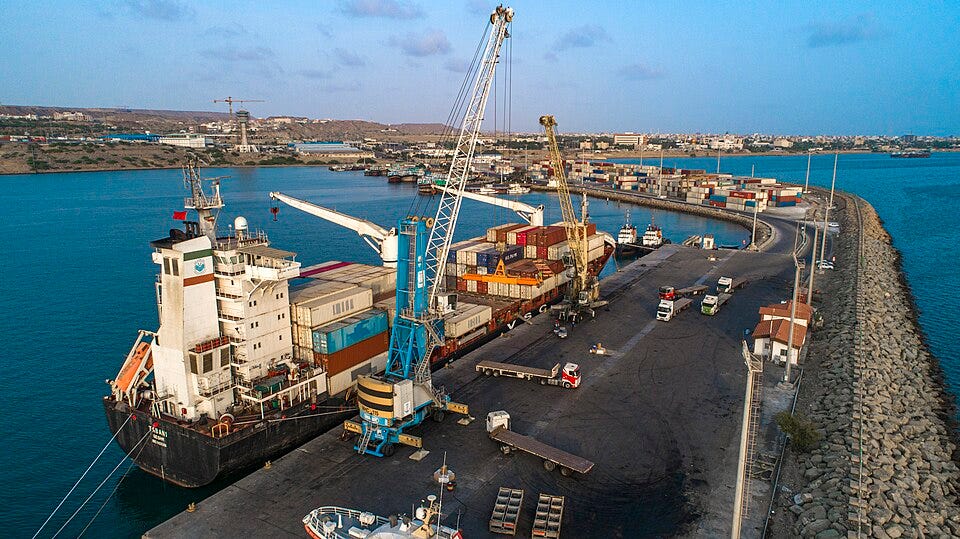

While the economy has in many ways adapted to ongoing warfare, a fundamental question remains: how long can those adaptations compensate for the loss of normal access to maritime trade?
The most immediate signs of pressure have emerged in the energy sector. As Iran Unfiltered reported earlier, domestic gasoline consumption is running above production, while the government says the maritime blockade and financial constraints have made replacing the shortfall through imports increasingly difficult. Reports of supply limitations have emerged in several parts of the country, while an attempt in Kerman Province to introduce a new pricing system for consumption above existing subsidized quotas was quickly suspended.
But gasoline is only one part of the problem. Iran historically conducts much of its foreign trade through its southern ports, and shifting that volume to roads and railways carries significant logistical and financial costs.
Majidreza Hariri, chairman of the Iran-China Chamber of Commerce, has emerged as one of the most outspoken Iranian business figures warning about the economic consequences of a prolonged maritime blockade. Hariri has argued that if the blockade continues over the long term, its impact on Iran’s economy could exceed that of years of sanctions.
According to Hariri, even redirecting trade through neighboring countries such as Turkey and Pakistan cannot replicate the capacity of Iran’s southern ports. Iran lacks sufficient land-border logistics to move comparable volumes of goods, he said, while transportation costs for some shipments have already risen to four or five times their pre-blockade levels. The result, he warned, would be more expensive goods as well as reductions in the quantity and quality of imports.
Hariri has therefore called ending the maritime blockade an economic priority, arguing that it should be broken through negotiations if possible and, in unusually stark language for a business official, by force if negotiations fail. His warning highlights an important limitation of the strategy the Iranian government is now pursuing. Overland routes can reduce the impact of the blockade, but they cannot fully replace maritime trade.
President Masoud Pezeshkian nevertheless says Iran is rapidly expanding those alternatives, and has already moved from one train from China entering Iran per week to three such trains per day now. Pezeshkian said Iran would not remain passive in the face of pressure and blockade, and the uptick in rail traffic with China is indicative of that proactive
The increase, if sustained, represents a striking expansion in rail capacity. At one train per week, the route would amount to roughly 52 trains annually. Three trains per day would represent a theoretical pace of more than 1,000 trains a year.
Pezeshkian said the government is also working to activate additional trade routes through Azerbaijan, Russia and other regional corridors. He presented the effort as part of a broader strategy of expanding economic relations with neighboring countries and making greater use of organizations including the Eurasian Economic Union, BRICS, the Shanghai Cooperation Organization and the Economic Cooperation Organization. “We are finding alternative routes and creating new capacities,” Pezeshkian said, describing the objective as maintaining trade, supplying the country’s needs and increasing economic resilience.
The contrast between Pezeshkian’s comments and Hariri’s warning captures the central economic challenge facing Iran. Tehran appears to be finding ways around the blockade, but circumventing it is substantially more expensive and cannot easily reproduce the enormous carrying capacity of maritime shipping.
Yet another development complicates the picture further: Iran’s stock market has hit a record high, even though this does not translate to a booming economy. The Tehran Stock Exchange’s benchmark index entered the 5.6 million range this week, the highest level in its history. According to official Securities and Exchange Organization figures cited by BBC Persian, more than 135 trillion tomans in retail investor money entered investment funds between the beginning of the 40-day war on February 28 and August 10.
Since the beginning of the war, the benchmark index has risen approximately 52 percent, compared with roughly 41 percent official inflation over the same period. The stock market has also outperformed gold and the dollar, making equities one of Iran’s best-performing major asset classes during the war.
At first glance, a record-setting stock market appears difficult to reconcile with an economy simultaneously dealing with war, a maritime blockade, high inflation and growing logistical problems. Indeed, looks can be deceiving. Several characteristics of the Iranian market help explain the apparent contradiction. A large share of Iran’s biggest publicly traded companies are exporters or commodity producers, including petrochemical, refining, mining and metals companies. A weaker rial can increase the rial value of their foreign-currency revenues even when the actual volume of production or exports does not increase.
The exchange rate used for many corporate transactions has also risen sharply since the war began. As a result, companies can report significantly higher revenues and profits in rial terms without necessarily producing or exporting more goods.
Inflation itself has a similar effect. Consumer prices in July were nearly 88 percent higher than a year earlier, according to Iran’s Statistical Center. In an economy experiencing that degree of inflation and currency depreciation, rising nominal asset prices are not necessarily evidence that the underlying economy is becoming more productive.
One particularly revealing measure is the dollar value of the stock market. Despite the record-high rial-denominated index, the market’s total dollar value has fallen from roughly $110 billion last August to around $90 billion today. In other words, Iranian equities are worth more rials than ever, but the market remains considerably smaller when measured in dollars.
Government intervention has also played a role. Following the market’s reopening after a nearly three-month wartime closure, authorities introduced extensive measures intended to prevent panic selling, including restrictions on sales by institutional investors and market makers and injections of liquidity through state-supported market stabilization funds.
The stock market rally therefore should not be read simply as evidence that Iran’s economy is thriving despite the war. But neither should the mounting problems caused by the blockade be interpreted as evidence that economic activity has stopped.
Instead, Iran increasingly appears to be developing a wartime economy built around adaptation: substituting land routes for maritime trade where possible, expanding rail connections with China and other neighbors, prioritizing essential imports, and absorbing higher transportation costs while companies and investors adjust to inflation and currency depreciation.
The question is whether that model is sustainable. Railways and highways can keep essential goods moving and prevent a maritime blockade from completely isolating the country. Iran’s large domestic market, energy resources and extensive trade relationships with neighboring states also provide buffers that smaller economies might not possess.
But geography imposes limits. Moving containers thousands of kilometers by rail or truck is considerably more expensive than moving them by sea, and the capacity of Iran’s land borders cannot easily replace its southern ports.
That is why Hariri’s warning is significant. That the head of the Iran-China Chamber of Commerce warned that overland trade is not a permanent solution to the blockade, at precisely the moment when the government is celebrating the expansion of trade with China, suggests that deep challenges remain.
For now, Iran appears to be absorbing the economic pressure rather than being paralyzed by it. Trains are replacing some ships, trade is being redirected, and the Tehran stock market is setting records. But each workaround comes with costs, and the longer the maritime blockade continues, the harder it will become to compensate for what Iran has lost at sea.
Best reporting and unbiased analysis of affairs within Iran, as well as global affairs related to Iran.
As for the economic aspect of the war, we’ve to wait and see who cries uncle first.
Europe, US, GCC, Asia, China, or Iran.
IMHO, populace in the first 4 regions will blink first in this game of chicken.