

Recent statements from Washington, Tehran and Islamabad suggest that the United States and Iran are closer to a deal to end the war than at any point since the recent conflict began. Following weeks of military confrontation, escalating rhetoric, and fears of a return to a broader regional war, both sides now appear to be moving toward a memorandum of understanding, reportedly known as the “Islamabad Memorandum,” that could provide a framework for ending the current crisis and leading to technical negotiations on Iran’s nuclear program.
.jpg)
Pakistani Prime Minister Shehbaz Sharif shared on X, “Amid ongoing intense mediation efforts by Pakistan, we are fully aware of incessant misinformation campaign being waged by those who want to sabotage the peace deal. Setting aside the noise, we can confirm that a final, agreed upon text of the peace deal has been reached and Pakistan is now working closely with both sides to finalize the next steps. Peace has never been this close as it is now.”
If finalized, such a development would represent a significant diplomatic achievement. After months of military escalation, repeated threats of further conflict, and considerable economic disruption, even a preliminary understanding would demonstrate that diplomacy remains capable of producing results despite deep mistrust between the parties. The reported framework could help reduce tensions, lower the risk of renewed military confrontation, and create space for negotiations on longer-term issues that have divided the two countries for decades.
At the same time, it is important to recognize that a final agreement has not been released. Iranian officials continue to emphasize that the proposed memorandum remains under review by the relevant decision-making bodies within Iran. Foreign Ministry spokesperson Esmail Baghaei has repeatedly stated that reports regarding the timing and location of a signing ceremony remain speculative and that discussions over the final text continue. Iranian media outlets close to the government and the Islamic Revolutionary Guard Corps have similarly reported that the document has not yet received final approval from the relevant authorities. While the Pakistani Prime Minister is signaling that the deal is all but final, additional work may be needed or the agreement could unravel before the finisih line.
While Iranian officials have avoided declaring victory prematurely, their recent statements have become noticeably more optimistic. The clearest indication came from Foreign Minister Abbas Araghchi, who stated that the “Islamabad Memorandum has never been closer to finalization” and urged media outlets to refrain from speculation regarding its contents until the process is complete. Araghchi also stressed that all details would be shared with the public at the appropriate time. Although he stopped short of confirming that a final agreement has been reached, his remarks represented one of the strongest public indications from Tehran that negotiations are advancing successfully and may be approaching their final stages. President Trump himself shared a screenshot of Araghchi’s remarks on Truth Social.
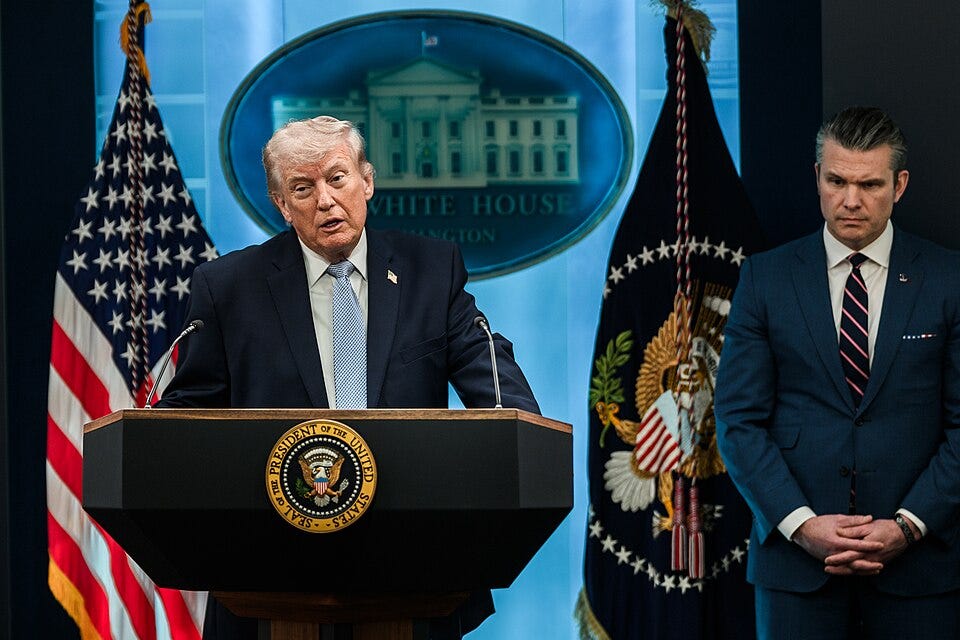
On the American side, President Donald Trump has repeatedly asserted that the agreement is nearly complete and could be signed in the coming days. He has described the emerging document as a “very strong” and “very detailed” memorandum of understanding and has stated that the agreement would ensure that Iran never acquires a nuclear weapon. Trump has gone so far as to declare that the United States has effectively “ended the war with Iran” and suggested that a signing ceremony could take place in Europe in the near future.
At the same time, Trump has also acknowledged that the memorandum is not itself a final settlement. Rather, it appears designed to serve as a framework for future negotiations and implementation. By definition, a memorandum of understanding is not the same as a comprehensive or legally binding agreement. Even if signed, it would likely represent the beginning of a new diplomatic phase rather than the conclusion of the dispute.
One of the most notable features of the current situation is the large number of competing reports regarding the contents of the proposed memorandum. The depiction of the agreement by Mehr News outlining 14 separate points appearing to tilt in Iran’s favor seemingly provoked anger from President Trump and led to near-simultaneous statements from Araghchi and Vice President JD Vance pushing back on media speculation and indicating that all would become clear once the deal is final.
Over the past several days, different media outlets have published dramatically different accounts of the agreement. Some reports describe a relatively narrow arrangement focused on nuclear issues, including limitations on enrichment levels, commitments regarding nuclear weapons, and the future disposition of enriched uranium stockpiles. Other reports describe a much broader framework involving sanctions relief, access to frozen Iranian assets, maritime security arrangements, the reopening of the Strait of Hormuz, reconstruction assistance, and a sixty-day period of negotiations intended to produce a final settlement.
Some leaked versions of the agreement suggest that sanctions relief would be gradual and conditional on Iranian compliance, while other reports describe more substantial economic measures. Certain accounts claim that issues such as Iran’s missile program and regional activities remain part of the broader diplomatic discussion, while other reported drafts explicitly exclude those subjects from future negotiations. American, Israeli, and Iranian media have each presented different interpretations of the memorandum’s contents.
At present, none of these leaked drafts can be independently verified. The existence of multiple and often contradictory versions likely reflects the fact that negotiations remain ongoing, that political factions are selectively leaking information in an effort to influence public opinion and shape the final outcome, and potentially that different actors only have insight into portions of the discussions.
Qatar and Pakistan have reportedly played central mediation roles throughout the process. Qatari officials have publicly acknowledged discussions with Washington regarding recent understandings reached between the parties, while Trump has repeatedly referenced the involvement of regional governments in facilitating progress. These diplomatic efforts appear to have contributed significantly to keeping communication channels open during a period of extraordinary tension.
The negotiations also face determined opposition from multiple directions, including within Iran itself. As reports of a potential memorandum began to circulate, several conservative political figures, commentators, and media outlets quickly moved to criticize the government’s negotiating strategy and warn against what they view as excessive concessions.
Some of the sharpest criticism has come from figures associated with the political camp of former nuclear negotiator Saeed Jalili, which has long advocated a more confrontational approach toward negotiations with the United States. State television and other conservative media outlets have reportedly provided platforms for commentators critical of the government’s diplomatic efforts, while some opponents have sought to portray the emerging agreement as a strategic setback for Iran.
Among the most vocal critics has been Mahmoud Nabavian, a parliamentarian closely associated with the Paydari Front and the broader hardline camp. Nabavian has argued that the emerging agreement risks being presented domestically as a diplomatic victory despite, in his view, failing to secure meaningful sanctions relief while potentially sacrificing important Iranian leverage, including over the Strait of Hormuz. His criticism reflects broader concerns among hardline factions that diplomacy could produce an arrangement they believe falls short of Iran’s strategic objectives.
At the same time, other figures linked to the negotiating process have adopted a more cautious tone. Mohammad Marandi, who has often served as an informal voice close to Iran’s negotiating team, recently sought to lower expectations regarding an imminent breakthrough, stating that “nothing will happen in Geneva on Sunday” and that important work remains to be completed. While Marandi did not reject the possibility of an agreement, his remarks underscored that negotiations remain ongoing and that unresolved issues still need to be addressed before any final announcement can be made.
The emergence of these public disagreements is noteworthy because it suggests that the debate inside Iran may be shifting from whether negotiations should occur to what kind of agreement should ultimately be accepted. Rather than arguing primarily over the desirability of diplomacy itself, many critics are now focused on the substance of the proposed arrangement and whether it adequately protects Iranian interests.
The timing of these criticisms is also significant. Much of the opposition has intensified only after reports emerged suggesting that the memorandum may be nearing completion. This pattern may indicate that opponents increasingly view the prospect of an agreement as credible and are therefore stepping up efforts either to influence its contents, raise political costs for its supporters, or prevent its finalization altogether.
Opposition also exists outside Iran. Israeli officials continue to express doubts regarding Iran’s intentions and have emphasized that any final agreement must include major concessions on Iran’s nuclear capabilities and reject sanctions relief. Prime Minister Benjamin Netanyahu recently reiterated that Iran would not obtain a nuclear weapon while he remains in office and stated that he and President Trump remain aligned on that objective. According to some reports, Israeli officials remain doubtful that any interim memorandum will ultimately produce a comprehensive final settlement.
Perhaps the most revealing aspect of recent developments is not what officials are saying about the agreement itself, but how they are speaking about it. Both Iranian and American officials increasingly appear focused on managing domestic political reactions rather than debating whether an agreement is possible. This interpretation remains speculative, but it helps explain why public messaging on both sides has increasingly focused on managing expectations, countering criticism and reassuring skeptical domestic audiences.
Significant obstacles undoubtedly remain. Important questions concerning implementation, sanctions relief, verification mechanisms, security guarantees, and future negotiations have yet to be fully resolved. The existence of competing leaks, conflicting narratives, and vocal opponents in Tehran, Washington, and Jerusalem demonstrates that the process remains politically fragile.
Nevertheless, the balance of available evidence increasingly points toward a process that is moving closer to completion rather than further away from it. The combination of increasingly confident statements from senior officials, reports that the memorandum is in its final stages, and growing efforts by both governments to address domestic criticism all suggest that negotiators believe a diplomatic breakthrough is within reach. Whether the emerging memorandum ultimately becomes the foundation for a durable agreement remains uncertain. Yet after months of military confrontation and escalating tensions, diplomacy appears to possess more momentum than at any previous point in the crisis. The coming days will likely determine whether this momentum produces a lasting breakthrough or joins the long list of unrealized opportunities that have shaped U.S.-Iran relations for decades.