

Iran’s participation in the 2026 FIFA World Cup, scheduled to take place from June 11 to July 19, 2026, in the United States, Canada, and Mexico, has become increasingly uncertain amid the ongoing war involving Iran, the United States, and Israel. What began as a major international sporting event has gradually become entangled with geopolitical tensions, security concerns, and domestic political considerations in both Tehran and Washington.
.jpg)
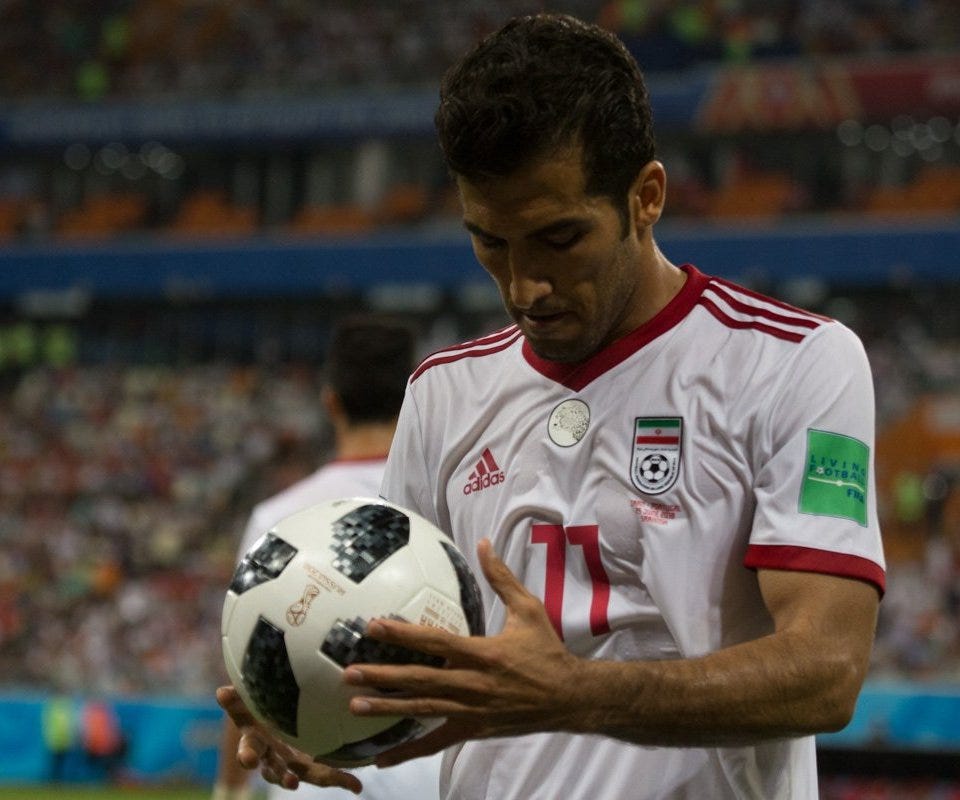
Iran has already qualified for the tournament and is scheduled to play three group-stage matches in the United States. According to the current schedule, Iran is set to face New Zealand on June 15 and Belgium on June 21 in Los Angeles, followed by a match against Egypt on June 26 in Seattle. However, the continuation of military confrontation between Iran and the United States, combined with heightened regional tensions, has cast serious doubt on whether the Iranian national team will ultimately participate in the tournament.
The issue first gained international attention after FIFA President Gianni Infantino revealed that he had discussed Iran’s participation with U.S. President Donald Trump during a meeting about preparations for the upcoming tournament. Infantino later stated publicly that Trump had welcomed Iran’s national team to compete in the United States, emphasizing that global sporting events such as the World Cup can bring people together even during periods of political tension.
However, the political messaging from Washington soon became more ambiguous, and even ominous. Donald Trump later stated that although Iran’s team would technically be welcome to participate, he did not believe that attending the tournament would be appropriate “for their own life and safety.” This statement introduced a new layer of uncertainty, suggesting that while there is no formal prohibition on Iran’s participation, the U.S. administration has expressed clear concerns about the security implications of hosting the Iranian team during, or potentially shortly after, the ongoing war.
At the same time, officials in Tehran have also expressed skepticism about participation under the current circumstances. Mehdi Taj, President of the Iranian Football Federation, acknowledged that following recent military attacks it is difficult to view the World Cup with optimism, particularly because several of Iran’s matches are scheduled to take place in the United States. Iranian officials have also referenced the recent controversy involving Iran’s women’s national football team in Australia, where several players reportedly sought humanitarian protection after facing political pressure during the AFC Women’s Asian Cup.
In addition to political concerns, Iranian government officials have also raised direct security considerations regarding the men’s national team traveling to the United States while the two countries remain in an active military confrontation. Iran’s Minister of Sports recently suggested that participation in the World Cup may not be possible under current conditions, particularly after the United States and Israeli war against Iran.
Despite these statements, Iran has not formally withdrawn from the tournament, and under FIFA regulations any withdrawal would require official notification to the organization. The FIFA World Cup regulations require qualified teams to participate unless extraordinary circumstances arise, and any withdrawal could lead to disciplinary measures, financial penalties, and the possible replacement of the team. FIFA retains broad authority to determine how such a situation would be handled if a qualified team withdraws or becomes unable to compete.
For now, FIFA appears to be adopting a wait-and-see approach, as the situation remains fluid and politically sensitive. A formal Iranian withdrawal could force FIFA to select a replacement team, potentially from the Asian Football Confederation, although the regulations allow the organization considerable discretion in determining the appropriate response.
At the same time, the uncertainty surrounding Iran’s participation reflects a broader reality: the 2026 World Cup is unfolding against the backdrop of one of the most serious geopolitical crises in the Middle East in recent years. With Iran responding to attacks through missile and drone strikes targeting Israel and regional locations hosting U.S. military forces, the conflict has created a security environment that inevitably affects international events involving Iranian nationals.
As a result, Iran’s presence at the tournament now depends not only on sporting considerations but also on diplomatic developments, security assessments, and the evolving trajectory of the conflict itself. Until a formal decision is made by either Tehran or FIFA, Iran remains officially qualified for the 2026 World Cup—but the possibility of withdrawal has become a realistic scenario amid the continuing war and rising political tensions.