

The United Arab Emirates has publicly reaffirmed that trade, commercial exchanges and financial transactions with Iran remain suspended, injecting new uncertainty into one of Iran’s most important economic relationships just as the Trump administration is attempting to escalate economic pressure on Tehran.
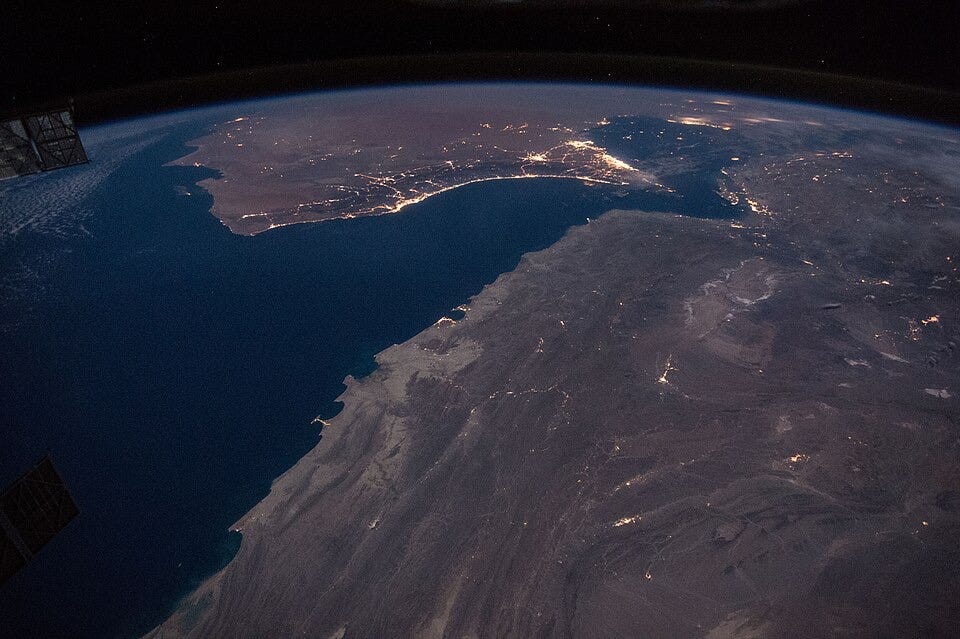

The statement followed a day of confusion over two Iranian ballistic missile launches in the Persian Gulf. The UAE military initially assessed that the missiles were heading toward the Emirates, but later said they were targeting vessels in the Gulf. Iran denied targeting the UAE.
It is not yet clear, however, that the UAE statement represents a new economic measure or an actual change in policy. The statement did not directly link the trade restrictions to the missile incident, instead saying that all economic exchanges with Iran had been halted in light of regional escalation.
Esfandyar Batmanghelidj, an economist and expert on Iran’s political economy, argued that the statement may not represent a new suspension of trade at all. He noted that Abu Dhabi never formally announced a resumption of economic ties after suspending them at the outset of the war, even as flights, shipping and other commercial activity began to recover. Iranian flights continue to land at Dubai International Airport, while vessel traffic has not shown an immediate disruption.
In Batmanghelidj’s reading, the statement may instead be intended to reaffirm the UAE’s official position amid growing U.S. pressure and ahead of expected new economic measures from the Trump administration. He argues that Abu Dhabi may maintain a tough public position while continuing to protect its own economic interests and retaining significant autonomy over how aggressively it enforces restrictions on Iran.
That interpretation cannot yet be confirmed. But the timing of the UAE statement is significant. Last week, Treasury Secretary Scott Bessent said Washington was preparing economic measures against Iran that had “never been seen” before and indicated that additional announcements could come this week. President Donald Trump subsequently said the United States intended to hit Iran hard economically.
The Trump administration has already sanctioned Iran heavily, though the ongoing maritime blockade adds a new dimension to the pressure on the Iranian economy. The Trump administration could seek to expand sanctions designations on actors who still engage in significant trade with Iran, though such moves may either target actors insulated from American trade - and thus be ineffective - or risk blowback in the form of countermeasures.
Whether the UAE statement becomes another significant component of that pressure will depend less on its wording than on what Abu Dhabi actually does next. For Iran, the stakes are considerable because the UAE is not simply another trading partner. Iranian customs figures show that the UAE accounted for roughly 31 percent of the value of Iranian imports during the first seven months of the previous Iranian year, making it Iran’s largest source of imports by value during that period, ahead of China.
Much of that trade does not consist of goods actually produced in the Emirates. The UAE functions as a major re-export hub through which Iranian companies obtain machinery, components, raw materials and consumer goods originating elsewhere. Dubai and Jebel Ali also provide access to logistics companies, commercial intermediaries and financial channels that have become particularly important as sanctions have restricted Iran’s ability to conduct business directly with companies around the world.
This means the crucial question is not whether trade between Iran and the UAE formally exists, but how much access Iranian companies retain to the commercial infrastructure centered in the Emirates. That question is becoming more important because Iranian manufacturers are already struggling with the accumulated effects of nearly six months of war.
The latest data from the Iran Chamber of Commerce show that factories have recovered some of the production lost during the initial shock of the conflict, but the broader picture remains weak. Businesses continue to report declining orders and shrinking stocks of raw materials, while shortages of foreign currency, difficulties importing goods, energy disruptions and limited access to financing are making it harder to maintain normal production.
One particularly worrying sign is the availability of raw materials. Iranian businesses reported that their inventories of raw materials fell for the fifteenth consecutive month, suggesting that many factories are drawing down supplies faster than they can replace them. If the UAE now begins enforcing its stated restrictions more aggressively against financial transactions, re-exports or Iranian-linked businesses, manufacturers dependent on imported components, machinery and intermediate goods could face an additional obstacle to replenishing those supplies.
Concerns about the longer-term health of Iranian industry are increasingly being voiced inside the country. This week, a senior official at the Ministry of Industry, Mines and Trade warned that signs of “deindustrialization” are emerging in parts of the economy and that continued deterioration could threaten Iran’s industrial base. At the same time, the spokesperson for parliament’s Industries and Mines Committee called on the government to establish a crisis task force for industries damaged by the war and demanded an operational plan to return affected businesses to production.
These warnings do not mean Iranian industry is already in collapse. Rather, they point to a risk that temporary wartime disruptions could turn into longer-term damage if factories cannot replenish supplies, obtain financing and restore normal production. The government has attempted to prevent that outcome. Early in the conflict, authorities approved a package containing 106 measures intended to support businesses, including provisions related to customs, trade, financing, taxes, foreign currency and imports.
But assessments from Iran’s private sector suggest implementation has been far less successful than the size of the package might imply. According to a recent assessment by the Iran Chamber of Commerce, satisfaction among businesses with implementation of the government’s wartime support measures was below 10 percent. Roughly one-third of the measures dealt with trade and customs, while others addressed financing, taxation, registration of imports and access to foreign currency.
Business representatives say many of the measures have either been implemented slowly or provided temporary breathing room rather than addressing the underlying problems facing production. The Chamber has identified three particularly serious wartime pressures: damage to some upstream industries that has spread through downstream supply chains, a sharp decline in demand, and prolonged uncertainty created by a conflict with no clear endpoint.
Manufacturers are therefore being squeezed from both sides: producing goods is becoming more difficult and expensive while consumers and businesses are becoming less willing or able to buy them. Iran does have alternatives to some of its traditional trade routes. As Iran Unfiltered recently reported, Tehran has dramatically expanded its use of overland commerce as maritime access has become more difficult. President Masoud Pezeshkian said the number of trains arriving from China had increased from roughly one per week to as many as three per day, while the government has sought to expand trade corridors through Central Asia and neighboring states.
Those routes have helped Iran keep goods moving despite the naval blockade and provide Tehran with alternatives that did not exist at the same scale during earlier periods of sanctions. But trains and trucks solve only part of the problem. Moving goods through another country is one thing; replacing the financial, logistical and intermediary services Iranian companies have long accessed through the UAE would be another. Iran may be able to redirect more shipments through China, Central Asia and neighboring countries, but establishing alternative payment mechanisms and commercial relationships could prove more difficult.
For now, there are important reasons not to assume that the UAE statement will suddenly sever those networks. Flights continue, vessel traffic has not stopped, and Iran and the UAE have powerful economic incentives to preserve at least some degree of commercial engagement. But the situation bears watching because the difference between a largely declaratory UAE policy and aggressive enforcement could be economically significant for Iran.
Nearly six months into the war, economic pressure on Iran is increasingly moving beyond oil exports and headline sanctions. Iranian factories must secure raw materials, finance imports, cope with energy constraints and maintain supply chains at the same time that domestic demand remains weak. The government’s own business-support program has so far struggled to address those problems.
Washington is now promising another round of economic pressure, while the UAE is publicly emphasizing that its restrictions on commerce with Iran remain in place. Iran has demonstrated that it can reroute trade when established channels are disrupted. The next question could be whether those adaptations will be enough to keep its factories supplied if access to one of its most important commercial hubs becomes substantially more difficult.