

The NIAC Capitol Insider is a digest tracking the latest from Congress on Iran-related policy developments, legislation, votes and more. This resource is designed to give our community a clearer, more comprehensive understanding of how Congress is approaching Iran policy by breaking down votes, providing policy analysis, and updating on key congressional actions.
Pentagon Submits $87 Billion Iran War Supplemental Funding Request
Congress Grapples with U.S.-Iran Memorandum of Understanding
Iran War Powers Resolution Passes Both Chambers - What Next?
The National Defense Authorization Act and Efforts to Merge U.S.-Israeli Militaries
Bicameral Letter on USCIS Green Card Policy Change
Congress is out this week for the July 4 recess but will return next week facing pressure to consider the Trump administration’s emergency supplemental funding request to cover the costs of the war with Iran. At the same time, opponents of the war are weighing potential legal action to enforce Congress’s recently passed war powers resolution, setting the stage for renewed debate over both the administration’s military actions and the future of U.S. policy toward Iran.
Pentagon Submits $87 Billion Iran War Supplemental Funding Request
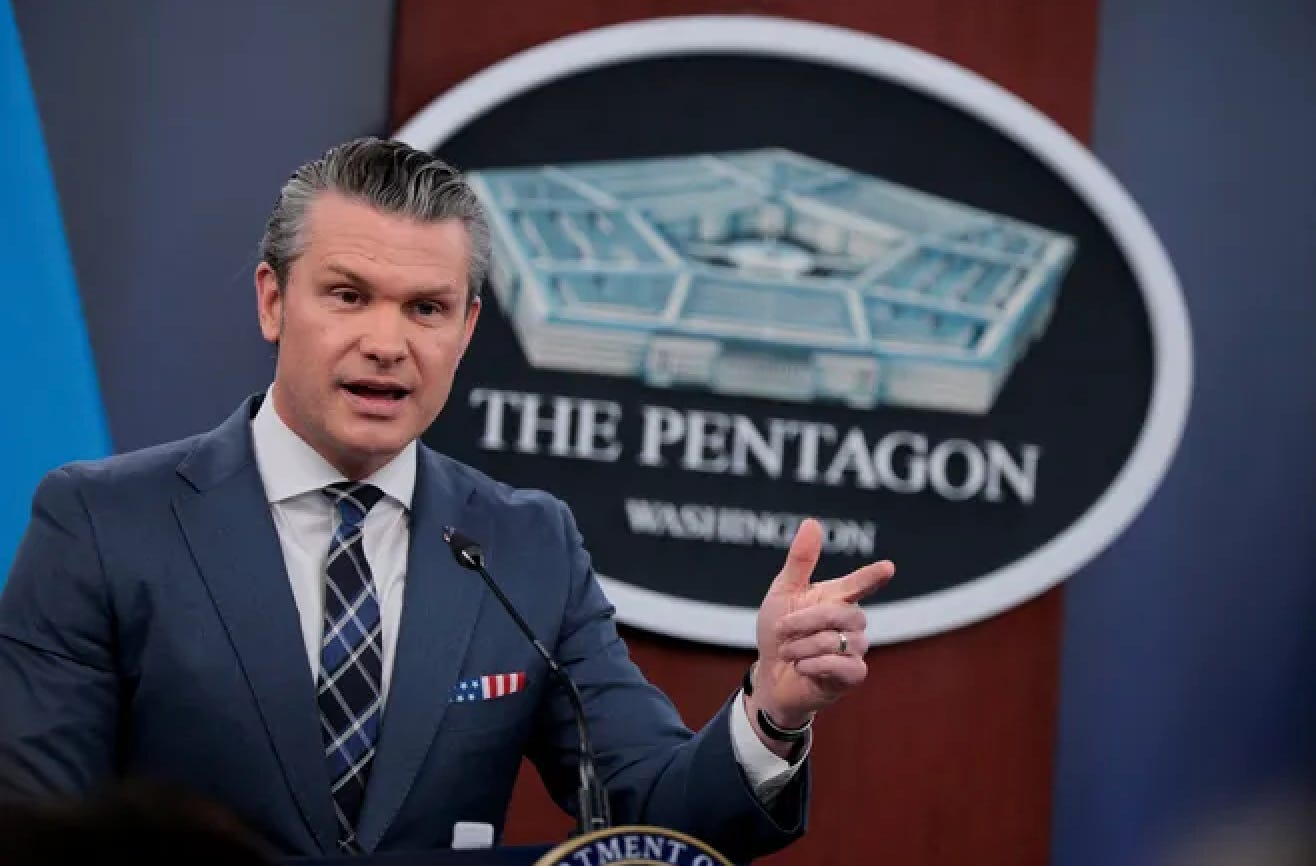
The Trump administration has asked Congress to approve an $87.6 billion emergency supplemental package, including $67.1 billion for the Pentagon, to cover the costs of the war with Iran. The largest requests include $21 billion to rebuild depleted munitions stockpiles, $17.3 billion for operational costs, $12.1 billion for classified programs and additional funding for drones, cybersecurity, and other defense priorities. The significant request for classified programs raises questions about how such a large pot of money could be used on the heels of a war launched without congressional authorization and almost no consultation or oversight from lawmakers. The request comes on top of the administration's already record-breaking $1.5 trillion defense budget request for fiscal year 2027, further complicating an already difficult appropriations process.
While much of the package is tied to the Iran conflict, the request also includes funding for separate initiatives that appear to be intended to secure broader support for the war funding. As a result, members of both parties have pressed the Pentagon to clearly distinguish what is necessary.
That scrutiny intensified last week after senior Pentagon officials briefed House appropriators behind closed doors. Republicans and Democrats alike emerged frustrated, stating that the Department of Defense failed to provide sufficient justification for the request or answer basic questions about how the funding would be spent. Even Chairman Ken Calvert, one of the package’s strongest Republican supporters, acknowledged that Congress needs substantially more information before moving forward.
The administration argues the funding is urgently needed, warning that some Pentagon accounts could begin running short as early as August. But the politics remain challenging. Notably, funding an unpopular war would create a difficult contradiction for Congress, particularly after the passage of a war powers resolution mandating an end to hostilities. After voting to declare that the war that they never authorized should end, lawmakers are now being asked to pay for the war’s large bill. To do so would likely weaken Congress’ own argument that the war lacks authorization and give the administration grounds to argue that Congress has effectively endorsed continued military operations. Combined with bipartisan frustration over the Pentagon’s lack of transparency, the supplemental currently faces an uncertain path on Capitol Hill - and an opportunity for opponents to block the funding from moving forward.
Congress Grapples with U.S.-Iran Memorandum of Understanding
The Memorandum of Understanding (MOU) between the United States and Iran has exposed divides within each party over how to deal with Iran amid the ceasefire. Although most Democrats opposed the war and most consistently voted to reassert Congress’ constitutional war powers, many have chosen to attack the agreement that ends the war while stopping short of vows to overturn it. In line with this position, Representative Gil Cisneros (D-CA) recently led 35 members of the New Democrat Coalition in a letter requesting an immediate briefing from the Trump administration on the MOU and any related “side agreements.” The lawmakers asked for details on Iran’s commitments under the agreement, the proposed $300 billion reconstruction fund that would be actualized in a final agreement, sanctions relief, enforcement mechanisms, and the administration’s plan for negotiating a permanent agreement during the MOU’s 60-day ceasefire. In announcing the letter, Cisneros said New Democrats “will not tolerate a deal that jeopardizes the interests and security of Americans while emboldening a hardline Iranian regime.”
Congress has an important oversight role, and lawmakers should demand transparency from the administration as negotiations move forward. But there is a difference between scrutinizing an agreement and working in bad faith to overturn it, risking a return to war. That distinction matters. The more Democrats adopt the argument that the MOU is simply a giveaway, the easier it becomes for opponents of diplomacy to argue that any agreement involving sanctions relief is politically unacceptable. That makes it harder for negotiators to sustain support for a final deal.
The agreement has already shown how fragile it is. Just days before U.S. and Iranian negotiators were expected to meet in Doha last week, the two sides exchanged military strikes, a reminder that the ceasefire can quickly unravel.
Republican reactions have further complicated the political reception of the MOU. Several GOP senators have expressed skepticism toward the MOU, warning it risks providing Iran significant economic relief without sufficient concessions. Senator Tom Cotton (R-AK) called aspects of the deal “out of step” with the president’s objectives and cautioned against “squander[ing] the leverage” built against Iran in recent years. Senator Ted Cruz (R-TX) called the reconstruction framework an “exceptionally bad idea,” while Senator Roger Wicker (R-MS) warned the $300 billion fund would “make Iran’s payoff under President Obama’s 2015 deal look like a pittance.” Senator John Cornyn (R-TX) warned the agreement could prove a “missed opportunity” to permanently reduce the threat from Iran.
However, not all Republicans are fully opposed. After an apparent conversation with President Trump after earlier remarks criticizing the MOU, Senator Lindsey Graham (R-SC) has noted some positive attributes of the deal while saying in an interview that he believes the deal will fail. Additionally, Rep. Buddy Carter (R-GA) acknowledged there are “a lot of concessions,” but argued the agreement should be understood as a “work in progress” tied to Iranian performance. He described the MOU as “performance-laden,” saying Iran would only be “rewarded” if it follows through on its commitments.
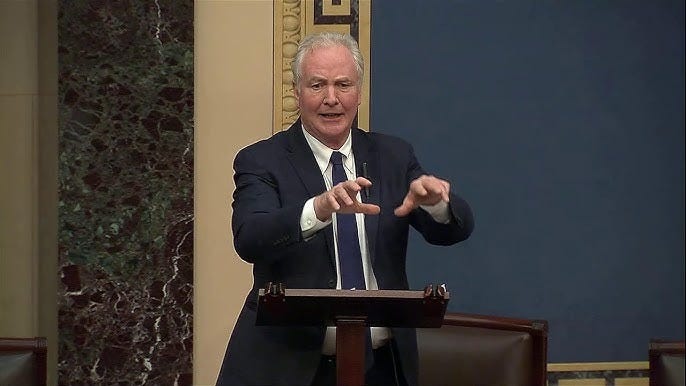
Notably, several lawmakers have taken a different approach compared to both their Democratic and Republican colleagues. This includes Sen. Chris Van Hollen, who has emphasized what the agreement has already accomplished. “The illegal war in Iran has been a blunder,” he said, while emphasizing that “There’s no good way to end a bad war.” He also challenged critics of the MOU with a simple question: “What is your alternative?“ Van Hollen further added that he wants “peace to prevail” and hopes that the MOU “becomes the foundation of a broader diplomatic settlement.”
The majority of critics in both parties are focused on what the agreement gives up and the risks it creates, while skeptical supporters like Van Hollen are emphasizing its function as a way to halt active conflict and keep diplomacy in motion. That split reflects the uncertainty surrounding the MOU’s trajectory, including whether it will ever move toward a finalized agreement potentially requiring a vote from Congress.
That uncertainty appears to be shaping incentives. With no clear path to a vote and no certainty the MOU will become a final deal at this current stage, many Democrats in particular appear to see this moment as a low-risk opportunity to criticize the administration’s diplomacy without having to take a binding position that could carry longer-term political consequences.
Iran War Powers Resolution Passes Both Chambers - What Next?
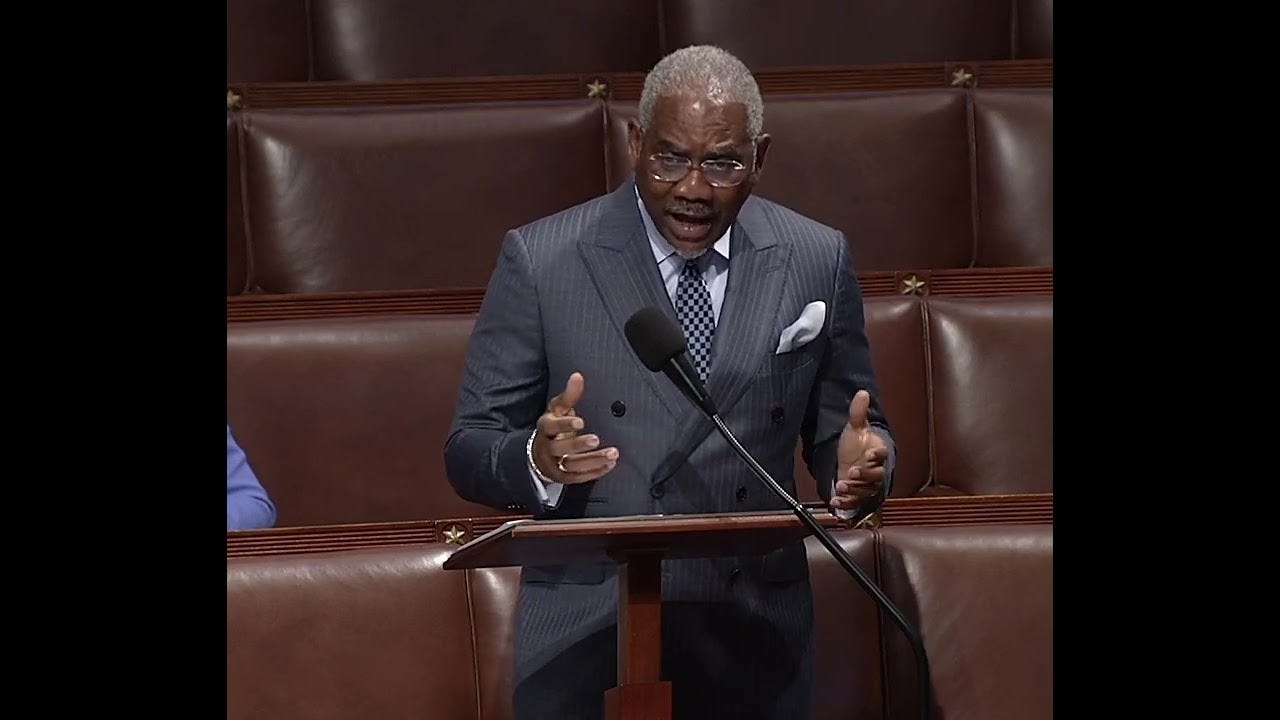
Congress has now approved an Iran War Powers Resolution in both chambers. House Foreign Affairs Committee Ranking Member Gregory Meeks’ H.Con.Res.86 passed the House in early June before clearing the Senate in a bipartisan 50-48 vote with the support of four Republicans. Because it is a concurrent resolution, the measure is not presented to the president for signature, and whether it is binding remains a legal question that courts have yet to settle. However, Meeks argues it is, in fact, legally binding on the President under the War Powers Act of 1973. Following Senate passage, Meeks pledged to “explore all legal avenues” to ensure the administration complies, citing the president’s lack of congressional authorization for the war.
The White House has argued there are no ongoing hostilities from which to withdraw following the April ceasefire, and historically administrations have disputed that war powers resolutions have legal force. However, this is the first time that a concurrent war powers resolution has passed both chambers under the War Powers Act, meaning it is an opportunity to settle the war powers debate. Thus, whether Representative Meeks and House Democrats will actually pursue legal action could establish a precedent regarding Congress’ authority to authorize war and finally settle legal questions that could make future wars, including a resumption of the war on Iran, more or less likely.
Relatedly, shortly after the passage of H.Con.Res.86, President Trump berated Senators who voted for it and - following a briefing with key administration officials - the Senate voted down Senator Tim Kaine’s (D-VA) own Iran war powers resolution 47-50. Senators Bill Cassidy (R-LA) and Rand Paul (R-KY) reversed their earlier support, with Cassidy switching from voting yes to voting “no,” while Paul changed his vote from yes to present, meaning he was recorded as in attendance for the vote but did not vote either for or against the measure. Following the failed vote, Kaine argued it was “of no consequence” because Congress had already expressed its position by approving H.Con.Res.86.
The National Defense Authorization Act and Efforts to Merge U.S.-Israeli Militaries
Both the House and Senate versions of the FY2027 National Defense Authorization Act (NDAA) – Congress’s annual defense policy bill that is considered “must pass” each year – include a provision entitled the “United States-Israel Defense Technology Cooperation Initiative” which would significantly expand military and defense technology cooperation between the United States and Israel through greater joint research, weapons co-production, technology sharing, and defense industrial coordination. It has received sharp criticism for further embedding the Israeli military and defense acquisition processes into that of the United States, undermining sovereignty and making future oversight much more difficult.
Representatives Ro Khanna (D-CA) and Thomas Massie (R-KY) introduced a bipartisan amendment to strike the provision, arguing Congress should not further institutionalize U.S.-Israeli military integration, particularly without greater oversight. However, the House Rules Committee declined to make the amendment in order, preventing the full House of Representatives from debating or voting on whether Section 219 should remain in the bill.
Deeper military integration would raise significant concerns with any country, but they are especially acute given Israel’s recent military operations in Gaza, Lebanon, and Iran. As such, critics argue that rather than further entrenching the bilateral military relationship, Congress should be strengthening oversight of U.S. security cooperation with Israel, enforcing relevant American laws against providing weapons to rights abusers and preserving its key oversight role on policy matters involving war and peace.
It remains unclear whether a debate could take place in the Senate over the measure, but the rejection of a vote on the proposed Massie-Khanna amendment denies Congress and the American public an important chance for debate on an issue of significant consequence to American security.
Bicameral Letter on USCIS Green Card Policy Change
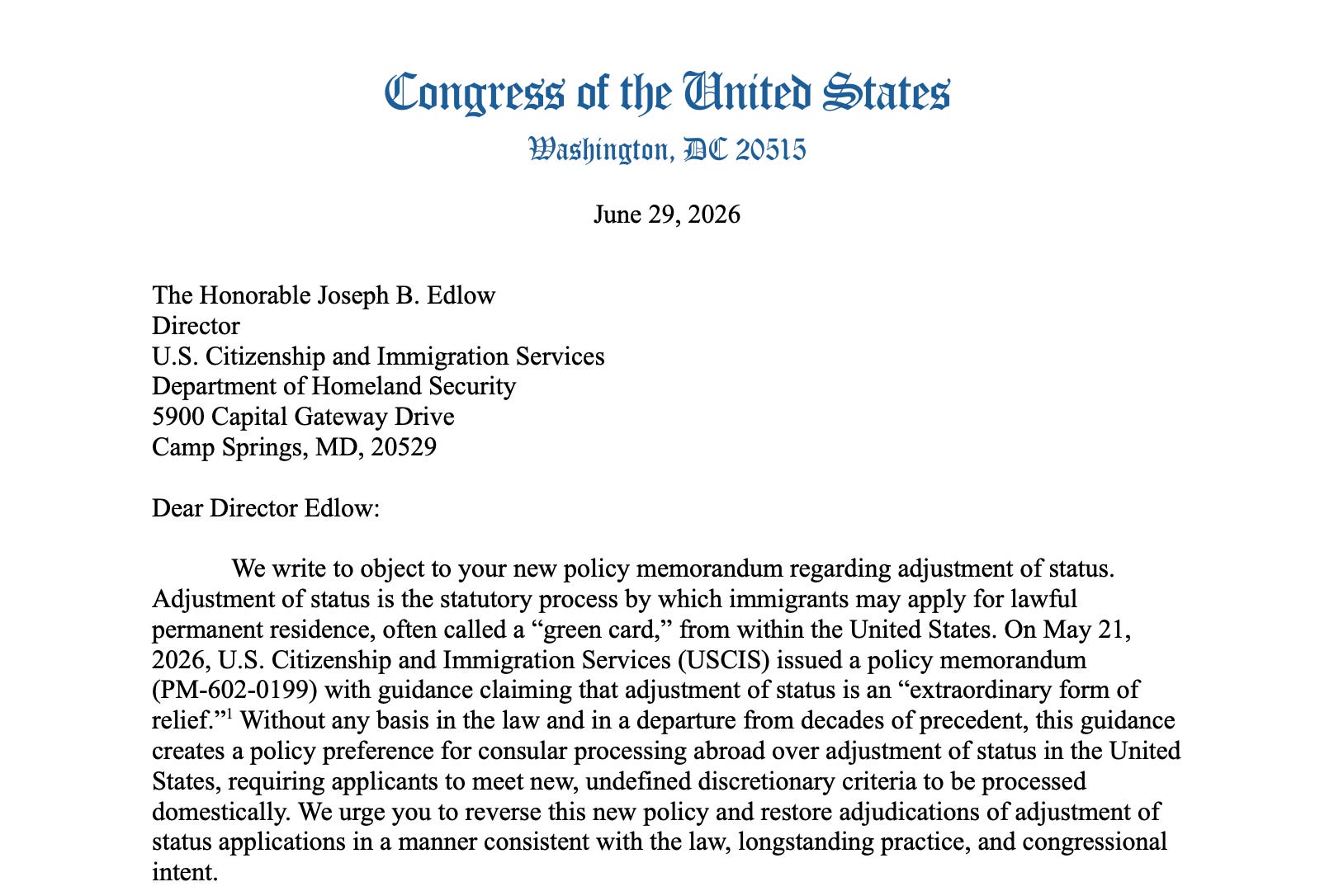
A bicameral letter is a letter signed by members of both the House and Senate, signaling coordinated congressional oversight efforts.
Senator Alex Padilla, Senate Democratic Whip Dick Durbin, Representative Jamie Raskin, and Representative Pramila Jayapal led more than 100 congressional Democrats in a bicameral letter urging U.S. Citizenship and Immigration Services (USCIS) to reverse a recent policy memorandum that suggested foreign nationals would need to leave the United States to secure immigration benefits, rather than applying for adjustment of status within the United States as has been common for years. NIAC was proud to support the letter given the particularly harsh expected impacts of this policy on Iranian nationals in the United States.
The lawmakers argue that the new guidance wrongly treats “adjustment of status” - the process that allows eligible immigrants already in the United States to apply for a green card without leaving the country - as an “extraordinary form of relief,” or something rare and exceptional. They say this mischaracterizes the legal pathway created by Congress.
They also argue the policy improperly pushes people toward applying through U.S. embassies and consulates abroad instead, and adds a new “national interest” standard that Congress never authorized. As the letter puts it, the policy “creates a policy preference for consular processing abroad over adjustment of status in the United States” and “undermines the very purposes Congress sought to advance” when it established the adjustment of status system. The lawmakers further warn that the change could separate families, disrupt jobs, and force many applicants to wait months or even years for visa appointments outside the country.
For Iranian nationals, the consequences could be especially severe given the lack of a U.S. embassy in Iran, existing travel restrictions, and ongoing barriers to consular processing. The letter specifically asks USCIS how it intends to provide a pathway to permanent residence for individuals who cannot access a U.S. consulate because of travel bans or the absence of diplomatic facilities in their home country. For now, the implementation of this policy is in doubt given recent comments from administration officials and recent litigation that has successfully challenged other discriminatory USCIS policies. For more information on this guidance, you can read NIAC’s memo here.