

Iran–U.S. negotiations in Islamabad ended without agreement, and President Trump has threatened a military blockade against Iran - an act of war. While few expected the first round of negotiations to produce an agreement, the President’s vow to escalate in response appears to be a choice of his own making that risks plunging Iran, the U.S. and broader region back into a disastrous war.
The talks, which lasted about 21 hours and involved the highest-level direct contact between the two sides in decades, concluded with both delegations leaving Pakistan and no immediate follow-up announced. U.S. Vice President JD Vance described the negotiations as serious and substantive but ultimately unsuccessful, indicating that the U.S. had made its final and best offer and was better positioned to live without an agreement than Iran. Iranian officials noted that some areas of understanding were reached despite unresolved differences.

The outcome reflects the depth of mistrust that continues to define relations between Tehran and Washington. Iranian officials emphasized that no realistic expectation existed for a single round of talks - especially after a 40-day conflict - to produce a comprehensive agreement. Instead, the negotiations appear to have clarified positions rather than bridged them. Both sides publicly maintain that they entered the talks in good faith, yet each attributes the failure to the other’s unwillingness to compromise on core demands.
President Trump’s Truth Social posts appeared to signal the coming end of the fragile ceasefire period. He stated “So, there you have it, the meeting went well, most points were agreed to, but the only point that really mattered, NUCLEAR, was not. Effective immediately, the United States Navy, the Finest in the World, will begin the process of BLOCKADING any and all Ships trying to enter, or leave, the Strait of Hormuz.” He continued, “IRAN IS UNWILLING TO GIVE UP ITS NUCLEAR AMBITIONS! In many ways, the points that were agreed to are better than us continuing our Military Operations to conclusion, but all of those points don’t matter compared to allowing Nuclear Power to be in the hands of such volatile, difficult, unpredictable people.”
In so doing, President Trump appears to point to the dispute over future Iranian enrichment as decisive to the breakdown in negotiations. While Iran has signaled significant flexibility over the contours of its nuclear program in past negotiations, and has specifically vowed not to pursue nuclear weapons, Iran has never agreed to limit something it perceives as a core right: to utilize domestic nuclear capabilities that can be used for both peaceful and non-peaceful purposes, similar to other nations.
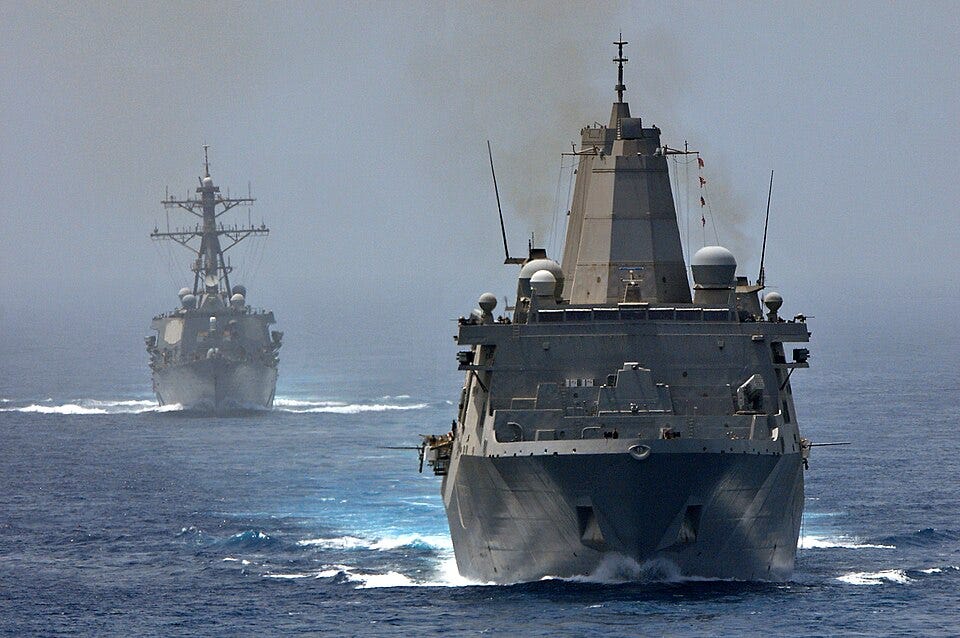
The Strait of Hormuz continues to define the course of the conflict, with President Trump vowing an extensive naval effort to further stifle traffic through the vital economic transit point. The vow of an effective double blockade appears to be a gamble that de facto control of the Strait can be wrested back from Iran, and that Iran will be unable to counter and weather intensifying economic pressure. Yet such an act would have profound implications on the global economy writ large.
Regional actors are already adapting to continued uncertainty. Saudi Arabia’s restoration of its east–west oil pipeline to full capacity (around 7 million barrels per day) reflects a strategic effort to reduce dependence on the Strait of Hormuz and mitigate potential disruptions. This development underscores how the uncertainty surrounding Hormuz is shaping broader energy and security calculations across the region.
A renewed war would carry significant risks for both sides, including broader regional escalation and severe disruption to global energy markets. This dynamic reflects a broader reality: Iran appears to believe it still holds meaningful leverage despite wartime damage, particularly through its position along one of the world’s most critical energy chokepoints. By contrast, the United States entered the negotiations with the expectation that military pressure would produce greater Iranian flexibility, an assumption that does not appear to have materialized. The gap between these perceptions contributed significantly to the lack of agreement.