

A flurry of remarks and events have signaled the importance of the ongoing conflict in Lebanon to a final settlement of the war between the U.S. and Iran. Following a late night post from President Donald Trump on Truth Social claiming “Iran really wants to make a deal, and it will be a good one for the U.S.A. and those that are with us,” Iran announced that it had halted all informal negotiations with the U.S. in light of Israeli military operations in Lebanon that violated the ceasefire. This triggered an apparent intervention from President Trump to halt an Israeli escalation into a Hezbollah stronghold in the southern suburbs of Beirut, followed by claims that negotiations with Iran are continuing.

The unfolding events signal that Lebanon has become the most flashpoint among many challenges to finalizing negotiations with Iran. For weeks, Iranian officials have argued that any ceasefire arrangement with the United States must apply across all fronts, including Lebanon. Tehran has repeatedly rejected the notion that direct U.S.-Iran tensions can be separated from Israel’s military actions against Hezbollah, one of Iran’s closest regional allies. From Iran’s perspective, Lebanon has become an integral component of the broader ceasefire framework and any future agreement with Washington.
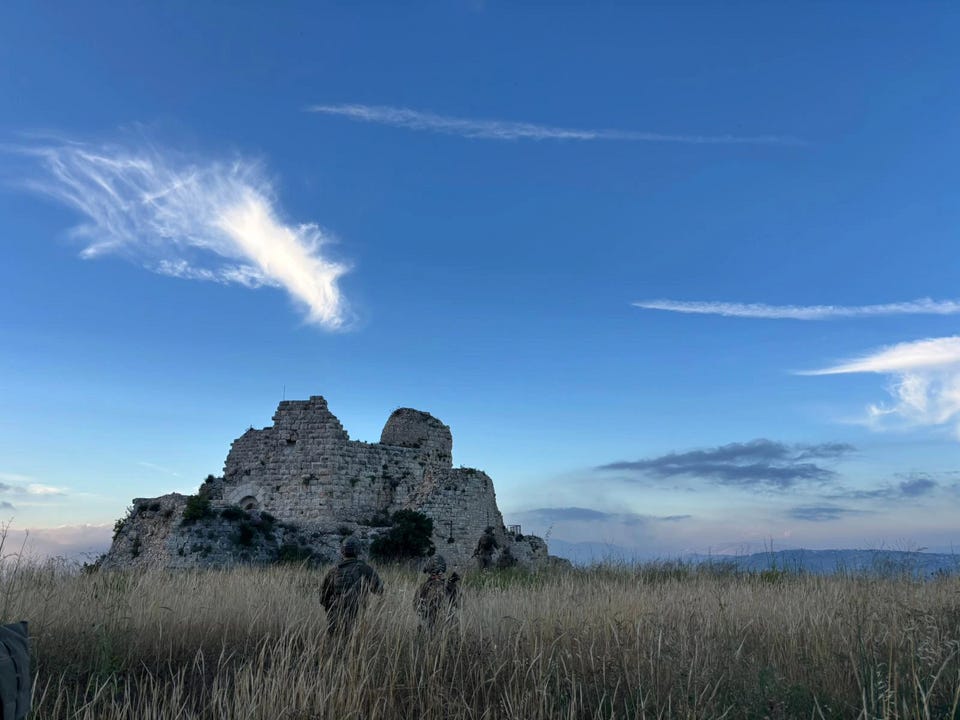
That position was put to the test on June 1 when Israeli Prime Minister Benjamin Netanyahu and Defense Minister Israel Katz announced plans to expand military operations against Beirut’s southern suburbs (Dahiyeh), Hezbollah’s political and security stronghold. The statements came as Israeli forces continued their ground campaign in southern Lebanon and signaled a willingness to widen the scope of the conflict. Earlier statements from Israeli leaders suggested that southern Lebanon would increasingly be treated as an active combat zone and that Israeli forces intended to maintain a deeper security presence north of the border.
For Tehran and Hezbollah, however, Dahiyeh is not simply another target. Unlike southern Lebanon, where active fighting is already taking place, Dahiyeh lies far from the current battlefield. The area serves as the center of Hezbollah’s political, organizational, media, and security infrastructure. Any major Israeli attack there would carry strategic consequences extending far beyond the immediate military balance. Iranian officials view the security of Beirut’s southern suburbs as a core component of the regional deterrence equation that has emerged during the current ceasefire.
Iranian officials reacted sharply to the Israeli announcements. Parliamentary Speaker Mohammad Bagher Ghalibaf and Foreign Minister Abbas Araghchi both signaled that a major Israeli escalation in Beirut would not be tolerated. Ghalibaf warned that the United States would soon receive a “bill” for such actions, while Araghchi reiterated that Lebanon was an inseparable part of the ceasefire framework. Around the same time, Iran’s Khatam al-Anbiya Central Headquarters reportedly warned residents of northern Israel to evacuate in the event of further escalation. Reports also circulated that Iran was preparing a response should Israel proceed with its threatened expansion of operations.
These developments were accompanied by Iranian media reporting that Tehran had suspended negotiations and the exchange of messages with Washington through mediators, arguing that Lebanon was one of the core conditions underlying the ceasefire and that violations in Lebanon constituted violations of the broader agreement. According to these reports, Iranian negotiators viewed Israeli actions as incompatible with continued diplomatic engagement.
What followed may have been one of the clearest indications yet of Washington’s desire to preserve the diplomatic process. In a series of social media posts, Trump announced that he had held a “very productive” conversation with Netanyahu and declared that no Israeli forces would move toward Beirut. He further stated that any forces already preparing to do so had been turned back. More importantly, Trump claimed that, through senior representatives, he had also communicated with Hezbollah and received assurances that “all shooting will stop,” with Israel not attacking Hezbollah and Hezbollah not attacking Israel. In a separate message posted later, Trump reiterated that negotiations with Iran were continuing at a “rapid pace.”
While the situation is still murky, Trump’s intervention appeared to signal a desire to prevent the Lebanon crisis from derailing negotiations with Tehran. The timing was particularly notable because it came only hours after Israeli leaders had publicly discussed expanding operations and after Iranian officials had warned of potential consequences.
The events of June 1 highlight the emergence of an unofficial but increasingly visible regional security equation. From Tehran’s perspective, attacks on Beirut’s southern suburbs are not separate from the broader confrontation involving Iran, Hezbollah, and Israel. The security of Dahiyeh carries enormous symbolic and strategic significance because Hezbollah’s political and security infrastructure is concentrated there. A major Israeli assault on Beirut could place Hezbollah under domestic pressure within Lebanon while simultaneously challenging one of Iran’s most important regional partnerships. Iran showed a willingness to suspend negotiations over developments in Lebanon, while Trump moved quickly to reassert both the ceasefire and the continuation of talks.
The episode also raises new questions about the relationship between Washington and Jerusalem. While Israeli warnings ahead of military operations have become routine during the wars in Gaza and Lebanon, that Dahiyeh could become the next target of escalation and the subsequent intervention by Trump to publicly declare that the escalation would not proceed marks an apparent reversal of a major escalatory move. The episode also exposes the continuing tension between Israeli military objectives and Washington’s effort to preserve a diplomatic track with Iran.
For now, the immediate crisis appears to have eased, though significant uncertainties remain. Fighting and military operations in southern Lebanon have not fully ceased, and it remains unclear whether Trump’s statement reflected a formal understanding between the parties, a temporary de-escalation, or an effort by Washington to prevent a rapidly escalating confrontation from undermining diplomacy with Iran. What is clear is that the White House viewed developments in Lebanon as sufficiently important to intervene directly at a moment when Tehran had reportedly suspended negotiations over concerns that the ceasefire was being violated.
Lebanon can no longer be considered a peripheral issue in U.S.-Iran diplomacy. It has become one of its most important defining tests. Both Tehran and Washington continue to spiral around a possible deal, seeking advantage in its ultimate terms, but the events of June 1 demonstrated how quickly regional developments can threaten to derail a finalization of the much-discussed agreement. Any future agreement will depend not only on sanctions, frozen assets, and nuclear specifics, but also on whether the parties can maintain a fragile regional security balance stretching from Iran to Lebanon while spoilers - including Israeli Prime Minister Benjamin Netanyahu - threaten to unravel the tentative progress being made.
For now, diplomacy has survived another test. Whether it can survive the next one remains is yet to be determined.