

President Donald Trump’s explicit threat to destroy Iran’s bridges, power plants, and essential infrastructure marks a profound and dangerous escalation—one that moves beyond military confrontation into the realm of collective punishment against an entire population. Speaking at the White House, President Trump warned that if Iran does not accept his terms, “they will have no bridges, no power plants, they will have nothing,” while reiterating earlier rhetoric about driving Iran back to the “Stone Age.” Such statements do not simply reflect pressure tactics; they signal a willingness to target the systems that sustain civilian life.
Bridges and electrical infrastructure are not peripheral assets—they are the backbone of modern society. Their destruction would disrupt hospitals, water systems, food supply chains and emergency services, placing millions of civilians at immediate risk. Under international humanitarian law, the deliberate targeting of civilian infrastructure - especially energy systems essential to survival - raises serious legal concerns and may constitute war crimes. The normalization of such threats erodes longstanding legal and moral boundaries designed to limit the human cost of war.
At the same time, this rhetoric is strategically reckless. By openly threatening to dismantle Iran’s civilian infrastructure, the United States increases the likelihood of retaliation beyond conventional military targets. Iran has already signaled that it will respond asymmetrically and regionally, and the scope of potential targets is expanding. Recent reports indicate that data and artificial intelligence infrastructure across the region - particularly facilities operated by major U.S. technology companies such as Amazon, Microsoft, Oracle, and Equinix in the UAE - are now being identified as potential targets for Iranian retaliation, especially after the targeting of computational infrastructure linked to Sharif University in Tehran. These facilities, though located in neighboring countries, are viewed as technical extensions of U.S. strategic capabilities, raising the risk that the conflict could extend into digital, technological, and economic domains far beyond traditional battlefields.
This potential shift to targeting civilian-linked digital infrastructure, including data centers, cloud systems and AI processing hubs, is significant. Such a development would not only broaden the geographic scope of the conflict but also threaten critical global systems that underpin finance, communication, logistics, and emerging technologies. In an interconnected world, the targeting of these systems could have cascading effects well beyond the immediate region.
Inside Iran, the political consequences are equally significant, and counterproductive to some stated U.S. objectives. Just months ago, the country experienced widespread anti-government protests, reflecting deep internal dissatisfaction. Yet as the war has escalated, external threats, particularly those aimed at civilian infrastructure, have contributed to a shift in public dynamics. Every night, large numbers of people are now present in the streets, expressing support not only for the country but, increasingly, for the state itself in the face of external attack. A society that was internally divided is being pushed toward cohesion under threat.
This dynamic illustrates a well-established pattern: when civilian populations perceive that their basic survival is at risk, political grievances are often subordinated to national defense. By threatening to destroy the infrastructure that powers homes, connects cities, and sustains daily life, the United States risks strengthening the very forces it claims to oppose, while weakening the space for internal reform and dissent.
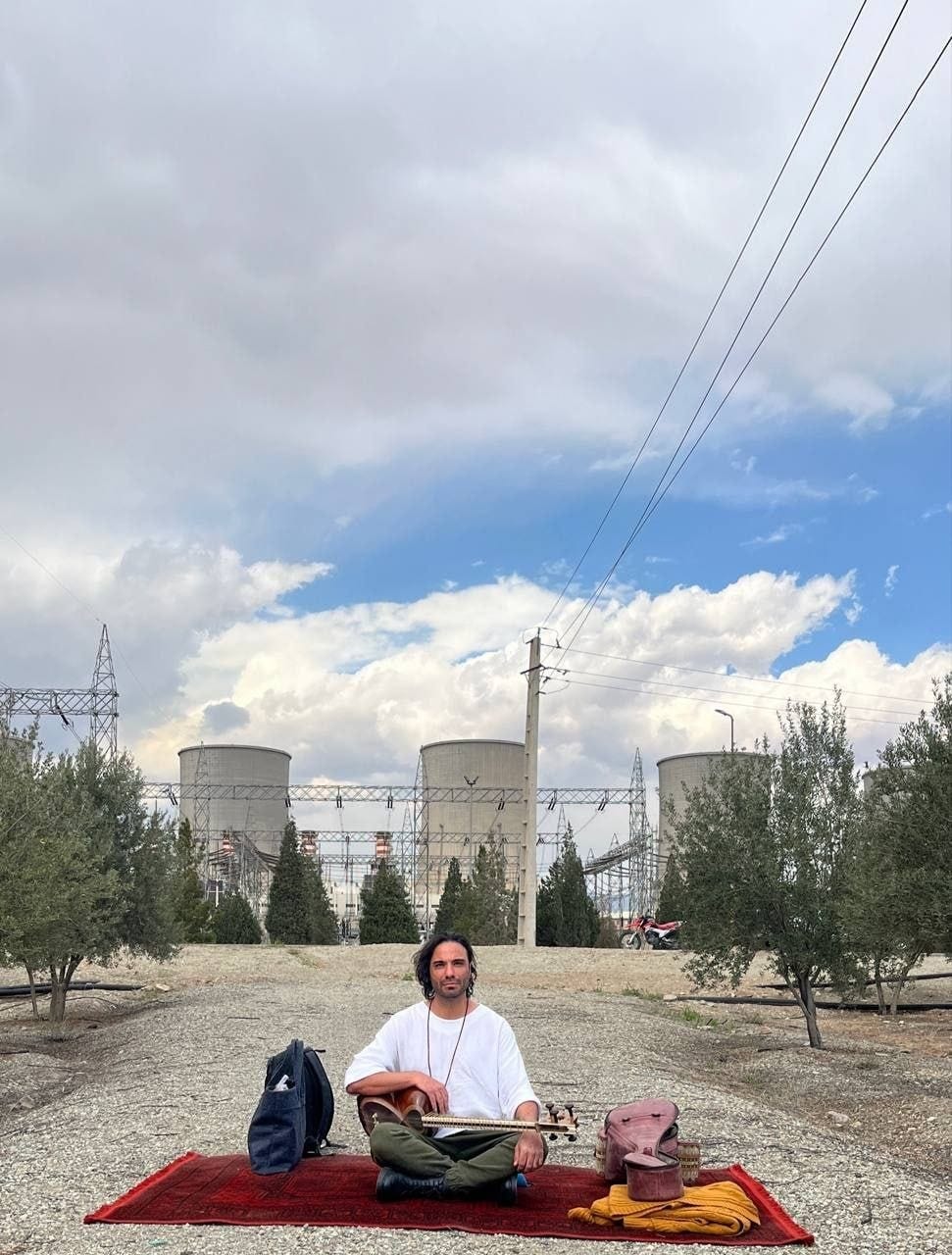
At the societal level, the defense of infrastructure has taken on symbolic and human dimensions. Iranian civil initiatives - including calls for public gatherings around power facilities - frame attacks on energy systems as attacks on life itself. Musician Ali Ghamsari has staged a symbolic sit-in at the Damavand power plant, protesting the potential targeting of civilian infrastructure. His protest underscores a broader sentiment: electricity is not a political abstraction—it is light, heat, medical care, and dignity. In parallel, state-linked initiatives have called for nationwide human chains around power plants - reportedly scheduled for 2:00 PM - to send a message to the world that attacks on public infrastructure constitute war crimes. These responses reflect a population increasingly focused on preserving the essentials of daily life under threat.
Simultaneously, the war has been accompanied by a parallel battle over narratives. In the months leading up to the conflict, some media narratives suggested that significant segments of Iranian society might welcome external intervention. Yet as the consequences of war have become visible—through damaged infrastructure, civilian risk, and economic disruption—such narratives have become increasingly difficult to sustain. The reality on the ground has challenged earlier assumptions and raised deeper questions about the role of media in shaping perceptions of war and its legitimacy.
The contradiction at the center of U.S. policy is now stark. In January, Trump presented himself as aligned with the aspirations of Iranians seeking freedom. Today, he threatens to destroy the very infrastructure that sustains their lives, while arguing that such suffering will ultimately benefit them. This is not a strategy for empowerment; it is a justification for inflicting widespread hardship.
The implications of this approach extend far beyond Iran. Targeting critical infrastructure - physical and digital - risks triggering cascading failures across interconnected regional systems, from energy supply to cloud computing and global data networks. It raises the prospect of retaliatory strikes on civilian-linked assets across the Gulf and beyond. Most importantly, it normalizes a form of warfare in which both physical infrastructure and the digital backbone of modern life become legitimate tools of coercion.
If such a doctrine takes hold, the result will not be stability or peace. It will be a more expansive war, greater civilian suffering, and a region pushed closer to systemic crisis. At a moment when diplomacy remains possible, the threat to erase a nation’s infrastructure - both physical and digital - is not only legally and morally indefensible, but strategically catastrophic.