


The Democrats’ decisive victory in the November 3 U.S. midterm elections has been greeted in Tehran with a mixture of satisfaction, warnings of military retaliation, and caution about whether the results will change Washington’s approach toward Iran. Senior Iranian officials have interpreted the Republican defeat as a rejection of President Donald Trump’s war, while Iranian newspapers and commentators have offered differing assessments of its political significance and implications for the next phase of the conflict.

The election has received extensive attention in Iranian media, particularly because it followed months of military confrontation, disruptions to the Strait of Hormuz, and rising energy prices. Trump himself acknowledged that the war with Iran contributed to Republican losses, a development prominently highlighted by Iranian news outlets.
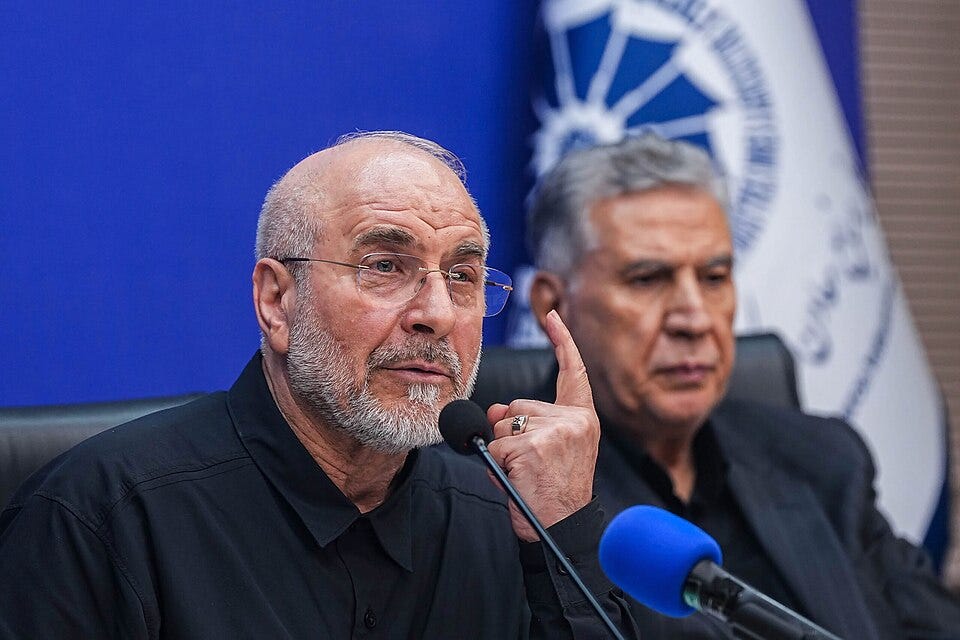
Mohammad Bagher Qalibaf, Iran’s parliament speaker and a leading figure in negotiations with Washington, delivered one of the most direct responses. Writing on X on Wednesday, November 4, Qalibaf declared that Americans had rejected the war, whether motivated by moral objections or the financial pressures of rising living costs. “Conscience or the cost of living, Americans said NO TO WAR, and we endorse this message,” he wrote. But Qalibaf’s response also included an explicit threat. He warned that if the U.S. government disregarded the wishes of American voters to serve what he called international paymasters and blackmailers, it would discover that Iran’s “NO comes with a Nightmare.”
His message combined approval of the election results with a warning against renewed American military action. Rather than offering concessions in response to Trump’s political defeat, Qalibaf portrayed the vote as an additional reason for Washington to abandon military escalation.
Supreme Leader Mojtaba Khamenei offered a more skeptical interpretation of the election’s significance. In a written message released on November 4, he rejected the expectation that changes in American political leadership would fundamentally alter Washington’s hostility toward Iran. Khamenei argued that those hoping for changes in American behavior because of shifts between political parties, or believing that concessions to Washington could end its hostility toward Iran, were seriously mistaken.
Khamenei also issued a military warning, saying that any renewed American aggression would produce a much broader Iranian response. He described Iran’s attacks on American military facilities in the region and its control over the Strait of Hormuz as part of a wider confrontation with U.S. power.
The contrast between the two senior leaders is notable. Qalibaf emphasized the political costs of the war for Trump and interpreted the election as a rejection of further confrontation. Khamenei focused on the continuity of American policy and warned against assuming that Democratic control of Congress would create a fundamentally different relationship with Washington.
Other senior Iranian figures have also presented the election as evidence of the costs of the war for the United States. Mohammad Mokhber, a senior adviser to the supreme leader and former acting president, argued that Iran had succeeded in transferring part of the war’s economic burden to the United States through higher oil prices.
Mokhber’s assessment reflected a broader argument within Iran’s political establishment that the conflict has produced consequences for American households as well as for Iran’s economy. Judiciary chief Gholam-Hossein Mohseni-Ejei adopted an even more confrontational tone, portraying Trump as having suffered both military and political setbacks. He warned that further confrontation could bring additional defeats.
These statements reflect a recurring theme in the official Iranian response: the Republican defeat is being presented not simply as an American domestic political development but as evidence that the war has undermined Trump’s position at home. Iranian conservative newspapers have reinforced that interpretation, often using the election to draw broader historical comparisons between Iran and the United States.
Hamshahri, a newspaper associated with Tehran’s municipal establishment, published a prominent report under the headline “Iran’s Shadow Over the U.S. Elections.” It argued that Iran had again become a major factor in American politics, but this time through the cost of groceries, fuel prices, and the economic pressures experienced by American households. The newspaper drew a parallel with November 4, 1979, when Iranian students seized the U.S. Embassy in Tehran, sparking a crisis that plagued the Carter administration until its electoral defeat the following year. The anniversary, commemorated annually by the Islamic Republic, coincided with the announcement of today’s American midterm election results. Hamshahri’s presentation suggested that the confrontation with Iran had once again become a political liability for an American president, although through different circumstances than those of the 1979 hostage crisis.
Jam-e Jam, affiliated with Iran’s state broadcaster, adopted a similarly emphatic tone, presenting the Republican defeat under the headline “The Twilight of Trumpism.” Tasnim News Agency, which is close to the Islamic Revolutionary Guard Corps, highlighted the Democratic victories and gave prominence to Qalibaf’s warning against further American military action.
Nour News, an Iranian outlet that has been associated with the Supreme National Security Council, emphasized the relationship between the war and the Republican defeat. In its November 4 coverage, it highlighted American media assessments linking the results to the prolonged conflict, higher energy prices, and dissatisfaction with Trump’s handling of the war.
Not all Iranian commentary, however, has treated the election as a straightforward victory or a guarantee of reduced tensions. Rouydad24, an Iranian news outlet, published an analysis on November 4 examining how the Republican defeat might affect the confrontation with Iran. The report argued that the results could increase the political costs of continuing the war for Trump, while emphasizing that the change in congressional control would not automatically bring an end to hostilities. The distinction is important. While conservative newspaper headlines emphasized Trump’s defeat, Rouydad24 focused on the choices facing the administration after the election and the possibility that political pressure could alter its approach to Iran.
Another analysis published on November 4 by political researcher Akbar Abbasi examined the changing balance of power in Washington and its implications for the conflict. Abbasi described the Democratic victory as an important development but argued that the election results alone would not determine the course of the war. His assessment reflected a more cautious approach to interpreting the American political setback, emphasizing that military developments, diplomatic negotiations, and decisions by the parties involved would remain central to the outcome.
Concern about the possibility of renewed American attacks has also emerged in Iranian economic circles. Hamid Hosseini, a spokesman for an Iranian oil exporters’ association, acknowledged the election’s antiwar message but noted continuing public concern that Trump could respond to his political defeat with renewed military action.
The concern of continued war illustrates a different dimension of the Iranian response. While political figures have highlighted the Republican losses, the prospect of further escalation remains a serious issue for businesses and households facing the economic consequences of the conflict. The war has damaged infrastructure, disrupted commercial activity, and created uncertainty for exporters, importers and industries dependent on stable transportation and energy supplies. For those sectors, the immediate significance of the election lies less in the partisan balance in Washington than in whether it reduces the risk of another round of attacks.
The possibility of renewed confrontation also complicates the more celebratory interpretations of the results. Trump’s electoral defeat could increase pressure on his administration to reach an agreement, but Iranian commentators have also raised concerns that the president might lash out with military action despite the political setback.
The differences in Iranian reactions are therefore largely about what the election means for the future, rather than whether it represents a setback for Trump. Qalibaf and other senior officials have presented the results as a rejection of the war and a warning to Washington. Khamenei has emphasized that American hostility will persist regardless of party affiliation. Conservative newspapers have highlighted the political costs imposed on Trump, while other commentators have focused on the risks and uncertainties surrounding the next phase of the conflict.
The reactions also reveal a tension between two considerations in Tehran: the desire to demonstrate that American military pressure has failed to achieve its political objectives, and the need to prevent further destruction and economic damage inside Iran. For now, there has been no publicly identified post-election announcement from Iran’s Foreign Ministry indicating a change in Tehran’s negotiating position. Diplomatic efforts involving regional intermediaries continue amid disagreements over the Strait of Hormuz, military operations, and the conditions necessary for a lasting agreement.
The emerging picture from Iran is one of political satisfaction tempered by strategic caution. The Republican defeat has strengthened the argument among Iranian officials that the war has become a liability for Trump. But it has not produced a common expectation that peace is imminent. For Tehran, the central question following the November 3 election is whether the political consequences of the war will push Washington toward a negotiated settlement or whether the conflict will enter another phase despite the electoral setback suffered by its American architects.