

Military operations in the U.S.–Iran war across July 16-17 indicate a widening campaign involving the return of a maritime blockade and the bombing of civilian and military infrastructure, regional bases and commercial shipping, testing the political and military endurance of the warring parties. The immediate battlefield is concentrated in southern Iran and the Persian Gulf, with the United States seemingly seeking to force Iran to surrender its control over the Strait of Hormuz before Iranian retaliation imposes intolerable military, political, and economic costs on Washington and its regional partners. Some observers increasingly speculate that the array of targeting is focused on limiting Iran’s ability to counter a land invasion of Iranian islands in the Strait of Hormuz or the southern coast.
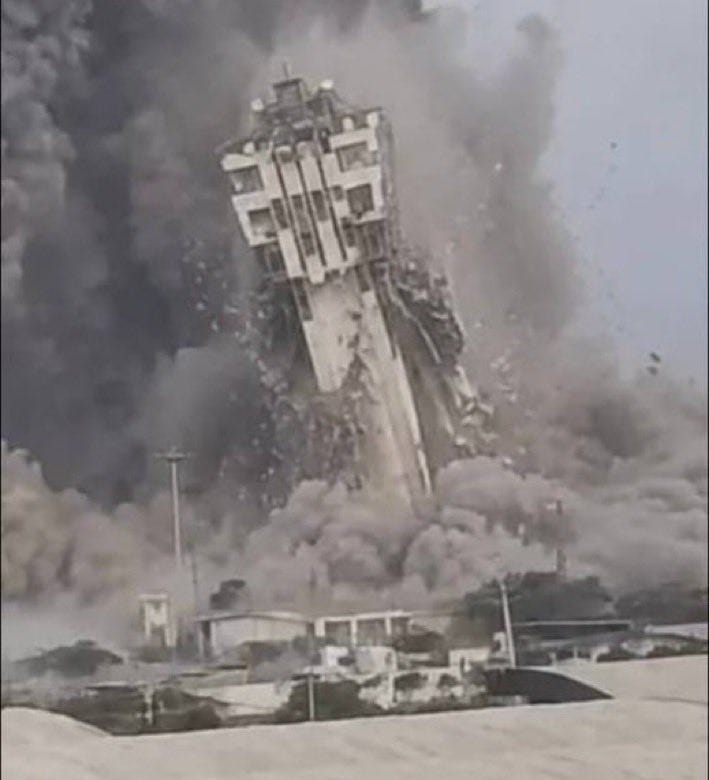
During the sixth consecutive night of American attacks, U.S. forces expanded their target set to include bridges, an airport, railway infrastructure, port facilities, communications systems, coastal positions and other logistical nodes in southern Iran. U.S. Central Command said it had targeted military logistics infrastructure, while Iranian media reported attacks around Bandar Abbas, Bandar Khamir, Qeshm Island, Iranshahr and Chabahar. Bridges connecting Bandar Abbas with the rest of the country were struck, as was a railway station and infrastructure at Iranshahr airport. The maritime tower at the port of Chabahar was also destroyed, with Secretary of Defense Pete Hegseth posting a photo of the destruction of the tower. Electricity and transportation services have been impacted in parts of southern Iran.
These attacks caused significant human casualties. Iranian accounts reported at least eight people killed and approximately 20 injured in the latest attacks across southern Iran. Broader official Iranian figures cited in international reporting put the toll from the renewed U.S. campaign at at least 38 dead and more than 400 wounded. The dead included civilians, emergency workers and military personnel. In Bandar Khamir, strikes reportedly hit areas close to civilian transportation infrastructure. Earlier in the renewed campaign, a firefighter was killed following an attack on Iranshahr airport, while fishing piers, commercial facilities and boats were damaged in Sirik and Bandar Abbas.
The distinction between military and civilian infrastructure has become increasingly blurred. Bridges, ports, airports, railways, power networks and communications facilities sustain civilian life and economic activity, even if they at times are used for military purposes. Their destruction produces civilian casualties, isolates communities, interrupts emergency services, restricts food and fuel distribution, and leaves civilians without electricity during extreme summer heat. As the campaign expands, the humanitarian consequences are therefore likely to grow even if Washington continues to classify the targets as militarily relevant.
Iran responded to the American strikes with missiles and drones directed at U.S. military sites and facilities in Bahrain, Kuwait, Oman and Qatar. Explosions were reported in Doha, where a child was injured, while Kuwait said Iranian attacks damaged a desalination facility. Tehran claimed that it had struck American military assets and air-defense systems, although several of its claims, including assertions that U.S. aircraft had been destroyed, remain unverified. Gulf governments reported intercepting incoming missiles and drones, but the attacks demonstrated that bases and infrastructure used to support the American campaign remain vulnerable.
The renewed exchange is occurring alongside an increasingly aggressive maritime confrontation. U.S. Marines boarded the tanker M/T Wen Yao in the Gulf of Oman as part of Washington’s renewed blockade of Iranian ports. U.S. forces also redirected several commercial vessels and reportedly disabled another tanker that attempted to challenge the blockade. Iran, meanwhile, has continued to threaten shipping in the Strait of Hormuz and insists that it will resist attempts to eliminate its control over the waterway. Commercial traffic through the strait has fallen sharply, insurance costs have risen, and oil prices have risen higher as the risk of a prolonged disruption increases.
The American target pattern indicates that Bandar Abbas has become a major focus of the campaign. The city is Iran’s largest commercial port, an important naval and Revolutionary Guard base, and the logistical center of Iranian operations around Hormuz. By striking bridges, railways, airports, radar systems, communications facilities and nearby islands, the United States is attempting to isolate this southern theater from the Iranian interior. The objective appears to be not merely the destruction of weapons but the weakening of the larger network that allows Iran to reinforce coastal units, reposition mobile missiles, coordinate naval operations and sustain the closure or disruption of the strait.
This strategy also may be aimed at preparing for an American invasion or incursion. An attempt to exert control and occupy the entire southern coast is likely beyond American operational readiness, requiring vast numbers of troops, extensive regional staging areas and a commitment to occupy a large and hostile country. As a result, limited territorial operations are more plausible, even though they would likely entail heavy casualties and ultimately prove unsustainable. U.S. Marines or special forces could attempt to seize or temporarily neutralize Iranian positions on Qeshm, Abu Musa, Greater Tunb or Lesser Tunb, conduct raids against missile and radar facilities, and seek to establish protected maritime corridors. Attacks on bridges and transport routes would slow Iranian reinforcements and make such operations easier to sustain.
The more ambitious future scenario is not a conventional invasion resembling Iraq in 2003, but a distributed war combining American airpower, naval forces and special operations with pressure from regional states and armed groups along Iran’s periphery. In Sistan and Baluchestan, local militants could intensify attacks while external actors supplied intelligence or logistical assistance. Kurdish opposition organizations could increase cross-border operations in western Iran. Arab armed networks or sabotage teams could target pipelines, ports and energy facilities in Khuzestan. Gulf countries could supply bases, intelligence, air defense, maritime patrols and financing without committing large armies inside Iran.
Pakistan would be particularly important in relation to the southeastern border and the defense of Saudi Arabia, but direct Pakistani participation in an invasion remains unlikely. Islamabad is concerned about being drawn into the conflict and must consider its own Baluch insurgency, domestic sectarian tensions, economic vulnerability and relations with China. Pakistan is more likely to reinforce Saudi defenses, secure its border with Iran, control armed movements through Pakistani Baluchestan and share intelligence than to open a direct ground front.
Iran’s strategy seeks to prevent the United States from limiting the war to Iranian territory while raising the costs on Washington. Mehdi Mohammadi, an adviser to parliament speaker Mohammad Bagher Ghalibaf, has described the present phase as preparatory and has argued that Iran must transfer the costs of war to the economic and political rear of the U.S.-led coalition. His remarks should not be treated as confirmation of an approved operational plan, but they provide a coherent explanation of one strand of Iranian strategic thinking.
In this framework, Iran cannot defeat the United States by matching its aircraft, naval forces or surveillance capabilities. It must instead threaten the systems that sustain American and regional power: the Strait of Hormuz, Bab al-Mandeb, the Red Sea, Gulf energy terminals, alternative oil pipelines, ports, airports, desalination facilities, insurance markets and global fuel prices. Reporting that Tehran instructed the Houthis to prepare to close Bab al-Mandeb if the United States attacked Iran’s electricity network lends credibility to the possibility of a coordinated two-strait strategy.
A simultaneous crisis in Hormuz and Bab al-Mandeb could force commercial shipping to avoid both the Persian Gulf and the Red Sea–Suez route. Ships might be redirected around the Cape of Good Hope, increasing transportation time, fuel use, freight charges and insurance premiums. Iran and its allies would not need to impose a complete physical closure. Repeated drone or missile attacks and the credible threat of mines might be enough to convince shipping companies that the routes were commercially unacceptable.
The most important uncertainty in American and regional calculations, however, is Iran’s capacity for endurance. During the earlier 39-day phase of the war, Iran absorbed tens of thousands of U.S. and Israeli attacks, the assassination of senior political and military figures, damage to military and civilian infrastructure, economic disruption, and substantial casualties without experiencing the rapid political or institutional collapse that some war planners apparently expected. Despite internal dissatisfaction and economic hardship, the state preserved command continuity, continued missile and drone operations, maintained control over the security apparatus and prevented significant military defections or a nationwide uprising.
The earlier campaign therefore demonstrated that Iran’s vulnerability to airpower does not automatically translate into political collapse. The country’s decentralized military structures, strategic depth, extensive security institutions, experience operating under sanctions and capacity to replace individual commanders allowed it to continue fighting. Public anger at the government coexisted with nationalism and opposition to foreign military intervention. External attacks may even have temporarily reduced internal political divisions by transforming the conflict into a perceived defense of the country.
This resilience could again disrupt American and regional expectations. A strategy built on the assumption that several weeks of infrastructure destruction, assassinations and economic pressure will produce regime collapse may underestimate the Iranian state’s ability to absorb punishment. Iran does not need to defeat the United States conventionally. It may only need to survive long enough for casualties, energy prices, shipping disruption, political opposition and divisions among Gulf governments to weaken the coalition, convincing President Trump to shift course again.
The existential nature of the conflict reinforces this endurance. For Washington, the war’s goals have shifted between nuclear disarmament, weakening Iran’s military, changing its regional behavior and restoring unrestricted passage through the Strait of Hormuz. These are serious objectives, but they are not existential for the United States, and there is an observable mismatch between means and ends. For Iran’s political and military leadership, however, the war is increasingly understood as a struggle for the survival of the state, the territorial integrity of the country and the continuation of the existing political order.
An actor fighting for limited strategic objectives may eventually decide that the costs are excessive. An actor that believes it is fighting for survival can more easily justify destruction, civilian suffering and economic deprivation. This asymmetry of commitment may be as important as the asymmetry in military power. The United States possesses overwhelming conventional superiority, but Iran may possess a greater willingness to absorb prolonged costs because defeat could mean the collapse of the state, foreign occupation, territorial fragmentation or the removal of the ruling system.
This does not mean that Iran is invulnerable. Continued attacks could seriously weaken its economy, military infrastructure and ability to govern. Civilian casualties and service failures could eventually produce anger that manifests in opposition to the government. Peripheral armed conflicts could exhaust security forces. Assassinations or defections could damage command cohesion. But these outcomes are not automatic, and the experience of the earlier 39-day phase of the war suggests that timelines based on rapid collapse should be treated with skepticism.
The likely future is therefore a contest between American escalation and Iranian endurance. Washington will continue attacking southern logistics, enforcing the maritime blockade and considering limited territorial operations. It may also support sabotage, assassinations and armed pressure in peripheral regions. Iran will continue striking regional bases, threatening Gulf infrastructure and attempting to globalize the conflict through the Strait of Hormuz and potentially Bab al-Mandeb.
The decisive question is not simply how many Iranian targets the United States can destroy. It is whether that destruction can produce political fragmentation before Iran’s retaliation generates intolerable regional and global consequences. If Iran again demonstrates the resilience it showed during the 39-day war, the United States and its partners may once again phase a situation where tactical military success has not produced strategic victory. The U.S. would then phase yet another fork in the escalation trap, where ever more radical military operations are contemplated and deescalation looks like a bitter pill after so many sunk costs.
Iran faces an equally severe dilemma. Its endurance may deny Washington a quick victory, but escalation against Gulf cities, commercial shipping and global energy routes could unify its adversaries and help justify a much broader campaign. The conflict is therefore moving toward a dangerous test of political will. American strategy depends on the belief that military and economic pressure will eventually break Iran. Iranian strategy depends on the belief that the country can survive longer than the opposing coalition can tolerate the war. The outcome may be determined less by battlefield superiority than by which side has misunderstood the other’s capacity and willingness to endure.