

Only weeks after the signing of the Islamabad Memorandum of Understanding, Iran and the United States have once again entered a cycle of direct military confrontation. What was presented as an end to the war now appears to have been little more than a temporary pause. Across the better part of a week, U.S. forces have carried out repeated waves of strikes against targets across southern Iran, while Iran has responded by attacking American bases and military facilities in Qatar, Kuwait, Bahrain, Oman, and Jordan. Commercial shipping has been hit, regional air defenses have been activated, and the Strait of Hormuz has once again become the central battlefield in the war.
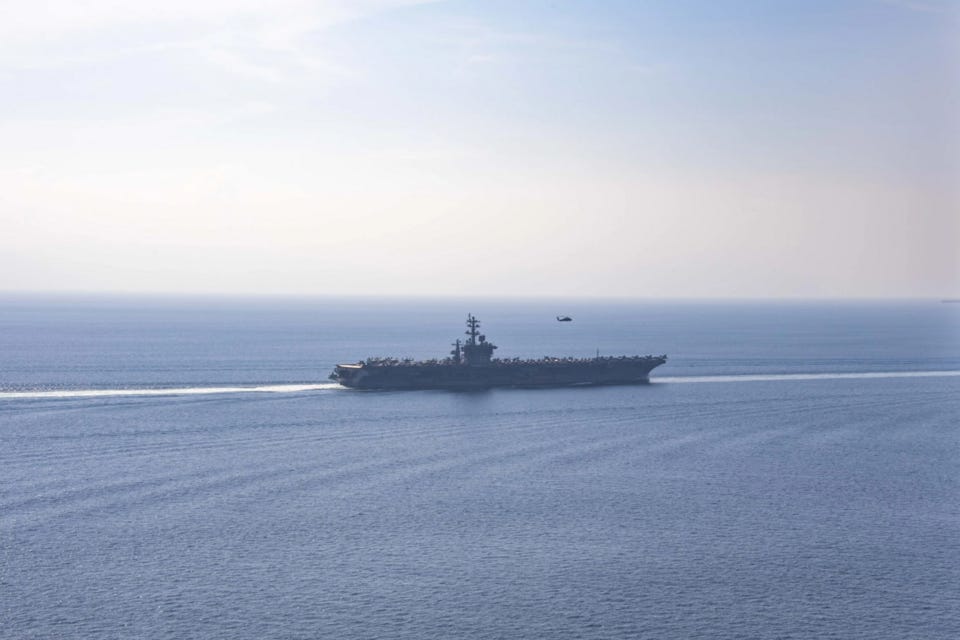
_in_the_Strait_of_Hormuz_26_November_2023.png)
The renewed war was not triggered by a single incident. It emerged from two unresolved crises that remained in place after the agreement: Lebanon and the Strait of Hormuz. At the same time, the domestic balance of power inside Iran appears to have shifted in favor of factions that opposed the agreement from the beginning and now argue that Washington and Israel used the ceasefire to consolidate military gains without fulfilling their own commitments.
On Lebanon, Israel attempted to use negotiations with the Lebanese government to avoid a full withdrawal from Lebanese territory as called for in the understanding with Iran and preserve its military freedom of action in the south. From Tehran’s perspective, Israel was trying to redefine the ceasefire so that it would stop large-scale fighting while allowing Israel to maintain occupied positions, conduct military operations, and impose new security arrangements on Lebanon.
This became a broader test of whether the United States and Israel intended to implement the agreement in good faith. Opponents of the deal inside Iran increasingly argued that Israel was using the ceasefire not to end the conflict, but to formalize the results of the war. If Israel could avoid withdrawal from Lebanon while continuing pressure on the Lebanese government, they argued, Washington might attempt to use the same strategy against Iran in the Strait of Hormuz.
The more immediate flashpoint for the breakdown of the ceasefire was the continuing struggle over control of the Strait of Hormuz. Iran interpreted the Islamabad agreement as recognizing a central Iranian role in restoring and managing commercial navigation through the strait. Washington, however, appears to have regarded the agreement as requiring Iran to guarantee unrestricted passage without imposing licensing requirements, fees, or Iranian control over shipping routes.
Oman has proposed reopening both the southern route through Omani waters and the northern route near Iran. Under the reported proposal, the southern route would operate without Iranian permission and largely according to the conditions that existed before the war. From the perspective of Oman and the United States, this arrangement would preserve freedom of navigation and prevent Iran from exercising unilateral control over the waterway.
From Iran’s perspective, however, the proposal amounted to the creation of a parallel route designed to bypass Iranian authority and reduce Tehran’s leverage over the strait. For the Iranian leadership, the ability to regulate or disrupt shipping in the Strait of Hormuz was a significant strategic gain to emerge from the war. If commercial vessels could pass through the southern route under U.S. protection and without following Iranian procedures, Iran’s claim to control the strait would be severely weakened.
In this contested environment, Iran’s reaction was therefore predictable. It attempted to block vessels that used what it described as an unauthorized route by issuing warnings, firing on or intercepting ships, and ultimately announcing the formal closure of the Strait of Hormuz.
Following the official closure announcement, commercial traffic through the strait reportedly fell to minimal levels. While the United States continues to insist that the waterway is legally and militarily open, shipping companies have little incentive to test whether passage is genuinely safe while missiles and drones are firing in the area. The practical question is therefore not only whether a route is technically open, but whether commercial operators, insurers, and crews are willing to use it.
In this sense, Iran has once again demonstrated that effective control does not necessarily require physically blocking every vessel. If the threat of attack is sufficient to deter normal commercial traffic, Tehran can impose a de facto closure even while U.S. forces declare that freedom of navigation remains guaranteed.
This has produced two directly contradictory claims. Iran says the strait is closed and that no ship can pass without complying with Iranian arrangements. U.S. Central Command says the strait remains open, that Iran does not control it, and that American forces are deployed to ensure lawful passage.
These claims cannot coexist indefinitely. Every commercial vessel that passes safely under U.S. protection strengthens Washington’s position. Every ship that turns back, is intercepted, or is attacked strengthens Iran’s claim that it controls the waterway. The strait has therefore become not merely a shipping route, but a daily test of military credibility and political authority.
Tensions in the Strait of Hormuz are the proximate cause of the collapse of the memorandum of understanding. President Donald Trump said Iran and the United States had been close to another agreement before Iran suddenly attacked another ship with a drone. While the claims should be taken with a grain of salt, President Trump asserted that Iranian negotiators had been prepared to make major concessions and that the attack came only hours later.
Iran presented a different account. The Islamic Revolutionary Guard Corps said the vessel that was fired upon had used an unauthorized route, ignored warnings and shut down its tracking systems. From Tehran’s perspective, the ship was not merely a civilian commercial vessel but part of a U.S.-backed attempt to establish a navigation route outside Iranian control.
The United States responded with a major new wave of strikes. U.S. Central Command has said approximately 140 military targets were struck in one round, and more than 300 targets had been attacked over three nights. The announced targets included missile and drone sites, coastal surveillance systems, ammunition storage facilities, communications networks, and Iranian naval capabilities. Sunday evening, CENTCOM announced that they had “began launching more strikes against Iran to continue degrading their ability to attack civilian mariners and commercial ships freely transiting the Strait of Hormuz. The Commander in Chief has directed the strikes to hold Iranian forces accountable.”
Strikes were reported across Bandar Abbas, Qeshm, Bandar Lengeh, Jask, Sirik, Chabahar, Konarak, Bushehr, Asaluyeh, Dayyer, Kangan, Khuzestan, Kerman, Lorestan, and other areas. Iranian officials reported casualties, including military personnel and civilian infrastructure workers.
Iran responded by expanding the battlefield across the region. The IRGC said it used Qadr, Emad, Kheibar Shekan, Fateh-110, and Zolfaghar ballistic missiles against U.S. targets in the Middle East. These missile types represent a mix of medium-range and short-range systems designed for attacks on fixed military infrastructure, air bases, command centers, radar installations, and logistics facilities.
The IRGC announced that it had targeted Al Udeid Air Base in Qatar, describing the strike as part of the second phase of its response. According to the IRGC statement, ballistic missiles struck the base’s aircraft maintenance facilities and command-and-control center. The IRGC also said that it had intercepted and stopped a second vessel in the Strait of Hormuz and warned, using the phrase “fight, and we will fight,” that continued U.S. attacks would produce stronger retaliation.
Iran also claimed that it struck Prince Hassan Air Base in Jordan with ballistic missiles. According to the IRGC, the attack targeted a command-and-control center and hangars used by MQ-9 drones. The Guard said the strike was part of the first stage of its retaliation against the latest American attacks.
There are also unconfirmed open-source claims that a U.S. Navy MQ-4C Triton strategic reconnaissance drone may have been destroyed at the Jordanian base. Some open-source intelligence analysts say the aircraft had previously been based at Al Dhafra Air Base in the United Arab Emirates but was transferred to Jordan because of the vulnerability of bases closer to Iran.
Satellite imagery reportedly shows damage to a drone maintenance hangar at Prince Hassan Air Base, while Sentinel-2 imagery from July 12 showed smoke still visible over the site. Analysts who track the aircraft’s movements say the MQ-4C had been flying almost daily until July 11. They argue that if it does not return to flight operations in the following days, this may indicate that it was damaged or destroyed. However, this remains speculative. While claims concerning the aircraft should be treated as unverified, the potential loss would be significant. The MQ-4C Triton is a long-endurance maritime surveillance aircraft used to monitor large maritime areas and support naval intelligence operations. Its reported value is approximately $240 million. If confirmed, its destruction would represent one of the most important Iranian strikes on a high-value U.S. intelligence asset during the conflict.
Iranian missiles also struck or landed near targets in Kuwait. Reports indicated that three Iranian ballistic missiles landed near Shuwaikh Port in Kuwait City. Kuwaiti authorities separately reported attacks on three facilities in northern Kuwait and a drone strike on an offshore oil installation belonging to the Kuwait Oil Company. Material damage and at least one injury were reported.
Iranian media said the intended targets included U.S. missile units or military positions in Kuwait. However, strikes near a major commercial port and damage to an oil facility increased the risk that the conflict would be viewed not only as an Iran-U.S. confrontation, but as a direct threat to the security and economic infrastructure of Gulf states.
Iran also announced attacks on U.S. radar systems, Patriot batteries, ammunition depots, logistical facilities, and command infrastructure in Bahrain and Oman. In Oman, the IRGC said it struck logistical support facilities for U.S. naval forces and aircraft-carrier refueling infrastructure at Duqm.
The attack on Oman was particularly consequential because Muscat had served as a principal mediator between Iran and the United States. Only hours before the strike, Iranian Foreign Minister Abbas Araghchi had been in Oman discussing navigation arrangements for the Strait of Hormuz. Oman condemned the attack, summoned the Iranian ambassador, and described the strikes as irresponsible violations of sovereignty and good-neighborly relations. Qatar, Kuwait, Bahrain, Jordan, and other regional governments also condemned Iranian attacks or activated air-defense measures in response to Iranian missiles and drones.
Iran’s strategy appears to be based on the argument that regional states cannot provide bases, ports, radar coverage, logistical support, or transit routes to the United States while remaining insulated from the consequences of war. By expanding its retaliation across multiple states, Tehran is attempting to raise the regional cost of U.S. military operations. But this strategy carries a major political risk. Countries such as Oman and Qatar had previously worked to preserve the ceasefire and maintain diplomatic channels. By striking their territory, Iran risks transforming mediators into adversaries and creating a stronger regional coalition in support of U.S. military action.
The absence of Saudi Arabia from Iran’s publicly announced list of targets is also notable. Iran attacked or claimed to have attacked targets in Qatar, Kuwait, Bahrain, Oman, Jordan, and areas connected to the United Arab Emirates, but it did not directly target Saudi Arabia. This may indicate that Tehran is deliberately preserving a political channel with Riyadh or attempting to prevent Saudi Arabia from joining the conflict more directly. Iran may also be distinguishing between countries it believes are actively supporting U.S. operations and those that have remained more cautious.
However, this distinction may not survive a prolonged war. If Saudi Arabia becomes more closely involved in U.S. military operations, maritime security, or regional air defense, pressure inside Iran to broaden the target list could increase.
The return to war also reflects an apparent change in the internal balance of power in Tehran. After the agreement, President Masoud Pezeshkian, Foreign Minister Abbas Araghchi, and Parliament Speaker Mohammad Bagher Ghalibaf defended negotiations as a necessary way to end the war and reduce economic pressure.
Following the funeral of Ali Khamenei, however, opponents of the agreement appear to have gained greater influence. Calls for revenge at the funeral; slogans against Pezeshkian, Ghalibaf, and Araghchi; and increasingly hostile criticism on state television suggest that sections of the political and security establishment now view the agreement as an unacceptable concession.
The written message attributed to Mojtaba Khamenei, Iran’s new leader, further intensified this atmosphere. In the message, he pledged that revenge for his father and others killed during the war would “certainly” be carried out. He also warned that those responsible should not expect to die peacefully. This rhetoric is important because it suggests that revenge may now be developing into a central source of political legitimacy for the new leadership. If so, restraint and compromise with the United States could become increasingly difficult to defend inside the Iranian system.
The attacks in the Strait of Hormuz may therefore serve a domestic as well as a strategic function. They allow the new leadership to demonstrate that it has not surrendered, that it will not abandon Iran’s main source of leverage, and that it is willing to impose costs on the United States.
Ghalibaf’s rhetoric has also become notably harder. He has said that the era of one-sided agreements is over, that the United States must pay a price for failing to honor its commitments, and that only those prepared for war are capable of negotiating with Washington. This shift may represent an effort by Ghalibaf to protect himself from criticism over his role in the negotiations. By emphasizing military readiness, he can argue that dialogue was never intended to replace deterrence and that responsibility for the collapse of the agreement lies with the United States.
Araghchi, by contrast, continues to emphasize mutual compliance with the Islamabad memorandum. He has accused Washington of violating the deal through new sanctions and other measures, while arguing that the only viable path remains reciprocal implementation. The difference between these positions may reflect a deeper struggle inside Tehran between officials seeking to salvage the agreement and factions that believe the diplomatic phase has ended.
New U.S. sanctions have strengthened the position of the agreement’s opponents. Washington imposed measures against individuals, exchange houses, and companies accused of financing the IRGC, evading sanctions, and transferring assets for senior Iranian officials. The United States portrayed the sanctions as a response to renewed Iranian attacks on international shipping. Tehran, however, said the sanctions violated U.S. commitments under the memorandum and demonstrated that Washington had no intention of providing meaningful economic relief.
This reinforces the argument made by hardliners: Iran provided immediate concessions, while U.S. promises remained vague, delayed, or reversible. Under this interpretation, the closure of the strait is an attempt to restore leverage that Iran surrendered during the negotiations. Iran’s current strategy appears to be based on a calculated gamble. Tehran may believe that Trump does not want a prolonged regional war, that disruption in the Strait of Hormuz will drive up energy prices, and that pressure on Gulf governments and U.S. military bases will eventually force Washington to moderate its position.
Under this calculation, Iran must demonstrate that the United States cannot simultaneously benefit from the ceasefire, impose new sanctions, establish a shipping route outside Iranian control, and attack Iranian military positions without facing substantial costs. Tehran may expect that a controlled escalation will force the United States back into talks through Qatar, Oman, or Pakistan, potentially producing concessions on sanctions relief or recognition of Iran’s role in the strait. But the gamble could fail. Trump may interpret attacks on commercial vessels, regional bases, and allied states not as bargaining pressure but as a direct challenge to U.S. military credibility. In that case, Washington may expand rather than limit its attacks.
What may come next is extremely difficult to foretell, but the continued evisceration of diplomatic agreements will make any attempt to restore peace extremely difficult. Iran, fresh off new U.S. attacks amid the late Supreme Leader’s funeral ceremonies, will view any U.S. pivot back to diplomacy with even deeper distrust. U.S. hawks will likewise paint Iran’s actions as the predictable irrationality of radicals, even if U.S. actions have helped trigger Iranian retaliation every step of the way.
While the Islamabad agreement may still be salvageable, another declaration of ceasefire is unlikely to be enough. Any durable settlement will have to address the issues that were postponed the first time: Israel’s obligations in Lebanon, the management of the Strait of Hormuz, sanctions relief, freedom of navigation, the role of coastal states, and the use of regional bases by the United States. Without agreements on these underlying disputes, any future ceasefire will remain only a temporary pause before the next round of war.
Strikes have been reported in Bandar Abbas, Qeshm, Bandar Lengeh, Jask, Sirik, Chabahar, Konarak, Bushehr, Asaluyeh, Dayyer, Kangan, Khuzestan, Kerman, and Lorestan. These places are not the centers of Iran's political power. Lurs, Arabs, and the Sunni population of Qeshm do not control the Iranian government. Iran is governed by the theocratic leadership in Tehran and the religious establishment in Qom.
Why, in heaven's name, is President Trump attacking poor, defenseless Iranians living in remote parts of the country? How many innocent camels have been killed on the island of Qeshm? This is ridiculous.
We need a ceasefire now. President Trump should sit down with the Iranian government and negotiate peace. The world benefits from Iranian oil and natural gas being available on the global market. Attacking Iran is not the solution. America should move forward with diplomacy and peace.
We make peace with our adversaries; there is no need to make peace with our friends. It is time for the United States to disengage from this conflict in the Middle East. Iran is not America's war to fight.
Prime Minister Netanyahu is leading Israel down the wrong path. Leave Iran and the Strait of Hormuz. Peace is a better alternative than continued war.
Gasoline should cost 99 cents a gallon, taxes included. Filling a tank should cost about $12 anywhere in the United States.
John 3:16.
Jesus was from Bethlehem, in the region historically known as Palestine.