

The aftermath of the 2026 war has pushed Iran into one of the most fragile social and economic moments in its contemporary history. While international attention has largely focused on military escalation, sanctions, nuclear diplomacy, and regional confrontation, a quieter crisis is unfolding inside Iranian society itself: the weakening of the country’s already fragile civil society and nongovernmental organizations (NGOs).
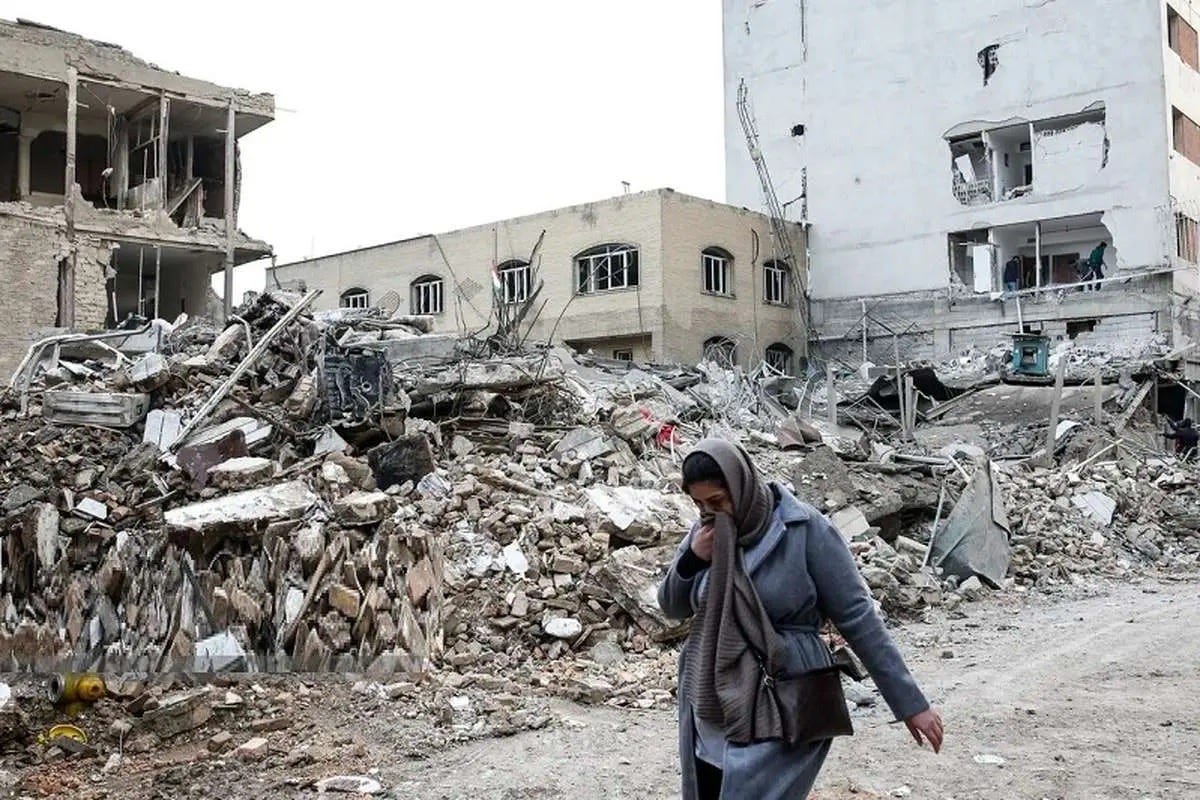
Iran entered 2026 already weakened by years of crippling sanctions, severe currency devaluation, inflation, and chronic economic mismanagement. The war dramatically accelerated these existing pressures. Inflation has surged, the rial has sharply depreciated, unemployment and layoffs have spread across multiple sectors, and millions of Iranians now struggle to afford basic necessities. International reporting indicates that food prices have risen dramatically, businesses are failing, and large parts of the middle class are being pushed toward poverty.
Yet the deepest damage may not be purely economic. Across Iranian society, a growing sense of paralysis and suspension has emerged. Families, businesses, institutions, and social actors increasingly operate in a state of uncertainty, unable to predict whether conditions will stabilize, deteriorate further, or descend once again into total war. This atmosphere has weakened long-term planning and disrupted many forms of organized social activity.
In this environment, NGOs and civil society organizations have become more important - not less. Over the past decade, despite heavy political pressure, sanctions, internet restrictions, economic instability, and institutional distrust, Iran’s nonprofit and civic sector gradually evolved into one of the few remaining spaces capable of building social trust, professional cooperation, and organized collective action.
Many organizations significantly improved their governance structures, expertise, nationwide networks, and operational capacity. They became increasingly active in areas such as child welfare, disability support, women’s empowerment, education, poverty alleviation, mental health services, environmental protection, addiction recovery, and humanitarian relief. These organizations frequently filled gaps left by both the state and the private sector. During earthquakes, floods, economic crises, and other humanitarian emergencies, civil society networks often played a crucial role in mobilizing aid, identifying vulnerable populations, and maintaining local trust.
The current war and economic crisis, however, threaten to reverse years of slow institutional development. The pressure is now coming from multiple directions simultaneously. Economic collapse has weakened traditional donation networks and sharply reduced the ability of ordinary citizens to financially support nonprofit organizations. Inflation and currency devaluation have dramatically increased operational costs. At the same time, wartime conditions and internet disruptions have damaged the communication systems many organizations depend on for fundraising, coordination, volunteer mobilization, and public outreach.
Studies examining Iran’s 2026 internet shutdowns describe one of the most extensive and centralized censorship systems ever implemented in the country. For NGOs that rely heavily on digital communication, these disruptions have become existential challenges.
International sanctions add another layer of difficulty. Humanitarian and charitable work involving Iran faces major banking and legal barriers, making international support extraordinarily difficult to transfer or coordinate. Even organizations legally permitted to conduct humanitarian activities often struggle with sanctions compliance rules, banking restrictions, insurance complications, and logistical obstacles.
Meanwhile, the state’s priorities during and after the war have increasingly shifted toward security management, emergency response, and macroeconomic survival. Although state-affiliated institutions such as the Iranian Red Crescent, municipalities, and large quasi-governmental foundations have carried out substantial relief operations, independent NGOs often remain politically marginalized and structurally vulnerable.
The danger, however, is not only organizational collapse. The greater risk is the erosion of Iran’s remaining social infrastructure. Civil society organizations are not merely charity providers. They are institutions that generate social trust, cooperation, professional expertise, and networks of human connection inside an increasingly polarized and strained society. In countries experiencing deep political division, economic deterioration, and declining institutional legitimacy, NGOs often become one of the last remaining spaces where individuals with different social and political views can still cooperate around shared human concerns.
This is particularly important in Iran today, where political polarization, social fragmentation, distrust, and institutional fatigue have intensified over recent years. Many traditional mediating institutions - including political parties, labor organizations, and independent professional associations - have either weakened significantly or lost public credibility. In this context, civil society organizations increasingly function as one of the few remaining forms of organized social participation.
Their loss would carry consequences far beyond humanitarian assistance. A major collapse of the NGO sector could accelerate the departure of skilled social workers, researchers, educators, organizers, therapists, and community professionals who have spent years building institutional knowledge under extraordinarily difficult conditions. Many of these individuals remain in the civic sphere despite earning far less than they could in the private sector because of a continued commitment to social causes and public service.
If these organizations fail financially, much of this human capital may permanently disappear from civic life. Rebuilding such institutions later would be extremely difficult. Social trust and civic capacity cannot be recreated quickly after collapse. They require years of accumulated relationships, organizational learning, operational experience, and public legitimacy. Once destroyed, rebuilding them becomes exponentially harder and more expensive.
What is at risk is part of Iran’s remaining social resilience. At a time when war, sanctions, inflation, displacement, internet censorship, and political repression are simultaneously placing enormous pressure on society, the survival of independent civic institutions may represent one of the few remaining buffers against deeper social fragmentation.
Humanitarian crises do not only destroy infrastructure and economies. They also erode the social bonds that allow societies to endure prolonged instability. In contemporary Iran, NGOs and civil society organizations increasingly function as part of that essential social glue. Their survival may ultimately prove critical not only for humanitarian relief, but for preserving the possibility of social cooperation, public trust, and peaceful coexistence in one of the most strained periods of Iran’s modern history.