

The controversy surrounding remarks by Iranian parliamentarian Mahmoud Nabavian on state television has become one of the clearest signs yet of the growing resistance to the Iran–U.S. memorandum of understanding from hardline factions within the Islamic Republic. Nabavian, the deputy chairman of Parliament’s National Security and Foreign Policy Committee and a leading figure in the Paydari Front, appeared on a live broadcast on state television and read portions of what he claimed were confidential communications from Supreme Leader Mojtaba Khamenei regarding negotiations with the United States. According to Nabavian, Khamenei had repeatedly expressed dissatisfaction with the direction of the talks and had imposed multiple conditions on negotiators, including preserving Iran’s enrichment rights, obtaining compensation from the United States, lifting sanctions, securing access to frozen Iranian assets, and maintaining full sovereignty over the Strait of Hormuz.
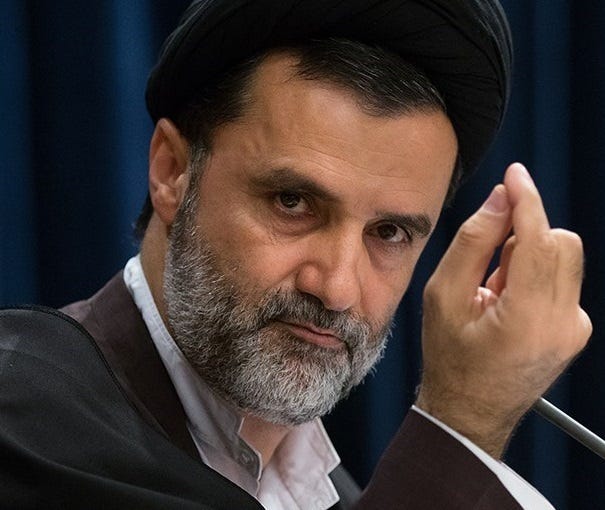

Nabavian further claimed that Khamenei had opposed negotiations on Iran’s nuclear program unless Iran’s enrichment rights were explicitly recognized and had warned that the negotiations taking place in Pakistan had deviated significantly from the conditions that originally justified them. He argued that the memorandum ultimately differed from what the leadership had envisioned and suggested that Khamenei had serious reservations about both the process and the outcome.
The reaction was immediate and extraordinary. State television abruptly cut the live broadcast before Nabavian finished his remarks. Hours later, IRIB issued a statement describing his comments as an improper disclosure of classified materials and warned that the matter could be subject to legal prosecution. The broadcaster subsequently accepted the resignation of a senior network manager and announced disciplinary measures against those responsible for the program.
The severity of the response was striking. Iranian state television has often served as a platform for critics of negotiations with the United States, including many figures associated with the Paydari Front. Nabavian himself had repeatedly appeared on television in recent months criticizing the negotiations and portraying the memorandum as a step toward turning Iran into an American “colony.” The decision to interrupt the program and publicly threaten legal action suggests that authorities viewed his comments as crossing a political red line.
The backlash extended well beyond state television. Saeed Ajorlou, a member of the negotiating team’s media apparatus and a close ally of Parliament Speaker Mohammad Bagher Ghalibaf, accused Nabavian of deliberately distorting confidential texts. Other political figures criticized him for selectively presenting excerpts from a much larger body of correspondence. Journalist Sadegh Hosseini called for greater accountability over repeated leaks of sensitive information, while former presidential adviser Hesameddin Ashena argued that if the documents were genuinely classified at the highest level, the law clearly defined the consequences of unauthorized disclosure. Even some conservative figures criticized Nabavian, arguing that his partial disclosures undermined institutional order and were designed to defend previous claims that the agreement amounted to Iranian surrender.
Yet the significance of the episode extends beyond questions of classified information. At its core, the controversy reflects an emerging struggle over how the public should understand the Iran–U.S. agreement and the role of the country’s leadership in approving it.
In a written statement attributed to Mojtaba Khamenei following the announcement of the memorandum, the Supreme Leader stated that he had “another opinion” regarding the agreement but ultimately permitted it to move forward after President Masoud Pezeshkian accepted responsibility for implementing it. Many observers interpreted the statement as an effort to create some political distance between the leadership and the agreement while preserving institutional unity and allowing diplomacy to proceed.
Nabavian’s intervention appeared designed to push that interpretation much further. By selectively quoting what he described as confidential communications, he sought to portray Khamenei not merely as cautious about the agreement but as fundamentally dissatisfied with many of its core elements. In effect, Nabavian attempted to strengthen the narrative advanced by hardline opponents that the memorandum represented a deviation from the leadership’s preferred strategy and was being pursued despite significant reservations at the highest levels.
By contrast, President Masoud Pezeshkian has offered a very different account of how the agreement was reached. Speaking at a national governance conference following the announcement of the memorandum, Pezeshkian described the agreement as the product of months of negotiations, consultations, and institutional review. He argued that if fully implemented, the memorandum could become a historic achievement for Iran, help resolve many of the country’s challenges, and create a new political and economic reality for both Iran and the broader Middle East.
Most significantly, Pezeshkian disclosed that more than 90 percent of participants in the Supreme National Security Council supported the agreement. According to the president, after extensive discussions, all members ultimately voted in favor of moving forward, although some limited disagreements remained. While he did not identify dissenting figures, his remarks offered one of the clearest indications yet that the agreement enjoys overwhelming support among Iran’s senior national security leadership.
Pezeshkian also emphasized the roles played by Parliament Speaker Mohammad Bagher Ghalibaf, Foreign Minister Abbas Araghchi, the negotiating team, and the Supreme National Security Council. He praised the cooperation among the executive, legislative, judicial, and military institutions and argued that this unity had strengthened Iran’s position. Perhaps most importantly, Pezeshkian explicitly credited Mojtaba Khamenei for making the agreement possible. He stated that negotiators would not retreat from the framework established by the Supreme Leader and argued that the authorities and guidance provided by him were indispensable to achieving the breakthrough. According to Pezeshkian, without the Supreme Leader’s support and guidance, the agreement would not have been possible.
These remarks stand in sharp contrast to the narrative advanced by Nabavian and other hardline opponents of the memorandum. Whereas Nabavian sought to portray the leadership as deeply dissatisfied with the negotiations, Pezeshkian presented the process as one that received overwhelming support from the country’s most important decision-making institutions and ultimately from the Supreme Leader himself.
The broader political context is equally important. Since the announcement of the memorandum, figures associated with the Paydari Front and other ideological factions have mounted a sustained campaign against the agreement. Nabavian has been among the most vocal critics, describing the memorandum as a path toward Iranian dependence on the United States and warning that it compromises national sovereignty. His opposition is consistent with a long record of resistance to engagement with Washington, opposition to Financial Action Task Force (FATF)-recommended reforms, and support for confrontational regional policies.
The controversy also highlights the increasingly isolated position of the agreement’s most vocal opponents. Despite significant criticism from hardline networks, the political system moved swiftly against Nabavian following his televised remarks. State television interrupted the broadcast, accepted a senior resignation, threatened legal action, and publicly distanced itself from his claims. Such a coordinated response suggests that key institutions are seeking to protect the agreement from internal sabotage and prevent disputes over the leadership’s position from undermining its implementation.
Viewed in this broader context, the Nabavian affair reveals that the primary political struggle is no longer over whether the Iran–U.S. memorandum should exist. The agreement has already secured support from President Pezeshkian, Foreign Minister Araghchi, Parliament Speaker Ghalibaf, the Supreme National Security Council, and ultimately the Supreme Leader. Instead, the emerging battle is over how the agreement will be interpreted, who will claim ownership of it, and who will bear responsibility if it succeeds or fails.
The episode therefore represents one of the clearest indications yet that a relatively small but highly organized hardline faction continues to resist the agreement and is attempting to frame it as a departure from the leadership’s preferred course. At the same time, the reaction from state institutions suggests that the Iranian establishment has largely coalesced around the memorandum and is determined to prevent opponents from using the authority of the Supreme Leader to undermine a diplomatic initiative that now appears central to the state’s post-war strategy.