

The Iranian judiciary has issued revised verdicts in the high-profile “Ekbatan Town” case, replacing earlier death sentences against several defendants with prison terms and financial penalties after years of legal disputes, forensic reviews, appeals, and political controversy. The case, connected to the death of Basij member and seminary student Arman Aliverdi during the 2022 nationwide protests, became one of the most closely watched judicial files linked to the “Woman, Life, Freedom” movement and Iran’s broader post-protest crackdown.
.jpg)
On May 20, 2026, Iranian courts issued the revised rulings in the case. Under the new verdicts, Milad Armoun, Alireza Kafaei, and Amir Mohammad Khosh-Eghbal were sentenced to five years in prison and payment of diyah (blood money) in connection with the killing of Arman Aliverdi. Meanwhile, Hossein Nemati, Navid Najaran, and Alireza Bormarz Pournak were acquitted of participation in intentional murder due to insufficient evidence, although Nemati was separately ordered to pay compensation for non-fatal injuries.
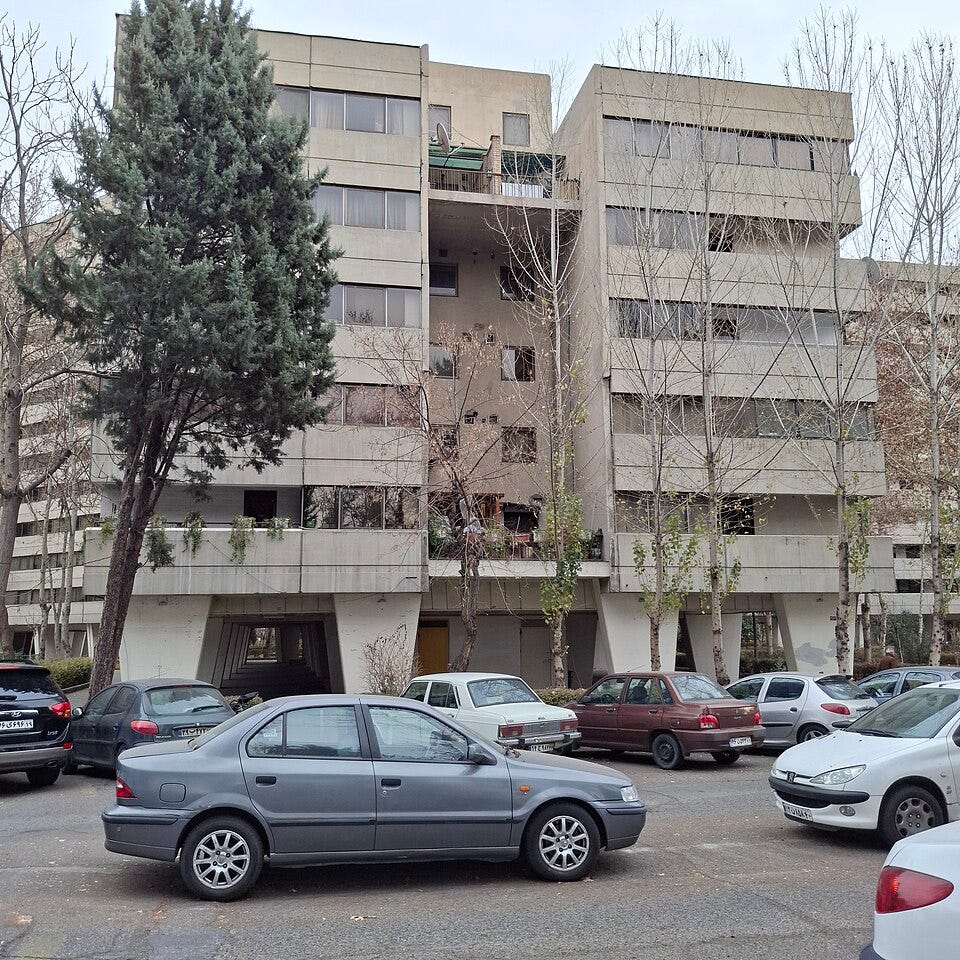
According to Iranian judicial authorities, Arman Aliverdi, a 21-year-old Basij-affiliated seminary student and youth mentor, was attacked during unrest in Tehran’s Ekbatan Town on November 4, 2022. He suffered severe injuries and died in a hospital two days later. Iranian state institutions described his death as a “martyrdom” and quickly opened a major judicial investigation into the events surrounding the incident.
The unrest took place during the nationwide protests that erupted after the killing of Mahsa Amini while in morality police custody in September 2022. Ekbatan Town in western Tehran became one of the most visible protest centers during that period, with repeated nightly demonstrations and anti-government slogans.
Iranian authorities stated that the investigation into Aliverdi’s death became highly complex because of the chaotic field conditions, delays in identifying suspects, and conflicting evidence. Because the case involved allegations of intentional murder, two parallel judicial tracks were opened: one before Tehran Criminal Court One dealing with homicide charges, and another before the Revolutionary Court concerning security-related accusations.
In February 2023, Tehran Prosecutor Ali Salehi announced that indictments had been issued and sent to the criminal court after extensive investigations. The initial proceedings later resulted in death sentences for six defendants: Milad Armoun, Alireza Kafaei, Amir Mohammad Khosh-Eghbal, Navid Najaran, Hossein Nemati, and Alireza Bormarz Pournak.
The original death sentences triggered widespread concern among activists, lawyers, and human rights organizations, especially because several executions linked to the 2022 protests had already been carried out in Iran. Support campaigns under the hashtag “Ekbatan Boys” emerged on social media, and demonstrations opposing the executions were organized in European cities including Hamburg, Gothenburg, and Brussels under the slogan “No to Execution.”
The case became especially controversial because of allegations of contradictions in the official narrative and reports of coerced confessions. According to portions of the original 30-page court ruling cited by Persian-language media, several defendants stated that Aliverdi had entered Ekbatan carrying a baton and stun gun while allegedly attempting to identify protesters. Some defendants claimed protesters removed those items from his backpack after the confrontation began. These accounts contradicted earlier narratives from Iranian state-linked media, which had insisted that Aliverdi was unarmed and carrying only religious study books.
Additional controversy emerged over the forensic evidence itself. According to the Legal Medicine Organization, the official cause of death was massive cerebral hemorrhaging and brain trauma caused by blunt-force injuries to the skull. However, judicial authorities later acknowledged that investigators and forensic experts could not conclusively determine which specific blow caused the fatal injury or who delivered it.
Iran’s judiciary later stated that forensic reviews concluded there was insufficient evidence proving that the defendants delivered the fatal head strike that caused Aliverdi’s death. The court argued that although there was little doubt some defendants participated in non-fatal assaults and injuries, their involvement in the fatal blow itself could not be proven beyond doubt.
Reports also suggested that video footage from the incident showed another unidentified individual striking Aliverdi in the head with a stone. According to sources cited by Persian-language media, that individual was never arrested, and even Aliverdi’s father reportedly believed the actual killer had fled Iran.
At the same time, human rights groups and defense lawyers raised allegations of torture and forced confessions during interrogations. According to reports cited by Persian-language media, one defendant allegedly stated he falsely confessed after severe beatings in detention.
The case also drew attention because Iranian state television aired televised interrogations of defendants before trial. In one broadcast, then-Tehran police chief Hossein Rahimi publicly accused defendant Milad Armoun of being one of the “main attackers” despite the defendant repeatedly denying carrying a knife or participating in the killing. Critics argued that such televised interrogations undermined the presumption of innocence and reflected political pressure surrounding the case.
According to Iran’s judiciary spokesperson, the Supreme Court overturned the original rulings in October 2025 and returned the case for further review and correction of evidentiary deficiencies. The retrial included renewed forensic examination, medical analysis, review of video evidence, and additional witness testimony intended to determine which actions directly caused Aliverdi’s death.
The revised rulings issued on May 20, 2026, significantly reduced the legal severity of the case compared to the original death sentences and have drawn major attention both inside and outside Iran. For critics of the government, the case symbolizes broader concerns regarding politicized prosecutions, coerced confessions, and the use of capital punishment in protest-related cases. For Iranian authorities and supporters of the judiciary’s approach, the case represents an attempt to prosecute violence committed during the unrest while adhering to evidentiary and forensic standards.
Despite the revised verdicts, the case is not fully closed. Iran’s judiciary has stated that the ruling remains subject to further appeal before the Supreme Court, while separate proceedings connected to the Ekbatan case continue before the Revolutionary Court.