

Provocative strikes by Israel in the southern suburbs of Beirut has triggered retaliatory Iranian missile strikes on northern Israel, raising fears that the U.S.-Iran ceasefire will break after being strained repeatedly. Israel has vowed a military response, which President Trump was quick to warn against, noting that the U.S. and Iran are close to producing a final agreement.
.jpg)
The immediate trigger was Israel’s attack on the Dahiyeh area of southern Beirut, a Hezbollah stronghold. Iranian officials had previously warned that an expansion of Israeli attacks into Beirut would cross a red line. Shortly after Israel’s attack, Iran launched waves of ballistic missiles toward northern Israel, which was a nightly occurrence for Israel little less than two months ago. Israel’s military said its air defenses intercepted all incoming missiles, though videos circulating on social media that have not been independently verified appeared to show possible impacts.
The escalation quickly produced regional consequences. Iraq announced that it was closing its airspace for 72 hours, reflecting heightened concern that Iraqi skies could again become a corridor for missiles, drones, or military aircraft. During the earlier 40-day war between the U.S.–Israel coalition and Iran, Iraqi airspace was repeatedly affected by missile routes and regional military activity.
Iran framed its missile strike as a warning rather than the opening phase of a broader campaign. The IRGC and Iran’s Khatam al-Anbiya command warned that if Israel expands attacks on Beirut or responds militarily to Iran’s strike, Tehran’s next response would be more severe and could include U.S.–Israeli targets across the region. Iranian officials also accused Israel of repeatedly violating the ceasefire in Lebanon and alleged that Israel used prohibited weapons, including white phosphorus, in its attacks.
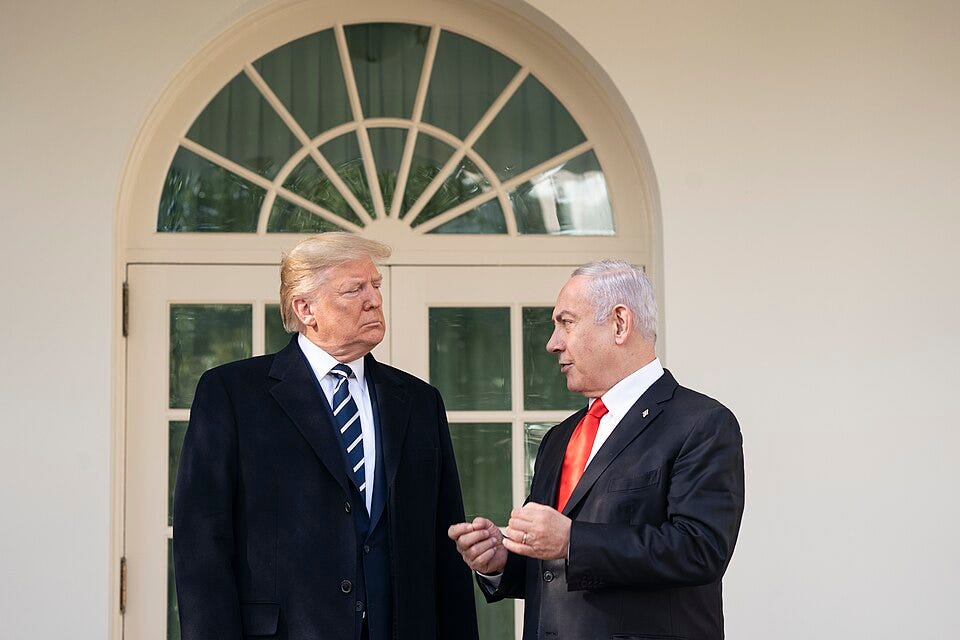
The United States has tried to move quickly to prevent a broader spiral. President Trump told Axios that he planned to call Israeli Prime Minister Benjamin Netanyahu and urge him not to retaliate. According to the report, Trump said both sides had “done their part” and that no further strike was needed. He also said the U.S. was “very close” to a final agreement with Iran and did not want the latest exchange to derail negotiations. In a separate message relayed through Fox News, Trump addressed Iran directly: “You have fired your missiles. That is enough. Return to the negotiating table and make a deal.”
The debate over how Israel should respond has also exposed divisions between the Israeli leadership and President Trump. Following Iran’s missile attack, Israeli National Security Minister Itamar Ben-Gvir, a prominent far-right member of Prime Minister Benjamin Netanyahu’s coalition, publicly called for a harsh response. In a brief post on X, Ben-Gvir wrote: “Tonight, Tehran must burn.”
His remarks came shortly after Iran launched missiles toward northern Israel in response to Israeli strikes on Beirut’s southern suburbs. Although the Israeli military said the missiles were intercepted and no immediate casualties were reported, Ben-Gvir’s statement reflected pressure from hardline factions within Israel for a broader military response.
Ben-Gvir has been among the most vocal critics of ceasefire arrangements involving Israel and its regional adversaries. His latest statement highlights the competing pressures facing the Israeli government as it weighs whether to pursue additional military escalation or avoid a confrontation that could trigger a wider regional conflict.
Consequential diplomatic efforts are also continuing in parallel. Iranian Foreign Minister Abbas Araghchi spoke with Turkish Foreign Minister Hakan Fidan, while Pakistan’s Interior Minister traveled to Tehran as part of continued mediation efforts. Turkey and Pakistan are among the regional actors seeking to prevent a wider conflict, though their influence will depend on whether Israel refrains from further strikes and whether Iran limits its response.
The risk of an escalation spiral remains significant for several reasons. First, Iran has publicly tied its response not only to attacks on Iranian territory, but also to Israeli actions in Lebanon, expanding the trigger zone for a wider conflict. Second, U.S. assets in the region have again been placed rhetorically within Iran’s target set, increasing the possibility that a local Israeli–Iranian exchange could evolve into a direct U.S.–Iran confrontation. Third, Iraq’s airspace closure underscores how quickly neighboring states can be drawn into the operational geography of the conflict.
The renewed confrontation also raises broader questions about the durability of the ceasefire that paused the most intense phase of the war. Iranian officials argue that Israel has repeatedly violated the ceasefire through continued military operations in Lebanon, while Israeli officials maintain that such actions are necessary to counter ongoing security threats. These competing interpretations increase the likelihood that localized incidents could trigger further escalation.
For now, the central question is whether Trump can succeed in restraining Netanyahu and preserve the diplomatic track with Tehran despite growing pressure from hardline figures inside Israel for a stronger military response. If Israel does not retaliate, the exchange could still be contained as a limited round of deterrence signaling. But if Israel responds militarily, Iran has already threatened a broader and more destructive campaign. The coming 24 to 72 hours will likely determine whether this becomes a contained crisis or the beginning of a new phase in the regional conflict.
Watching this unfold in real time and it is exactly what you laid out. Iran just fired its first missile barrage at Israel since the April ceasefire, retaliation for the Beirut strikes. Real war, real chokepoint, real escalation.
And crude closed Friday under $94 because Trump said talks were “going well.” The fundamentals are screaming and the tape just shrugs.
Decoupled called this perfectly. Oil does not trade on barrels anymore. It trades on whoever holds the microphone.
How does it make you feel watching missiles fly while the market sits there detached from reality? Curious where everyone else lands on this.
📖 https://wavesandpositions.substack.com/p/decoupled