

The passing of Homa Mirafshar at the age of 89 marks the end of an extraordinary chapter in modern Iranian cultural history. For generations of Iranians, her words were not merely lyrics set to music—they were expressions of love, longing, hope, heartbreak, and resilience that became woven into the fabric of everyday life. Whether heard in homes, at family gatherings, on long drives, or through the voices of Iran’s most celebrated singers, her poetry helped shape the emotional landscape of Persian music for more than half a century.
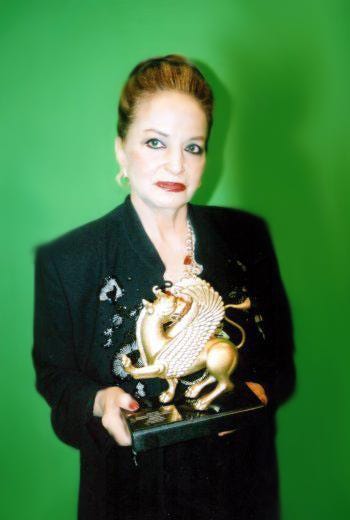

Known affectionately as the “Woman of a Thousand Songs” and often described as the “Queen of Iranian Songwriting,” Mirafshar leaves behind a body of work that few artists could rival. She authored more than a thousand poems and wrote over 250 songs that became enduring classics of Iranian popular and traditional music. Her lyrics transcended generations and political eras, continuing to resonate with audiences inside Iran and throughout the global Iranian diaspora.
Born in Tehran in 1937, Mirafshar’s artistic journey began early. Poetry came naturally to her, but it was her fascination with music that helped define her unique voice as a lyricist. She studied music under the renowned violinist and composer Asadollah Malek, learning the rhythms and melodies that would later distinguish her writing. Her understanding of both poetry and music allowed her to create lyrics that felt inseparable from the melodies they accompanied—a quality that made her work especially beloved among musicians and listeners alike.
Her professional career began with the song “Asemoon,” composed by Malek, but what followed was far more than a successful debut. Over the decades, Mirafshar became one of the most sought-after lyricists in Persian music, collaborating with an extraordinary range of artists. The voices of Homeyra, Hayedeh, Mahasti, Dariush, Ebi, Sattar, Martik, Shahrokh, Shohreh, Shahram Solati, Shakila, Leila Forouhar, Moein, and many others carried her words to millions of listeners. At the same time, some of Iran’s most accomplished composers - including Asadollah Malek, Anoushiravan Rohani, Mohammad Heydari, Jahanbakhsh Pazouki, Babak Afshar, Emad Ram, and Hassan Shamaizadeh - found in her poetry a perfect partner for their music.
Her personal life also became closely intertwined with the history of Iranian music. Following her marriage to Ali Mirafshar, she entered a family circle that included the legendary singer Homeyra, a relationship she often described as the inspiration behind many of her most memorable collaborations and creative achievements.
Yet Mirafshar’s contributions extended beyond songwriting. Before becoming one of Iran’s most celebrated lyricists, she worked as a journalist whose reporting attracted considerable public attention. During the late 1960s and early 1970s, she wrote widely read social reports for Iranian publications, including accounts that took her inside prisons and other corners of society rarely seen by the broader public. Her curiosity about human experiences and emotions - qualities that later defined her poetry - were already evident in her journalistic work.
The upheavals that followed the 1979 Revolution dramatically altered the lives of countless Iranian artists, and Mirafshar was no exception. She and her husband were arrested in the years following the revolution, and she spent six months imprisoned in what is now the city of Urmia. Eventually forced into exile, she rebuilt her life in the United States, joining a generation of Iranian artists, writers, and intellectuals who carried their culture abroad after leaving their homeland.
Exile brought loneliness and hardship, experiences she later described as years of displacement and uncertainty. Yet even during those difficult periods, she never stopped writing. Poetry remained her companion, and creativity remained her refuge. Through her work, she preserved a connection not only to Iran but also to millions of Iranians scattered across the world who found comfort, memory, and identity in the songs she helped create.
Among her many accomplishments were several published poetry collections, including Golpooneha, Golpooneha 2, Alaleh, and Golchin Azari. Her poetry often moved seamlessly between the intimate and the universal, helping explain why so many of her lyrics continue to feel fresh decades after they were first written. Songs such as “Gol Poonehaye Vahshi,” immortalized by Iraj Bastami, remain powerful reminders of her gift for transforming simple emotions into timeless art.
For many Iranians, Homa Mirafshar represented more than a songwriter. She belonged to a generation of artists whose work survived political upheaval, censorship, imprisonment, migration, and exile. Through all of these transformations, her voice endured - not as a performer on stage, but as the poet whose words gave life to the voices of others.
At NIAC, we join the many admirers of Homa Mirafshar in mourning her loss and celebrating her remarkable legacy. We extend our heartfelt condolences to her family, friends, artistic collaborators, and countless fans around the world. We also offer our sympathies to the Iranian-American community and to all Iranians, both inside Iran and across the diaspora, whose lives were touched by her poetry and music. While Homa Mirafshar is no longer with us, the songs she gifted to generations of listeners will continue to serve as a bridge between memory, culture, and home for years to come.