

The 2026 FIFA World Cup to be jointly hosted by the U.S., Mexico and Canada is intended to be a celebration of international sport, cultural exchange, and equal competition among nations. Yet Iran’s national team and its supporters find themselves facing unique and burdensome barriers that are unprecedented on the international sporting stage, which appear to be motivated both by the ongoing midwar tensions between the United States, Israel and Iran and extremely burdensome immigration restrictions that target Iranian nationals across the board. These burdens run counter to FIFA’s governing principles that emphasize non-discrimination, political neutrality, and equal treatment of participating teams and supporters.
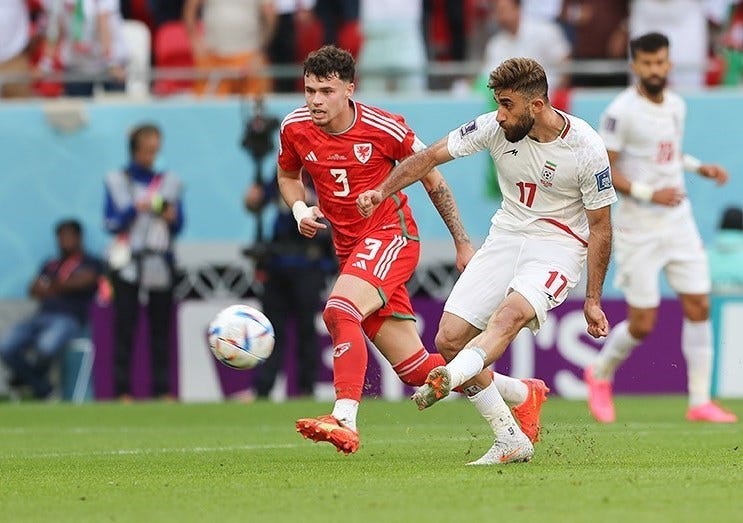

Iran, which qualified for the tournament and was drawn into Group G alongside Belgium, Egypt, and New Zealand, has encountered challenges related to ticket access, visa issuance, travel logistics, and the participation of team officials. While Iranian players were ultimately granted visas to enter the United States and compete in the tournament, the process leading up to that decision was marked by uncertainty that disrupted preparations and generated concerns among both the team and its supporters.
One of the most significant controversies involves access to World Cup tickets. According to the Iranian Football Federation, approximately 8 percent of tickets for each World Cup match are normally allocated to participating national federations, allowing supporters to purchase tickets through official channels. The Federation stated that after initially receiving its allocation and beginning the sales process, it was informed that the allocation would no longer be available. As a result, Iranian supporters lost access to the official ticket distribution mechanism only days before the tournament. The Federation argued that preventing Iranian fans from accessing their designated ticket allocation was inconsistent with the principles of equal treatment and fair participation that should govern international sporting competitions. Although the precise decision-making process behind the ticket allocation remains unclear, the outcome has significantly reduced opportunities for Iranian supporters to attend matches through official channels.
Visa-related issues have also became a major source of concern. In the weeks before the tournament, Iranian officials publicly warned that delays in visa processing could affect preparations, and ultimately switched their training facility from Arizona to Tijuana, Mexico, where the team established its World Cup camp. Although the relocation allowed preparations to continue, it created additional travel requirements and operational complexities. Instead of training in the same country where all three of its group-stage matches would take place, Iran is seemingly required to operate from outside the United States and travel into the country for competition.
Iranian diplomats and football officials reported uncertainty regarding whether players and members of the delegation would receive permission to enter the United States in time for the competition. While all Iranian players received visas approximately ten days before their opening match against New Zealand on June 15, allowing the team to participate in the tournament as scheduled, the team encountered separate visa denials for members of the supporting staff.
Multiple reports have indicated that a number of federation officials and support personnel were unable to obtain visas. Hedayat Mombeini, Secretary-General of the Iranian Football Federation; Mehdi Mohammad Nabi, Vice President of the Federation; Mehdi Kharati, a senior team administrator; and Mohsen Motamedkia, Media Director of the national team were all reported to not have secured visas. Reports also suggested that the visa status of Mehdi Taj, President of the Iranian Football Federation, remained uncertain and may have been affected by the restrictions. The inability of key administrative and support personnel to travel creates operational challenges for the national team and limits the Federation’s ability to manage its World Cup participation under normal conditions.
Iranian football officials openly expressed concern about the treatment the team could face during the tournament. Federation President Mehdi Taj criticized what he described as excessive interference in football administration and warned that uncertainty regarding entry procedures and delegation access could continue throughout the competition. The Federation indicated that it intended to raise its concerns with FIFA, arguing that football governance should remain within FIFA’s authority and be insulated from political disputes.
The political dimension of the issue became particularly evident in statements by U.S. officials. Responding to questions regarding visas for the Iranian delegation, the U.S. State Department confirmed that visas had been issued for players and essential personnel while stating that the United States would not allow Iran to “exploit the system” to enable individuals connected to terrorism to enter the country under false pretenses. Although the statement was framed as a security matter, critics argued that linking participation in a major international sporting event to broader geopolitical tensions risked politicizing the tournament and reinforcing unequal treatment of one participating nation.
Taken together, these developments created burdens that extended beyond the normal challenges of international competition. The uncertainty surrounding visa approvals, restrictions affecting federation officials and support staff, the relocation of the team’s training base to Mexico, additional travel requirements, and the loss of access to the Federation’s ticket allocation collectively placed Iran in a less favorable position than many other participating teams. While none of these measures prevent Iran from competing, they complicate the team’s preparation and limit opportunities for Iranian supporters to participate fully in the World Cup experience.
While the Iranian national team appears to have faced the most extreme hurdles to participation, other notable incidents have undermined the reputation of the U.S. as a host country. This includes the denial of a visa to Somali-born referee Omar Artan, who was denied entry to the United States and ordered out of the country despite having a valid visa and enduring an 11-hour interrogation session. Video circulating online also shows the Senegalese World Cup team enduring a security screening on the airport tarmac, which is highly unusual.
The issue extends beyond football. Major international sporting events are often presented as opportunities to transcend political disagreements and bring people together through shared competition. When athletes, officials, and supporters face barriers that other participants do not encounter, questions inevitably arise regarding equal treatment and the integrity of the competition itself.
The 2026 FIFA World Cup should ultimately be remembered for what takes place on the field. However, the experience of Iran’s national team demonstrates how political tensions and administrative restrictions can affect participation in global sporting events. When supporters lose access to official ticket allocations, when key team officials face travel restrictions, and when uncertainty over visas disrupts preparation for the world’s most important football tournament, the principle of equal participation is called into question. Regardless of broader political disagreements between governments, international sporting competitions function best when all participants are afforded comparable opportunities to compete, travel, and support their teams on equal terms.