

The United States has formally initiated a naval blockade of Iranian ports, marking a significant escalation following the failure to reach a deal on Saturday in Islamabad. The move places additional pressure on an already fragile ceasefire and raises concerns about broader regional destabilization.
U.S. Central Command has stated that the blockade targets maritime traffic to and from Iranian ports in both the Persian Gulf and the Sea of Oman. While U.S. officials emphasize that freedom of navigation through the Strait of Hormuz for non-Iranian destinations will supposedly remain unaffected by their blockade, enforcement measures include the inspection and potential interdiction of vessels linked to Iran. Statements from U.S. leadership suggest a maximalist enforcement approach, accompanied by warnings of force against perceived threats in the maritime domain, even as humanitarian shipments such as food and medicine are expected to pass under inspection protocols.
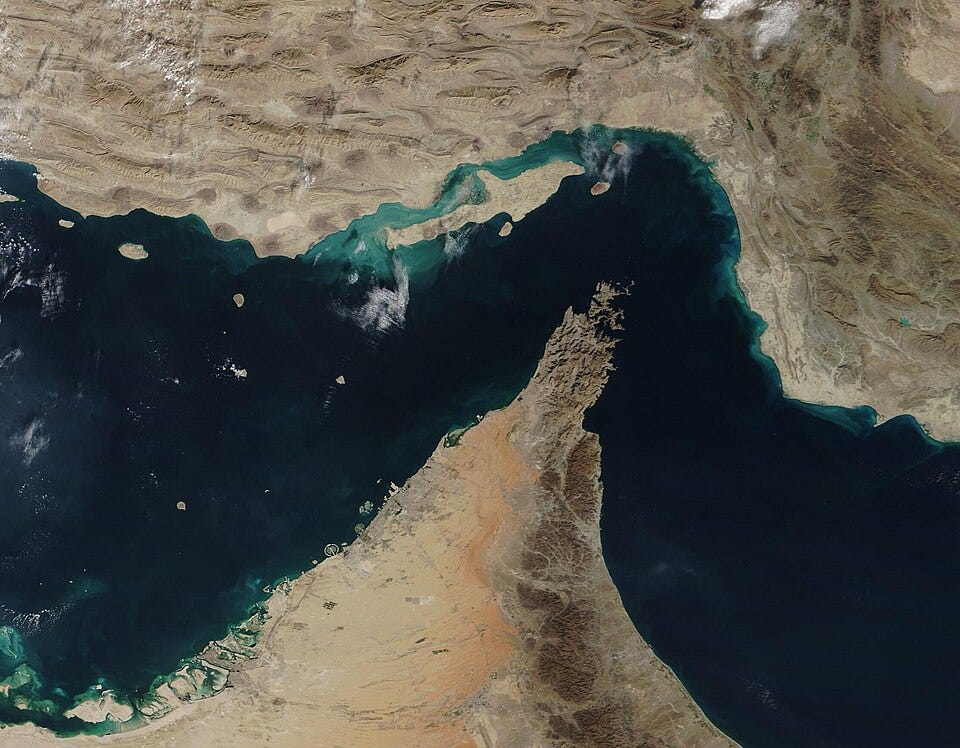

At the time of publication, no reporting has detailed any interdictions made by U.S. naval vessels against ships perceived to be linked to Iran. Since the beginning of the war on February 28, Iran has restricted the flow of maritime traffic through the Strait of Hormuz, barring vessels linked to warring nations while allowing tiered access to neutral and friendly nations. The maritime intelligence company Windward indicated that roughly 3,200 vessels were stuck west of the Strait of Hormuz on Saturday. Whereas an average of 138 ships typically transits the Strait of Hormuz in peacetime, some recent days have seen crossings as low as the single digits.
Speaking at the White House, President Trump asserted that “there is no war at the moment,” describing the situation instead as a blockade in which Iran is effectively unable to conduct commercial activity. He suggested that maritime traffic linked to Iran was unacceptable and emphasized that the current pressure campaign would be maintained without relaxation.
On the diplomatic front, President Trump stated that Iran is eager to reach an agreement, but reiterated that Tehran “will not have a nuclear weapon,” underscoring that U.S. nuclear demands remain a central point of contention. He acknowledged that while progress had been made on several issues, Iran had not accepted key conditions, adding that he remains confident Tehran will ultimately concede, warning that failure to do so would mean no agreement at all.
Despite this escalation in rhetoric and policy, diplomatic engagement has persisted. Regional actors, including Pakistan and Turkey, continue to signal that the ceasefire framework technically remains in place and that efforts are ongoing to bridge gaps between Washington and Tehran. Iranian officials have maintained that an agreement remains possible if U.S. demands move away from maximalist positions, particularly regarding nuclear rights and sanctions relief.
Iranian military and political leadership have rejected the blockade as unlawful, framing it as a violation of international norms governing maritime access. Officials have warned that security in the Persian Gulf is interconnected, signaling that continued pressure could lead to broader regional consequences. These dynamics increase the risk of miscalculation at sea, particularly in a highly congested and strategically sensitive waterway.
The blockade has already introduced a significant asymmetry in economic consequences. Global markets are experiencing volatility, with rising oil prices contributing to inflationary pressures, while U.S. consumers are facing higher fuel costs and declining confidence. At the same time, global supply chains face potential medium-term disruptions, including impacts on food production linked to energy and fertilizer markets. While Iran is likely to face continued economic strain, the short-term impact is being felt more immediately across countries with greater interconnectedness to the global economy.
Key U.S. allies have shown reluctance to support the blockade, emphasizing diplomacy and the restoration of maritime stability. At the same time, China has issued a direct and unusually sharp response, rejecting U.S. claims about the Strait of Hormuz. Chinese officials stated that the strait had remained open prior to the conflict and accused Washington of creating the crisis and disrupting global access, arguing that the blockade violates international law and threatens global markets.
China’s defense leadership has gone further, warning the United States not to interfere in Beijing’s economic and energy relations with Iran, emphasizing that China maintains ongoing agreements with Tehran and expects them to continue without external pressure. Chinese officials also stressed that, from their perspective, the Strait of Hormuz remains open, directly contradicting U.S. framing of the situation.
These exchanges reflect a broader shift, in which the blockade is not only a bilateral confrontation between the United States and Iran, but also a point of friction between Washington and major global powers, raising the stakes beyond the immediate region. Increasingly, separate powers may feel emboldened to more directly challenge American moves on Iran, particularly with the U.S. instigating a crisis via repeated violations of international law with little care for the broader impact.
At the center of the standoff remains a fundamental disagreement over Iran’s nuclear program. The United States continues to press for sharp limits including the de facto elimination of enrichment activities over a long period, while Iran maintains that civilian nuclear capabilities are a sovereign right. This unresolved issue continues to complicate efforts to translate the ceasefire into a broader and lasting agreement. As of now, the blockade is active, the ceasefire remains formally in place but under significant strain, and no clear timeline exists for renewed negotiations.
Blockades and Brinkmanship in the Gulf Will Not Deliver Security—Only Instability
The idea that the United States or its allies could improve security by attempting to blockade Iran’s maritime routes in the Sea of Oman or the broader Indian Ocean is not just strategically dubious—it is historically counterproductive. It risks repeating some of the most destabilizing patterns of modern U.S.–Iran relations, while pushing two nations with already fragile trust closer to confrontation rather than resolution.
History offers a clear warning: coercive pressure without a credible diplomatic off-ramp tends to deepen hostility, not resolve it.
During the presidency of Dwight D. Eisenhower, the United States pursued a complex mix of engagement and geopolitical intervention in Iran. Programs such as “Atoms for Peace” reflected a broader Cold War strategy of sharing certain nuclear technologies for civilian use under U.S. oversight. At the same time, the era is also indelibly associated with the 1953 Iranian coup d'état, in which the democratically elected government of Iran was overthrown and Mohammad Reza Pahlavi was reinstated as Shah with significant Western support.
That history matters—not because it dictates present policy, but because it shapes perception. In Iran, it remains a foundational reference point for mistrust toward U.S. intentions. Any policy that resembles economic siege or maritime containment is therefore interpreted not in isolation, but through the lens of that legacy.
Fast-forward to 1979: the Iranian Revolution fundamentally reshaped Iran’s political order and its relationship with the United States. Whatever one’s view of the revolution, it is undeniable that decades of perceived external pressure, interference, and confrontation contributed to an enduring cycle of antagonism. That history should caution policymakers against assuming that coercion produces compliance.
Today, proposals for naval blockades or aggressive interdiction in waters such as the Sea of Oman or the Indian Ocean raise immediate practical and humanitarian concerns. These are not abstract shipping lanes; they are vital arteries of global trade and energy flow. Any disruption would reverberate through global markets, potentially increasing energy prices worldwide and placing additional strain on inflation-sensitive economies, including that of the United States.
It is also important to be realistic about escalation dynamics. Maritime blockades are not symbolic gestures—they are acts that can be interpreted as acts of war. Once initiated, they narrow diplomatic space and expand military risk. In a region already characterized by overlapping tensions, miscalculation becomes more likely, not less.
Some argue that economic pressure will compel behavioral change. But historical evidence suggests otherwise. Iran is not the same country it was in 1953—demographically, politically, or strategically. With a population exceeding 90 million, a diversified economy, and deep regional ties, it is far more resilient to isolation than in earlier eras. Measures intended to coerce may instead harden national sentiment and empower hard-line responses.
There is also a domestic U.S. dimension that cannot be ignored. Prolonged military confrontation or maritime escalation in the Gulf would carry significant fiscal and human costs. It would also carry political costs, as American voters consistently show limited appetite for extended foreign entanglements that do not clearly enhance national security or economic stability.
This is why a different approach is urgently needed. Rather than expanding confrontation, U.S. policy should prioritize de-escalation, targeted diplomacy, and multilateral engagement where possible. That does not require naïveté about disagreements or security concerns. It requires recognizing that containment strategies rooted in maritime pressure are more likely to produce retaliation and instability than compliance.
Calls for restraint are not calls for passivity. They are calls for strategy. The United States retains substantial leverage in international diplomacy, economic coordination, and coalition-building. But leverage is most effective when paired with a credible diplomatic horizon—not when it is used in ways that close off negotiation entirely.
Ultimately, the question is not whether the United States should “stand firm.” It is whether firmness is being confused with escalation. History—from the aftermath of the 1953 coup to the upheavals of 1979—suggests that pressure without dialogue has repeatedly failed to produce lasting stability in U.S.–Iran relations.
The United States today faces enough global challenges without entering into another open-ended confrontation that risks civilian lives, economic disruption, and regional destabilization. A policy centered on maritime blockade would likely increase oil market volatility, raise energy costs, and deepen geopolitical fragmentation at precisely the moment when stability is most needed.
Peace is not achieved by repeating the cycles that produced instability in the first place. It is achieved by recognizing them—and choosing a different path.