

Iranian media has reported that Iran’s Supreme Leader Mojtaba Khamenei has taken a more visible role in recent days, including by participating in a series of meetings with senior officials and publishing new messages attributed to him. The increased activity coincides with renewed diplomatic contacts between Tehran and Washington, including reports of a letter from U.S. Vice President JD Vance to Iran’s Supreme National Security Council Secretary Mohsen Rezaei. Some reporting speculates about the possibility of direct negotiations between the U.S. and Iran as early as next week.
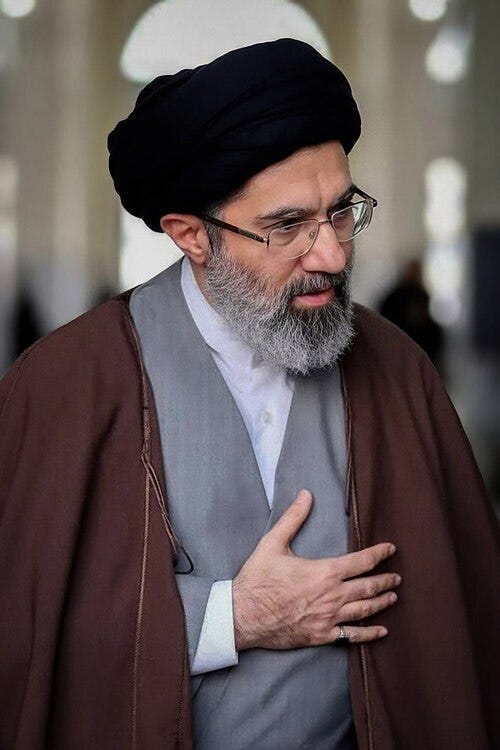

On October 27, Iranian media reported that Khamenei had met with Rezaei to discuss the country’s political, economic, and security challenges. According to Tasnim and Nour News, Khamenei called for securing Iran’s conditions for ending the war and moving beyond the current state of “neither war nor peace.” He also emphasized continued Iranian management of the Strait of Hormuz, stronger relations with neighboring countries, and the need for greater coordination among government institutions.
Khamenei did not announce a new negotiating initiative or indicate whether Iran might reconsider any of its demands. Instead, he emphasized protecting the rights of the Iranian people and the regional resistance front. He also called on the Supreme National Security Council to develop a comprehensive roadmap for addressing the country’s challenges and to work more closely with President Masoud Pezeshkian’s government.
The meeting came a day after senior representatives from Saudi Arabia, Turkey and Pakistan visited Tehran for discussions on regional security and deescalation. Rezaei reportedly briefed Khamenei on efforts to develop a regional security arrangement based on cooperation among neighboring countries.
The timing of the meeting became more significant following reports that Vance had sent Rezaei a letter exploring the possibility of renewed peace negotiations. The Wall Street Journal reported the correspondence on October 28, while subsequent accounts suggested the message had reached Rezaei through Qatari intermediaries before his meeting with Khamenei.
Other reports have raised the possibility of direct talks beginning next week, potentially in Qatar or Turkey. No date or venue has been confirmed, however, and President Donald Trump has described Vance’s outreach as related to medical assistance rather than a new peace initiative. Iranian Foreign Minister Abbas Araghchi, meanwhile, said on October 28 that Tehran remained in contact with regional mediators about implementing its seven-day proposal, potentially on an accelerated timetable.
The diplomatic contacts have also exposed unresolved differences. Iranian media, citing Axios, reported that Vance had insisted the nuclear issue be included in negotiations, while Tehran continues to demand relief from the U.S. naval blockade and economic restrictions.
The sequence raises the possibility that Rezaei’s meeting with Khamenei was part of preparations for another round of negotiations. The official account did not mention Vance’s reported letter, but the timing suggests that Washington’s latest approach may have been discussed. Khamenei’s public remarks could also help establish political support for renewed talks within Iran’s leadership.
That possibility is particularly important given the controversy surrounding the previous U.S.-Iran agreement. In a June 18 message following the signing of a memorandum between the Iranian and American presidents, Khamenei acknowledged that he had initially opposed the agreement in principle. He said he ultimately authorized it after Pezeshkian, as chairman of the Supreme National Security Council, accepted responsibility on behalf of the council for protecting Iran’s rights and the interests of the regional resistance front.
Khamenei used the phrase “I had a different view in principle,” making clear that his authorization did not amount to full agreement with the diplomatic approach. He also stressed that future face-to-face negotiations would not mean accepting Washington’s demands. The earlier negotiations, in which Parliament Speaker Mohammad Bagher Ghalibaf played a prominent role, had faced criticism from parts of Iran’s political establishment over the terms of the memorandum and the concessions involved. Khamenei’s statement added another layer to that debate by publicly distancing himself from the agreement while allowing it to proceed.
His latest remarks may therefore carry a different political message. Rather than simply authorizing a diplomatic initiative proposed by other officials, Khamenei is now publicly emphasizing the need to bring the current uncertainty to an end. If negotiations resume, this could give Iranian officials greater room to pursue an agreement without facing the same degree of internal criticism that accompanied the previous process. It does not, however, establish that Khamenei has changed his position on the terms of a settlement.
The meeting with Rezaei was one of several reports of consultations involving Khamenei in recent days. On October 21, Parliament Speaker Ghalibaf reportedly met Khamenei to discuss military, economic, and information-related developments. On October 24, the judiciary announced a meeting with Judiciary Chief Gholamhossein Mohseni Ejei, covering public rights, corruption, judicial administration, and compensation for damage caused by the war.
Khamenei had also previously met with President Pezeshkian, including reported consultations in May and August on the war, economic conditions, and government priorities. Pezeshkian described those discussions as extensive and highlighted Khamenei’s emphasis on national unity and addressing economic challenges. The concentration of meetings announced over the past week, however, has brought considerably more attention to Khamenei’s political activity.
Since succeeding his father, Ali Khamenei, who was killed in the opening U.S.-Israeli strikes on February 28, the new Supreme Leader has communicated mainly through written statements. Several reports have indicated that Mojtaba was seriously injured in the same strikes that killed his father, wife and other members of his family. The recently reported meetings have not been accompanied by publicly released photographs or recordings.
Following his meeting, Ejei described Khamenei as closely informed about domestic and international developments and engaged with the work of the country’s major institutions. His comments were among several recent statements by senior officials emphasizing the Supreme Leader’s involvement in national affairs.
On October 28, Tasnim also published a written response from Khamenei to letters sent by university students. He thanked them for their commitment to Iran’s future and encouraged scientific advancement, intellectual development and participation in the country’s long-term progress. The message contained no major policy announcement but added to the recent increase in communications attributed to him.
The political context is also changing. Pezeshkian has repeatedly warned that prolonged uncertainty is damaging the economy and making it difficult for businesses and government agencies to plan for the future. On October 25, the government newspaper Iran reported his renewed call for an end to the current situation, while Etemad published discussions among Iranian commentators about the country’s diplomatic options.
Not everyone within the political establishment agrees on how to proceed. Donya-e Eqtesad has reported Pezeshkian’s argument that military resistance and diplomacy are not mutually exclusive, while more confrontational figures have warned against accepting a settlement without sufficient guarantees. In September, Kayhan published an Assembly of Experts statement warning against peace proposals it characterized as capitulation.
These disagreements help explain the importance of Khamenei’s involvement. The Supreme Leader’s position could influence whether a new diplomatic initiative receives broader institutional support. The Supreme National Security Council is particularly important in this process. Under Iran’s Constitution, the council coordinates national security policies across civilian and military institutions, with its decisions requiring the Supreme Leader’s confirmation. Khamenei’s emphasis on the council’s responsibilities, combined with Rezaei’s role in the latest diplomatic contacts, suggests that it could become a central channel for managing any renewed negotiations.
For ordinary Iranians, the stakes are substantial. The possibility of renewed military attacks continues to impact investment, employment, transportation and reconstruction. Businesses that have suffered damage or suspended operations face difficult decisions about reopening, while the government must manage financial pressures and damaged infrastructure without knowing whether the current pause in large-scale fighting will last.
Khamenei’s recent meetings and messages have brought him more directly into public discussions at a potentially important diplomatic moment. His consultation with Rezaei, in particular, comes as Washington explores renewed contact with Tehran and regional governments seek to prevent another escalation. Whether these developments reflect preparations for a new agreement remains uncertain, but the combination of increased reports about Khamenei’s activities and diplomatic outreach suggests that Iran’s political establishment is once again weighing whether and how to move from military confrontation toward a more lasting settlement.