

Iranian state media have announced that Mojtaba Khamenei, the son of the late Supreme Leader Ali Khamenei, has been selected as the new Supreme Leader of the Islamic Republic of Iran, marking a historic and controversial transition of power during an ongoing war. The announcement was formally made today, March 8, following days of speculation after Ali Khamenei was killed in strikes on the Iranian leadership compound during the first day of the U.S.-Israel war on Iran on February 28. Those strikes also killed Zahra Haddad-Adel, the wife of Mojtaba Khamenei and daughter of former Iranian parliament speaker Gholam-Ali Haddad-Adel, as well as Mansoureh Khojasteh-Bagherzadeh, the wife of Ali Khamenei, Mesbah Bagheri-Kani, the husband of Hoda Khamenei, and Zahra Mohammadi Golpayegani, the 14-month-old granddaughter of Ali Khamenei. According to Iran’s state television news channel, Mojtaba Khamenei has been wounded in the current war and reportedly been left permanently disabled, though additional details are not yet available on the extent of his injuries.
Mojtaba Khamenei becomes the third Supreme Leader of the Islamic Republic and the first leader in the country’s post-revolutionary history whose leadership effectively follows his father, raising debate about the unprecedented nature of the succession. According to official Iranian news agencies, the Assembly of Experts voted decisively to appoint Mojtaba Khamenei as the new leader. However, the exact procedure of the vote remains unclear. During the week following Ali Khamenei’s death, no public in-person meeting of the Assembly of Experts was reported, with Iranian officials citing wartime security conditions as the reason. Reports also emerged that the secretariat of the Assembly of Experts in the city of Qom had been struck by U.S. and Israeli missiles, although no confirmed casualty figures were released. Reports suggest that consultations may have taken place remotely or through representatives, though no official details about the voting mechanism have been released.
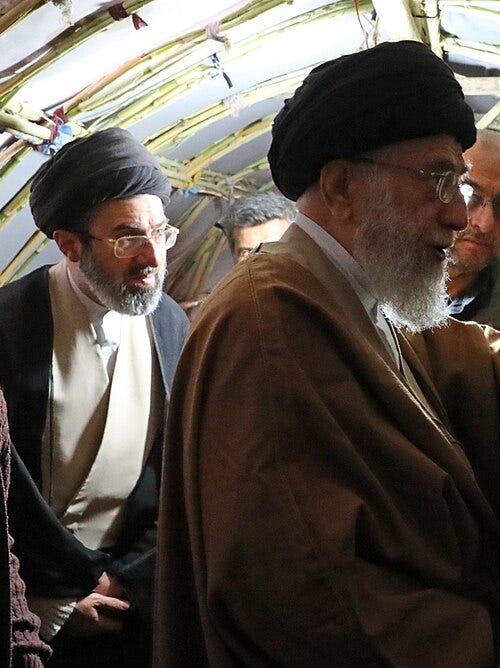

The leadership transition comes amid the ongoing war between Iran and the United States and Israel, which began with strikes on Iranian leadership facilities on February 28. In the immediate aftermath of the attack that reportedly killed Ali Khamenei, speculation emerged about whether Mojtaba Khamenei had also been killed in the strike. After four days of silence, Iranian media reported that Mojtaba Khamenei was alive and actively involved in advising on key national decisions, fueling speculation that preparations were underway for selecting a new leader.
According to Iran’s constitution, until a new Supreme Leader is formally chosen, the country is governed by a temporary leadership council composed of the president, the head of the judiciary, and a clerical member of the Guardian Council. With the announcement of Mojtaba Khamenei’s appointment, that transitional arrangement appears to have ended.
The decision has generated mixed reactions inside Iran’s political circles. Some conservative figures quickly expressed support. Hardline parliamentarian Hamid Rasaei indirectly welcomed the development, referring to Mojtaba Khamenei as an “Ayatollah” and suggesting that “Khamenei has become young again,” implying continuity with the policies of the late leader.
Others criticized the timing and process of the decision. Conservative journalist Mohammad Mohajeri described the rushed selection of a leader during wartime as “suspicious and illogical.” Former minister Abbas Akhoundi warned that choosing a successor in the middle of war could be “a dangerous deviation and a deadly poison for Iran during wartime.” Iranians who welcomed the killing of Khamenei now face the elevation of his son who appears deeply linked to the legacy of his father.
The succession also comes after years of speculation about Mojtaba Khamenei’s possible role as a future leader. Two years ago, Mahmoud Mohammadi-Araghi, a member of the Assembly of Experts, said in an interview with ILNA that Ali Khamenei had opposed considering his sons as candidates for succession. This statement remains one of the very few indirect indications attributed to the late leader regarding the issue of hereditary succession. Despite that earlier claim, Mojtaba Khamenei had long been considered one of the most likely candidates, largely due to his close connections with political, clerical, and security institutions within the Islamic Republic and his influential role in managing the office of the Supreme Leader.
Mojtaba Khamenei was born on September 8, 1969, in Mashhad, the second son among six children of Ali Khamenei. He attended the Alavi religious school and, according to Iranian media reports, participated as a teenager in several short deployments during the Iran–Iraq war. In 1999, at the age of 30, he moved to the religious city of Qom to pursue advanced clerical studies. Notably, he had not worn clerical robes until that time, an unusual path in Iran’s clerical hierarchy where religious training typically begins earlier.
He was married to the daughter of Gholam-Ali Haddad-Adel, a prominent conservative politician and former speaker of the Iranian parliament, until she was killed in the airstrike that killed his father. Although Mojtaba Khamenei has never officially held a government position, he is widely believed to have played an influential role within the power structure of the Islamic Republic, particularly through his involvement in the management of his father’s office and his relationships with security and political institutions.
The office of the Supreme Leader oversees a vast network of economic foundations and institutions sometimes described as an economic empire estimated to control assets worth as much as $95 billion. Because these organizations lack financial transparency and oversight, the exact role Mojtaba Khamenei may have played in their management cannot be independently verified.
Mojtaba Khamenei’s name first gained public prominence during the 2005 Iranian presidential election, when reformist candidate Mehdi Karroubi accused him of interfering in the election process in favor of Mahmoud Ahmadinejad. His name resurfaced again during the controversial 2009 presidential election, when protests erupted across Iran. Demonstrators frequently chanted “Mojtaba, may you die before seeing the leadership,” accusing him of involvement in the suppression of protest movements and electoral interference. Former reformist official Mostafa Tajzadeh later described the 2009 election as an “electoral coup” and claimed that pressure against him and his family had been ordered directly by Mojtaba Khamenei, allegations that have remained politically contentious.
In recent years, some religious media and clerical figures have referred to Mojtaba Khamenei as “Ayatollah.” In 2022, a religious news agency in Qom reported that he had begun teaching advanced “dars-e kharej” courses in Islamic jurisprudence, the highest level of study in Shi’a seminaries, suggesting he had reached the scholarly level of ijtihad. However, very little is known about his personal political views, and no public interviews or detailed policy positions attributed directly to him have ever been published.
Among some political figures, Mojtaba Khamenei has also been described as a potential agent of generational change within the Islamic Republic. Fa’ezeh Hashemi Rafsanjani suggested that Mojtaba Khamenei could become a “Mohammed bin Salman-like figure” for Iran, possibly introducing certain reforms within the system. Other political figures, including Abbas Palizdar and Abdolreza Davari, have in recent years expressed support for the idea of Mojtaba Khamenei eventually becoming Supreme Leader.
Following the official announcement of his leadership, many officials and political figures within the Islamic Republic congratulated him, including Hassan Khomeini, one of the grandsons of first Supreme Leader Ayatollah Ruhollah Khomeini. Iran’s security and military institutions also quickly declared loyalty to the new leader. In a statement, the Islamic Revolutionary Guard Corps (IRGC) congratulated Mojtaba Khamenei’s appointment and pledged full obedience, describing him as a qualified jurist and a young thinker capable of guiding the Islamic Republic through difficult historical moments. The statement emphasized that the Islamic Republic would continue its path despite the loss of the previous leader, asserting that the system is not dependent on any single individual.
The Iranian national police command also issued a statement declaring full allegiance to the new Supreme Leader, promising loyalty “to the last breath.” Similarly, Iran’s Armed Forces General Staff and the Central Headquarters of Khatam-al-Anbiya declared that the armed forces would stand under the command of Ayatollah Mojtaba Khamenei and defend Iran’s security against foreign enemies “until the last drop of blood.”
The IRGC Intelligence Organization also published a statement on social media declaring loyalty to Mojtaba Khamenei, emphasizing that Iran’s armed forces would defend the country under his leadership against foreign conspiracies. Beyond Iran’s borders, regional allies also expressed support. Hezbollah in Lebanon issued a statement congratulating Mojtaba Khamenei on his selection as Iran’s Supreme Leader, while Yemen’s Ansarullah movement also welcomed the decision, describing it as a sign of unity and resilience within the Iranian political system.
Inside Iran, Judiciary Chief Gholam-Hossein Mohseni-Ejei described Mojtaba Khamenei’s appointment as “a source of hope and satisfaction for the Iranian nation,” emphasizing that Iran remains engaged in a struggle against what he described as hostile enemies during a critical moment in the country’s history.
At the same time, the leadership transition has unfolded against the backdrop of escalating tensions with the United States. U.S. President Donald Trump previously rejected the possibility of working with Mojtaba Khamenei, calling him “a lightweight” in comments to Axios and suggesting Trump himself would be involved in choosing Iran’s next leader. “Khamenei’s son is unacceptable to me. We want someone that will bring harmony and peace to Iran,” Trump stated in the interview. Trump also warned that any future leader of Iran would need U.S. approval, stating that “if he does not receive our approval, he will not last long.” In another remark, Trump suggested that whoever becomes Iran’s new leader could eventually face assassination.
For years, speculation about Mojtaba Khamenei’s succession circulated widely, particularly as Ali Khamenei’s age advanced and discussions about the future leadership of the Islamic Republic intensified among members of the Assembly of Experts. Several clerics had hinted that the identity of the next leader had already been determined but kept confidential due to security concerns. After months of public absence and limited visibility, Mojtaba Khamenei’s sudden emergence as the new Supreme Leader marks one of the most consequential leadership transitions in the history of the Islamic Republic, taking place during a period of war, internal uncertainty, and intense geopolitical pressure on Iran.