

Iranian singer and songwriter Mohsen Namjoo has returned to Iran after nearly two decades abroad, an unexpected homecoming that comes as the Iranian government says it is working to make it easier for prominent artists, intellectuals and other members of the diaspora to visit or return to the country. Namjoo announced his decision in a video released Thursday, saying the message would become public when he was either on his flight to Tehran or had already arrived. He said that at this stage of his life, being in his homeland and close to family and friends mattered more than whether he would be allowed to resume his musical or cultural work.
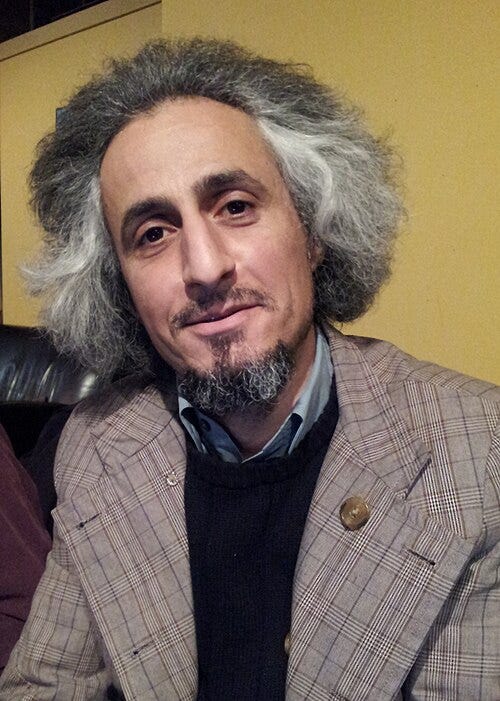

What makes Namjoo’s decision particularly notable is not simply the identity of the musician coming home. It is who Namjoo was when he left Iran, and the ongoing relationship between the Iranian government and the large Iranian diaspora.
Namjoo emerged from Iran’s underground music scene in the 2000s and became known for an unconventional mix of Persian classical music and poetry with blues, rock and jazz. He left Iran in 2007 and eventually established himself in the United States. Two years later, a Tehran court reportedly sentenced him in absentia to five years in prison over allegations of insulting religious sanctities through his use of Quranic verses in a musical performance. Namjoo said he had not intended to insult the Quran and had previously apologized over the recording, which he said was released without his authorization.
That history makes his return particularly striking. Iranian authorities have offered no public explanation of what happened to the old sentence, whether it remains legally relevant, or what assurances, if any, Namjoo received before returning. Nor has there been any announcement that he will be allowed to perform or release music in Iran. Namjoo himself has separated the decision to return from his professional future, saying that being home now takes priority.
Just one day before news of Namjoo’s return emerged, Culture and Islamic Guidance Minister Abbas Salehi described a broader government initiative aimed at reconnecting with prominent Iranians abroad. Salehi said his ministry had submitted more than 100 names of Iranian cultural, artistic and intellectual figures living outside the country as part of an effort to address obstacles that might prevent them from coming to Iran. Salehi said the initiative is not limited to permanent return. Someone might visit for several days, participate in a short-term program and leave again, or eventually move back permanently. The goal, he said, is to make different forms of return and engagement possible.
The initiative predates the latest war, but the experience of two conflicts appears to have given it greater significance. According to Salehi, the government intensified its outreach after the 12-day war, which officials saw as evidence that many Iranians abroad retained a strong attachment to the country despite their political, cultural or personal distance from the Islamic Republic. The process was disrupted by the subsequent 40-day war, he said, but the government intends to resume it as conditions stabilize.
Salehi said relations with the diaspora are becoming more open, with channels for dialogue and participation gradually expanding. That distinction - between attachment to the Iranian nation and support for the political system governing it - may be the most important part of the initiative.
For decades, Iran’s relationship with its diaspora has been marked by distrust. Millions of Iranians live abroad, including artists, academics, entrepreneurs and professionals whose relationship with the Islamic Republic ranges from engagement to outright opposition. For some, returning even for a visit has carried uncertainty about questioning, travel restrictions or old legal cases. Iranian political discourse, meanwhile, has often blurred the line between criticism of the government from abroad and hostility toward Iran itself.
Moreover, many individuals who have returned to Iran and thought they would not encounter obstacles have been blocked from leaving, arrested on dubious grounds and subjected to long and intense imprisonment. Several American citizens are believed to be held by Iran currently, including Kamran Hekmati and journalist Reza Valizadeh. These actions cast a long shadow and understandably deter many Iranians from returning to the country. Adding to this, many governments - including the United States - have warned about these dangers and explicitly recommend against travel to Iran under any circumstances.
Salehi’s comments suggest that at least part of the government is trying to reduce barriers to return. He said Iranians abroad should be respected except for those who “stand alongside Iran’s enemies,” while emphasizing that many expatriates had stood with their homeland during the recent wars.
But that formulation leaves a critical question unanswered: who decides where legitimate disagreement ends and “standing with the enemy” begins? Without clear legal guarantees and predictable procedures, government invitations alone are unlikely to erase the concerns that have kept some expatriates away.
The contradictions are already visible. Tehran is talking about greater engagement with Iranians abroad, and Parliament has passed legislation intended to support them. Yet journalists, students, artists and civil-society figures inside Iran continue to face restrictions, while a recently approved parliamentary measure on “countering foreign infiltration” has raised new concerns about contacts with foreign media, institutions and universities.
Iran is, in other words, trying to lower some of the barriers separating it from its diaspora while parts of the political system are simultaneously seeking tighter controls over interaction with the outside world. It is too early to know which tendency will prove stronger. There is also no evidence that Namjoo’s return resulted from the government’s list of more than 100 prominent expatriates. Neither Namjoo nor Iranian officials have publicly made that connection. His decision may be exactly what he says it is: a deeply personal choice to go home.
But it is difficult to separate his return from a broader question now emerging inside Iran: whether the experience of war can produce a different relationship between the Iranian state, Iranian society and millions of Iranians who have built lives abroad. The wars appear to have underscored an important distinction: many Iranians abroad who are critical of the Islamic Republic still feel a deep attachment to Iran itself. During the conflicts, disagreement with the government did not necessarily translate into support for attacks on the country or indifference to the suffering of people inside Iran.
For Tehran, recognizing that distinction could open access to an enormous pool of Iranian cultural, scientific and economic talent abroad. But turning emotional attachment to Iran into greater engagement with the country will require more than welcoming statements. It will require predictable rules, legal security and confidence that returning home does not depend on shifting political judgments about who is considered acceptable.
Namjoo’s arrival does not prove that such a change has taken place. The unanswered questions surrounding his own old court case are reason enough for caution. But a musician who once said he was prepared to face prison if he ever returned has now come home nearly two decades later, just as Tehran says it wants to reopen channels to prominent Iranians abroad. Whether Namjoo’s return remains an exception or becomes part of something broader may tell us considerably more about postwar Iran than the homecoming of one famous musician.