

Dr. Marta Shahbazi Alonso, a distinguished scientist of Iranian heritage and internationally recognized researcher at the University of Cambridge, died on October 28, 2026, at the age of 41, in a tragic train collision in Spain. A leading figure in developmental biology and stem cell research, Shahbazi made significant contributions to understanding the earliest stages of human life. Her death is a profound loss not only to the international scientific community but also to Iranians around the world, whose contributions to science, medicine, and academic research have helped shape advances in human knowledge.
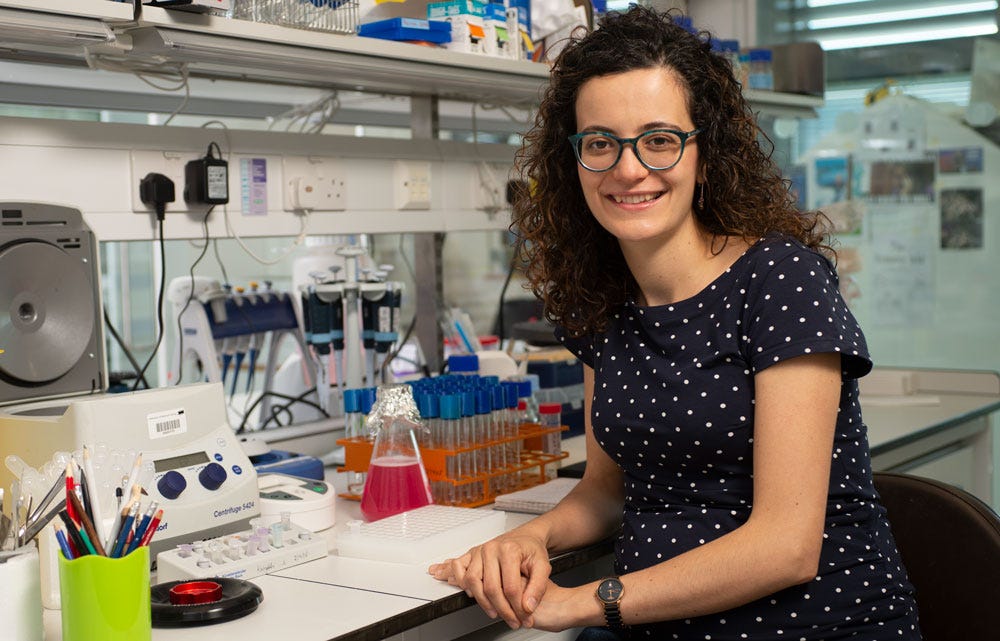
Born in León, Spain, to an Iranian father and a Spanish mother, Shahbazi grew up with a connection to both Iranian and Spanish heritage. She belonged to a generation of scientists of Iranian descent whose achievements have extended far beyond national borders, contributing to major scientific institutions and discoveries around the world. Her career reflected the international reach of Iranian talent and the important role that people of Iranian heritage continue to play in advancing science.
Shahbazi studied biology at the Autonomous University of Madrid and completed her doctoral research at Spain’s National Cancer Research Centre. In 2014, she moved to the University of Cambridge, where she established herself as an influential researcher in developmental biology. In 2020, she established her own research group at the Medical Research Council’s Laboratory of Molecular Biology (LMB) in Cambridge, one of the world’s leading biomedical research institutions. Her work focused on understanding how human embryos develop, how cells organize themselves during the earliest stages of life, and how stem cells acquire specialized functions.
One of her most significant scientific achievements came in 2016, when she contributed to groundbreaking research that enabled scientists to study human embryos in laboratory culture for up to 13 days. This advance opened new possibilities for investigating a previously poorly understood period of human development, including the biological processes surrounding embryo implantation and the formation of early embryonic structures.
Her subsequent research deepened scientific understanding of how embryonic cells establish their identities and organize into the structures that eventually form the human body. These discoveries have important implications for developmental biology, reproductive medicine, and stem cell research, potentially contributing to future advances in understanding infertility, pregnancy complications, and regenerative medicine.
Shahbazi’s achievements earned her international recognition, including the 2026 José Luis Gómez-Skarmeta Prize from the Spanish Society for Developmental Biology. Tragically, she was traveling to Spain to receive the award when the train collision occurred near Urda, in Toledo province, on October 28. Beyond her scientific accomplishments, Shahbazi was remembered by colleagues as a dedicated mentor, generous collaborator, and inspiring researcher. She helped train a new generation of scientists and contributed to an international research community working to answer fundamental questions about human development.
A mother of two young children, Shahbazi also spoke about balancing family responsibilities with the demands of scientific research. Her career reflected not only exceptional scientific talent but also a commitment to mentorship, education, and collaboration across national boundaries.
For Iranians inside Iran and across the diaspora, Shahbazi’s achievements represent another important contribution by a scientist of Iranian heritage to the advancement of global knowledge. Her life and career illustrate how Iranian heritage remains part of a broader international story of scientific achievement, even when those accomplishments take place far from Iran itself. Her untimely death deprives the scientific community of a remarkable researcher whose work had already expanded the boundaries of developmental biology and whose contributions might have continued for decades to come.
The National Iranian American Council (NIAC) extends its deepest condolences to Dr. Marta Shahbazi’s family, particularly her two young children, her friends, colleagues, and students, as well as to the people of Iran and Iranian communities throughout the world. We join Iranians at home and abroad in mourning the loss of an extraordinary scientist of Iranian heritage whose achievements brought distinction to the global Iranian community. We honor her remarkable contributions to science, her dedication to advancing human knowledge, and the lasting legacy she leaves through her discoveries and the generations of researchers she inspired.