

A growing chorus of Iranian political prisoners, reformist clerics, and human rights advocates is speaking out against Iran’s escalating use of the death penalty. Though they come from different backgrounds and make different arguments - legal, religious, political, and humanitarian - they are all warning that the country’s expanding execution campaign is deepening divisions rather than delivering justice. Their interventions come as executions have surged in the aftermath of the war with the United States and Israel, with many of those facing death sentences accused of violence against security forces amid involvement in the January 2026 protests.
The strongest statement so far came from imprisoned reformist politician Mostafa Tajzadeh, who released a message from Evin Prison on August 3. Tajzadeh acknowledged that Iran had weathered significant external pressure during the war, but argued that the country now needs reconciliation, not another cycle of repression. Executing mostly young defendants after what he described as opaque and flawed trials, he warned, risks repeating the same mistakes that have repeatedly fueled public anger instead of restoring stability.
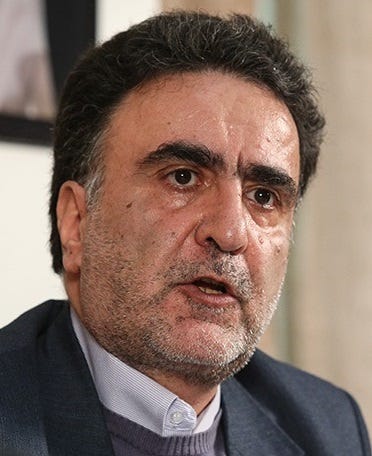

Tajzadeh did not argue against accountability for violence. Instead, he insisted that accountability requires fair and transparent justice. He called for an independent fact-finding commission into the January 8–9 events, public trials, access to independent lawyers, and a form of restorative justice that respects the rights of defendants, victims, and their families alike. In his view, executions neither deter future violence nor heal society’s wounds. Instead, they deepen mistrust between the state and the public while perpetuating a cycle of retaliation.
A different but complementary critique came from reformist theologian Hassan Yousefi Eshkevari, who grounded his argument in Islamic jurisprudence rather than politics. In a July 30 essay, Eshkevari argued that Islamic law requires punishments to serve justice and the public good, standards he believes Iran’s current use of the death penalty fails to meet.
He argued that qisas - or retributive justice - was originally intended to limit private revenge, not encourage it, and that capital punishment can only be justified when due process, proportionality, and reliable evidence are fully respected. Eshkevari questioned whether Iran’s judiciary meets those standards, particularly in cases relying on confessions allegedly extracted under psychological or physical pressure. He also noted that many executions - especially in drug-related cases - have historically reflected security policy more than traditional Islamic jurisprudence. While stressing that he was speaking generally rather than judging individual cases, he repeated his longstanding criticism of what he has previously called the Islamic Republic’s transformation into a “Republic of Death.”
Three other prisoners held in Evin - Abolfazl Ghadyani, Mohammad Najafi, and Reza Valizadeh - offered a more explicitly political critique in a joint statement released around July 29–30. The veteran dissident, human rights lawyer, and Iranian-American journalist jointly argued that authorities are using executions to rebuild political authority after the war, portraying the death sentences as instruments of state power rather than justice. Their statement came shortly after two more defendants were executed on July 28 in the Isfahan “Alikhani Square” case, bringing the total number executed in that case to four, while eight others remain on death row.
The broader debate has also expanded to the government’s handling of the January crackdown itself. After President Masoud Pezeshkian criticized those citing estimates of 30,000 to 40,000 deaths, imprisoned activist Mehdi Mahmoudian argued that focusing on the exact number misses the central issue. Even by the government’s own figures, he wrote, thousands of people were killed and deserve accountability. He questioned who gave the orders, who carried them out, and who concealed what happened, arguing that those seeking answers are branded traitors while those responsible have faced little scrutiny.
Longtime journalist and human rights advocate Emadeddin Baghi remains one of the most influential voices behind this broader movement. For decades, Baghi has documented executions in Iran and argued against capital punishment from within an Islamic legal framework. Many of the arguments in Eshkevari’s recent essay build directly on that work. A campaign launched after Baghi’s Panorama interview earlier this year has likewise focused on improving judicial transparency by calling for the publication of death sentences and opportunities for retrials, rather than the swift implementation of executions.
These domestic concerns closely mirror those raised internationally. UN High Commissioner for Human Rights Volker Türk recently warned of the sharp increase in executions, saying at least 56 people have been executed on national security charges since March 19, including 27 connected to the January protests, while more than 100 others remain at risk. Amnesty International has similarly warned that at least 60 people face imminent execution, including three people who were minors at the time of their alleged offenses.
Taken together, these statements point to an increasingly coordinated challenge to Iran’s post-war execution campaign. Although the critics approach the issue from different perspectives - constitutional rights, Islamic jurisprudence, political reform, or international human rights - they arrive at much the same conclusion: Iran’s judiciary is moving quickly to carry out irreversible punishments through proceedings that critics argue fall short of basic standards of fairness and due process. However, this growing pressure from inside and outside Iran to halt and slow executions faces a judicial system that has long defied public pressure and accountability.