


President Trump started the Iran war expecting that he would cruise to a swift victory in a handful of weeks, if not days. High off the capture of Venezuelan President Nicolás Maduro, Trump thought the rules of international relations did not apply to him, so long as he was daring.
Yet, the war has ground on for the better part of a year, with periods of stalemate punctured by ship strikes and major periods of bombing and missile retaliation. No end is in sight, and astute observers widely predict another major round of warfare, one that will be potentially even more destructive than earlier rounds. What was supposed to be a blitzkrieg increasingly looks like a forever war.
Yet there is apparently comfort with the notion of a new forever war with Iran, both within the Trump White House and some former U.S. officials who served Democratic administrations. Brett McGurk, Biden’s former Middle East policy chief who is currently seeking to rehabilitate his image after helping facilitate the genocide in Gaza, has previewed not just a continuation of the war throughout Trump’s term but also beyond.
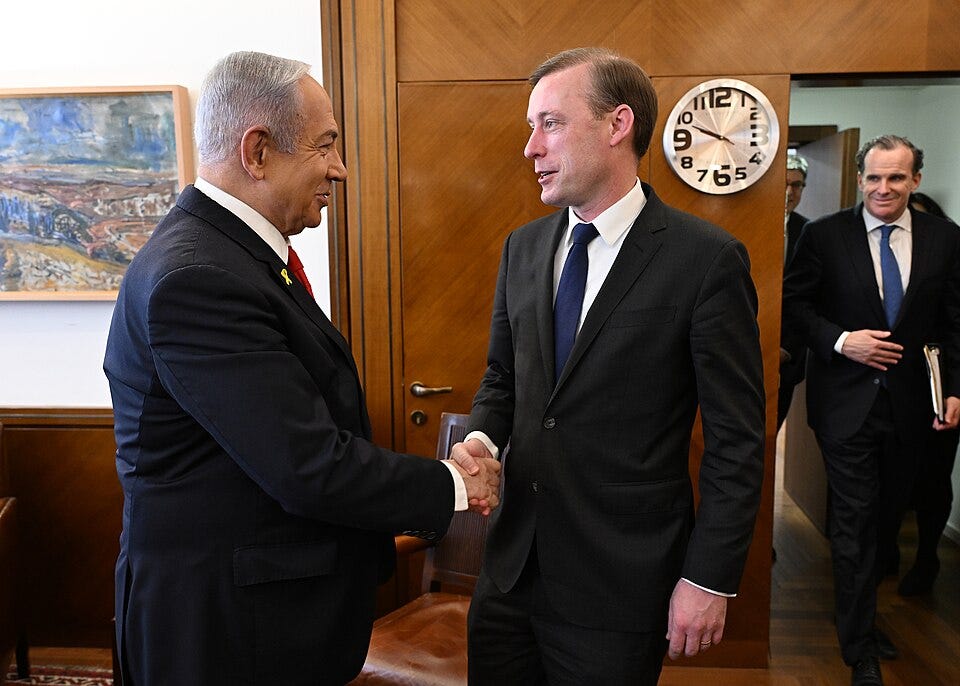

Speaking with Fareed Zakaria, McGurk asserted the Iran war “is going to go on through the end of Trump’s presidency, and it’ll go into -- the next president will have to deal with this chronic problem of Iran … I don’t see kind of the end game until ultimately this regime changes, either fundamentally changes its character and its policies which right now is hard to see, or eventually the regime comes apart. But again, that is going to be, I think, way down the road. So, I think we are in this period and it’s going to last for some time.” Ultimately, McGurk suggested that Iran truly abandoning its nuclear program and the potential for weaponizing it could lead to a resolution of the war, but suggested there was no sign of such a concession coming from Iran.
McGurk is correct that this war - as disastrous and as ill-conceived as it has been - could indeed be a new “forever war” for Washington. However, nobody should be so comfortable with that possibility given the significant costs for U.S. and regional security, the global economy and the people of Iran. Fortunately, even now, policymakers are not limited to throwing up their hands like McGurk and placing the blame on Tehran for why there isn’t an easy path out of a war of aggression started by Washington. Policymakers still have options to chart a course out of the quagmire.
The clearest path to an end to the war remains a diplomatic agreement that ends hostilities and creates the contours of a modus vivendi for each side.
In mid-March, I wrote in The American Conservative that President Trump had an escape ramp from a forever war with Iran and its mounting costs if he put significant sanctions relief on the table. I warned that the war was backfiring badly and the costs would continue to mount so long as the U.S. held on to its leverage and did not seek to trade it in for an end to the war and progress on other goals, including the nuclear program. President Trump ultimately came to a similar conclusion, albeit months later, when he struck the Memorandum of Understanding with Iran. Yet, following extensive blowback from within President Trump’s own party and in the media, the deal only lasted for a few weeks before President Trump used disputes in the Strait of Hormuz as a pretext to blow up the agreement and resume the war in full.
That deal, or an amended version of it, seems to still be on the table. Then, as now, Iran has little incentive to agree to an end to the war without a path toward rebuilding itself afterwards. Returning to the MOU would ultimately cost the U.S. very little, as it would be trading in its sanctions leverage for concrete concessions: an immediate end to a backfiring war, a restoration of flows through the Strait of Hormuz and a path toward addressing other issues, including Iran’s nuclear program, via diplomacy. President Trump would be wise to cut our nation’s losses in the war and take the deal on offer, or a version of it. His attempt to try to up-end its terms through military and economic pressure that Iran is incentivized to fiercely resist is a recipe for the forever war McGurk anticipates.
Now, with the midterms approaching, a second path to prevent a forever war appears plausible: Congress not just directing an end to the war, but actively severing funding for it by barring the Department of Defense from spending money on the unauthorized war. House Democratic Leader Hakeem Jeffries made it a point to say that “definitively” ending the Iran war would be one of the incoming Congress’ top priorities if Democrats gain control. Likewise, several Senate Democrats - including Sens. Tim Kaine (D-VA) and Mark Kelly (D-AZ) - have suggested that Congress can use “the power of the purse” to terminate funding from being used to continue the war. Even if Congressional control does not flip entirely, increasing numbers of Republicans have both voted against the war and expressed trepidation about it continuing. Congress will have both the ability and very likely the numbers to cut off funding for the war, though whether or not they will follow through is still unclear.
These two factors combined could mutually reinforce each other. President Trump, seeing the unpopularity of the war Lindsey Graham, Benjamin Netanyahu and others sold him on, could decide it is time to cut bait before his problems get worse. Yet it is probably more likely that President Trump is unable or unwilling to cut his losses on Iran. Here, Congress would need to act, lest it betray the will and mandate given to them by voters to end this unpopular war and the rising unaffordability it is directly tied to.
McGurk envisions a future where both President Trump and Congress fail to end the war, and a future administration - potentially one staffed by McGurk himself - takes up the mantle of the forever war until Tehran is defeated and bends the knee. Yet there is no reason that anyone should continue this war for another day, let alone more than two years. Fortunately, for now, there are alternatives available: both to end the war and to staff a future administration that can build toward a just peace.