

Iran’s new academic year began in late September after a year of extreme disruption that has included interrupted learning, rising costs that are placing additional pressure on families and thousands of educational facilities impacted by war damage. For many students, it represented a first return to in-person learning in many months, beginning with disruptions from the protests and subsequent crackdown and internet shutdown, and continuing through to a war that opened with the tragic bombing of the Shajareh Tayyebeh school in Minab. While many schools across the country have now reopened, some - including in the south of Iran - continue to remain closed and reliant on remote learning. Although authorities say most damaged schools have been repaired and returned to service, the consequences of months of conflict continue to affect students, teachers, and households across the country.
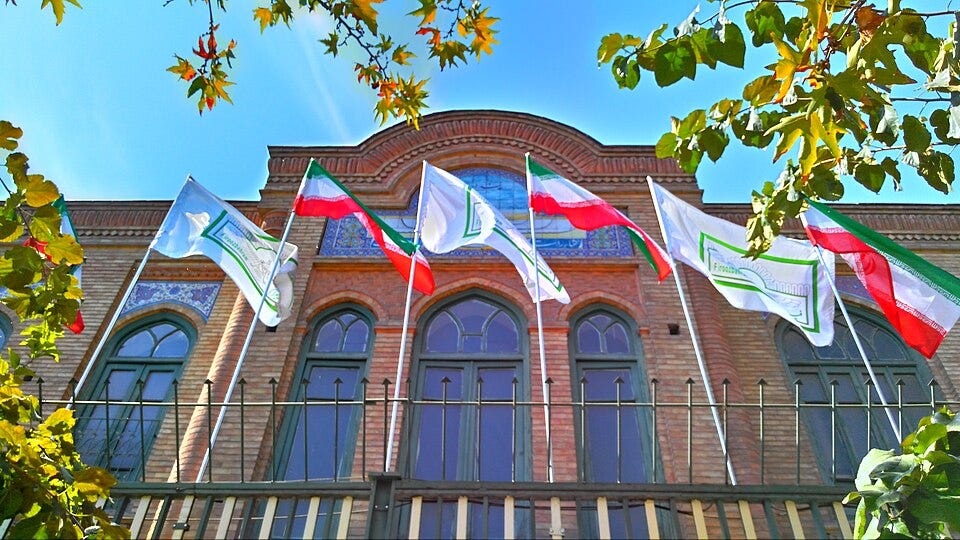

According to Hamidreza Khan-Mohammadi, head of Iran’s School Renovation Organization, 1,288 schools across the country were damaged during the war, including 16 that required complete reconstruction or major structural repairs. The damage extended across several provinces, including Tehran, Isfahan, Khuzestan, Kermanshah, Lorestan, and Hormozgan.
On September 21 in Minab, Hormozgan province, Khan-Mohammadi said that most affected schools had returned to service, while the 16 schools requiring major reconstruction remained a separate challenge. In Hormozgan alone, 79 schools outside the province’s islands sustained damage, with officials reporting that most had been prepared for the start of the academic year. A new, temporary Shajareh Tayyebeh school opened in Minab on September 23, allowing surviving students to begin the academic year in a replacement facility. The temporary school is expected to operate for two years while a permanent educational complex is being constructed.
The financial cost of damage to Iran’s education system has also been substantial. Education Minister Alireza Kazemi estimated in June that 1,507 educational facilities had sustained damage, with reconstruction and repair costs reaching approximately 37 trillion rials (3.7 trillion tomans). Subsequent statements by education officials clarified that the larger figure included multiple educational spaces associated with 1,288 schools.
While authorities have emphasized the rapid repair of damaged buildings, the interruption of classroom instruction has created additional challenges. During the war, the Ministry of Education developed three methods to continue teaching: online classes through the domestic Shad platform, televised lessons, and printed educational materials for students without reliable access to digital technology.
Kazemi acknowledged that the suspension of in-person instruction had affected education, even as teachers and school administrators attempted to maintain contact with students and families. The decision to rely on televised and printed materials alongside online platforms also reflected the difficulties faced by children without adequate internet access or electronic devices.
The effects of interrupted learning are not necessarily resolved when classrooms reopen. Students returning after extended periods of remote instruction may need additional academic support, while teachers face the challenge of restoring classroom routines and addressing gaps in learning. The burden can be especially significant for younger children and students from lower-income households who have fewer educational resources available at home.
Provincial education authorities have also acknowledged the need to compensate for learning difficulties associated with virtual instruction. In Khorasan Razavi, officials announced preparations for more than 1.5 million students, including plans to equip new classrooms, organize teaching staff, and address educational setbacks from previous disruptions.
At the same time, the rising cost of school supplies has created another financial challenge for Iranian families already struggling with inflation and declining purchasing power. Domestic media reports ahead of the academic year described significant increases in the prices of notebooks, schoolbags, stationery, clothing, and other basic educational necessities.
Mehr News Agency reported that preparing a student for the school year could cost as much as 15 million tomans, depending on the supplies purchased. For households with multiple school-age children, these expenses can represent a considerable financial burden, particularly as families also face rising food, housing, and transportation costs. A September report by the Human Rights Activists News Agency, HRANA, similarly documented the difficulties facing low-income families as the prices of stationery, school uniforms, shoes, and backpacks increased. The report highlighted concerns that growing educational expenses could further widen inequalities between students from different economic backgrounds.
These pressures illustrate how the effects of war intersect with Iran’s broader economic difficulties. While damage to school buildings is visible and can be addressed through reconstruction projects, the consequences of interrupted education and financial hardship are more difficult to measure.
For millions of Iranian children, the beginning of the academic year has traditionally been associated with new classrooms, school supplies, and the return of familiar routines. This year, it has also been shaped by damaged schools, months of educational disruption, and the financial pressures facing their families. The condition of Iran’s schools offers a broader picture of how war continues to affect everyday life, extending beyond military targets and damaged infrastructure to the education, financial security, and future opportunities of the country’s children.
Reopening schools represents an important step toward restoring normal life, but physical reconstruction alone cannot reverse the educational and economic consequences of the conflict. Ensuring that students can continue learning requires not only functioning classrooms but also accessible educational materials, support for students who have fallen behind, and assistance for families struggling to afford basic school expenses.