

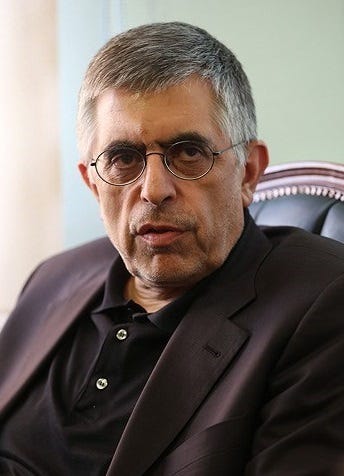
An ongoing dispute within Iran’s political establishment over the collapse of the Memorandum of Understanding with the United States reflects a broader debate on how Iran should balance military pressure with diplomacy that could end the war. The controversy intensified this week after former Tehran mayor Gholamhossein Karbaschi criticized attacks on commercial shipping in July that triggered American reprisals and a breakdown of the deal. Karbaschi argued that the attacks had given Washington a justification to abandon an agreement favorable to Iran.

The Islamic Revolutionary Guard Corps (IRGC) strongly rejected suggestions that the operation was unauthorized, insisting that it had followed the military chain of command and was a response to American violations of the agreement. The debate has drawn in prominent reformists, former presidents, senior conservatives, and Parliament Speaker Mohammad Bagher Ghalibaf, a central figure in Iran’s negotiations with Washington. It reveals divisions not simply between reformists and hardliners, but over how Iran should preserve diplomatic opportunities while maintaining sufficient deterrence against renewed military attacks.
The Islamabad Memorandum of Understanding, signed in June, established an interim framework for ending the U.S.-Iran war and negotiating a comprehensive agreement within 60 days. It called for an immediate cessation of military operations on all fronts, including Lebanon, the lifting of the American naval blockade, and arrangements under which Iran would be responsible for facilitating safe commercial passage through the Strait of Hormuz.
The agreement soon encountered disputes over implementation. Iran accused Washington of violating its commitments in Lebanon and attempting to establish a southern shipping corridor that bypassed Iranian maritime arrangements. The United States subsequently cited Iranian attacks on commercial vessels as justification for abandoning the understanding.
The central disagreement now is whether Iran’s attacks destroyed a diplomatic opportunity or were a response to American actions that had already undermined the agreement. Karbaschi, speaking on the state television program Be Vaghte Iran, argued that the Islamabad understanding had given Tehran a significant diplomatic advantage. He suggested that even international observers were surprised by Washington’s willingness to accept its terms.
According to Karbaschi, attacking the vessels provided President Donald Trump with a justification for withdrawing. Had Iran refrained from the attacks, he argued, Tehran could have retained the stronger diplomatic position. Karbaschi also questioned who had authorized the operation, referring to reports that President Masoud Pezeshkian had been unaware of it. He did not dispute that Iranian forces were responsible for the attacks but challenged the apparent lack of clarity surrounding the decision. He further argued that Iran should have used the mechanisms established under the understanding to address alleged violations rather than resorting to military action.
The controversy had already been fueled by remarks attributed to veteran reformist Behzad Nabavi, who reportedly relayed an account suggesting that Pezeshkian had not been informed about the operation. The president has not publicly confirmed that account.
IRGC spokesperson Hossein Mohebi responded by categorically rejecting the suggestion that the attacks had been carried out independently of the military command structure. Mohebi said the operation was neither unauthorized nor conducted without coordination with higher authorities. He argued that an operation of such significance could not occur outside established military procedures.
He described the attacks as a response to repeated American violations, invoking Washington’s withdrawal from the 2015 nuclear agreement and subsequent military attacks during diplomatic negotiations as evidence of a broader pattern of broken commitments. His statement confirmed the IRGC’s institutional responsibility for the operation. However, it did not identify which senior political authorities approved the attacks or establish whether Pezeshkian had been informed beforehand.
The dispute over responsibility also depends on what happened before the vessels were attacked. Lebanon was one of the earliest points of contention. Article One of the Islamabad understanding called for an immediate and permanent cessation of military operations on all fronts, explicitly including Lebanon, and respect for Lebanese sovereignty and territorial integrity. Yet on June 26, Washington brokered a separate agreement between Israel and Lebanon that envisaged a gradual Israeli withdrawal linked to security conditions, including Hezbollah’s disarmament. Israeli forces remained in parts of southern Lebanon.
From Tehran’s perspective, the Washington arrangement contradicted the Islamabad commitments by allowing Israel to maintain its military presence rather than requiring an immediate withdrawal. Whether this constituted a formal breach depends on the interpretation of the agreement, but it was a concrete source of disagreement over implementation.
The Strait of Hormuz became another major point of contention. Articles Four and Five of the Islamabad understanding recognized arrangements under which Iran would facilitate the safe passage of commercial vessels during the 60-day interim period. Iran subsequently introduced a system requiring vessels to obtain transit permits and follow designated routes. Yet Washington moved to establish an alternative southern corridor near Oman that bypassed these arrangements.
By promoting a parallel route, Washington challenged the practical authority that Tehran understood the agreement to recognize. Although the memorandum did not grant Iran exclusive sovereignty over the entire strait, its provisions provided a substantial basis for Iran’s objection to a shipping system designed to bypass its agreed role.
These disputes complicate the argument that the attacks on the three vessels were the first event to undermine the ceasefire. They do not, however, establish that attacking commercial shipping was a necessary or lawful response.
The controversy has also exposed disagreements within Iran’s reformist camp. Mohammad Reza Jalaeipour, a reformist political activist, challenged Karbaschi’s argument that Iran should have avoided giving Trump a pretext to abandon the agreement. He argued that Trump’s record of withdrawing from international agreements demonstrated that Washington did not necessarily require such a pretext. Jalaeipour also warned that preventing war at any cost could become counterproductive if it required Iran to surrender strategic leverage, including its missile capabilities or its position in the Strait of Hormuz. In his view, excessive restraint could encourage further American demands rather than secure lasting peace.
Ghalibaf, who played a central role in negotiating the Islamabad understanding, offered a broader defense of combining military pressure with diplomacy. In remarks this week, he said Iran had deliberately structured the understanding in two stages because its negotiators anticipated that Washington might not fulfill its commitments. Ghalibaf argued that military strength and negotiations should reinforce each other. He described the objective as establishing lasting deterrence by convincing adversaries that military pressure could not achieve their goals against Iran. He insisted that this did not mean advocating endless war or endless negotiations, but using both instruments to secure an agreement that could withstand future pressure.
The debate has also extended to the terms on which Iran should seek peace. In an October 15 commentary, Kayhan editor Hossein Shariatmadari sharply criticized former Foreign Minister Mohammad Javad Zarif, former President Hassan Rouhani, and senior reformist politician Hossein Marashi over positions he portrayed as encouraging concessions to Washington. Shariatmadari criticized Zarif’s references to the 1828 Treaty of Turkmenchay, rejected Marashi’s proposal for a tactical retreat to prevent another war, and opposed Rouhani’s suggestion of a referendum on whether military attacks should continue.
He went further, accusing some political figures of effectively acting as American ambassadors despite the absence of a U.S. embassy in Tehran. His criticism illustrated how disagreements over diplomatic compromise and military strategy have become intertwined with questions of political loyalty.
The emerging debate cannot be reduced to a simple division between advocates of war and supporters of peace. Karbaschi emphasizes preserving diplomatic opportunities and avoiding escalation. Jalaeipour questions whether restraint alone can prevent American pressure. Ghalibaf advocates combining military force with negotiations to establish deterrence, while Shariatmadari portrays certain proposals for compromise as politically unacceptable.
Questions about the breakdown of the understanding persist, particularly in the ongoing absence from public life of Iran’s new Supreme Leader, Mojtaba Khamenei. For ordinary Iranians, the stakes extend far beyond political disagreements. Renewed war threatens livelihoods, economic recovery, infrastructure, and prospects for stability, while the absence of credible security arrangements could leave the country vulnerable to further confrontation. What this debate reveals is an Iranian political establishment struggling not only over responsibility for the collapse of the Islamabad understanding, but over a more fundamental question: how can Iran secure a lasting peace without leaving itself vulnerable to another war?