

On July 20, Football 360, one of Iran’s most influential independent sports media platforms founded by renowned journalist and broadcaster Adel Ferdosipour, was abruptly disrupted shortly after the conclusion of the FIFA World Cup, fueling new concerns about censorship and political interference in Iranian sports journalism. Ferdosipour has worked in sports television for years, where his unvarnished, critical voice has earned him a mass following inside the country.
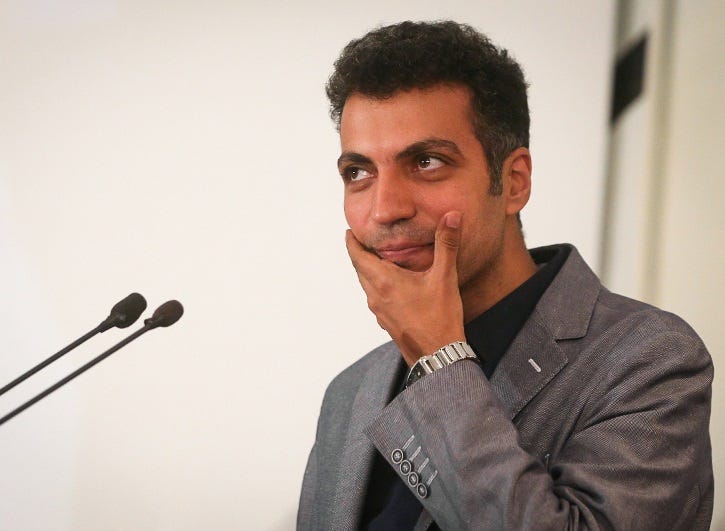

During a live broadcast, Ferdosipour revealed that Football 360’s website had gone offline only minutes before the program was scheduled to begin, forcing the show to continue through YouTube, Instagram, and Telegram. He initially expressed hope that the outage was the result of a technical problem but later suggested that it reflected years of pressure against him and his independent media platform.
The timing immediately drew attention. The disruption occurred one day after the World Cup final and came on the heels of a highly public confrontation between Ferdosipour and Iran national team head coach Amir Ghalenoei over criticism of the team’s performances.
The dispute began after Ghalenoei sharply criticized journalists and commentators who had questioned Iran’s performance during the tournament. Without naming Ferdosipour directly, he accused some media figures of disappearing during the war and returning only to attack the national team. He also questioned why the authorities continued to provide such critics with public platforms, comments widely interpreted as an appeal for official action against independent sports commentators.
Ferdosipour strongly rejected the accusations, stating that he had remained in Tehran throughout the war, while noting that Ghalenoei himself had spent part of that period at his residence in Antalya, Turkey. Defending the role of independent journalism, Ferdosipour declared, “If they expected me to say the national team played wonderfully regardless of reality, I am not that kind of person.”
While Ferdosipour linked the disruption to criticism of the national team, another explanation has emerged from Iranian media. According to Asr-e Iran, the disruption may have stemmed from a series of complaints filed by Iran’s state broadcaster (IRIB) against Adel Ferdosipour and Football 360. The report alleges that government authorities and regulatory bodies deliberately postponed intervention until after the World Cup had concluded to avoid controversy during the tournament.
According to the same report, Ferdosipour’s live interview with internationally renowned Iranian referee Alireza Faghani further intensified pressure from IRIB, ultimately leading to action against the platform the day after the World Cup final. Faghani - a referee in key matches in the World Cup - has been a target of criticism by state media after Faghani was photographed with and shook the hand of U.S. President Donald Trump after officiating a match in the United States in 2025. Yet, the possible connection to the Faghani interview could not be independently confirmed, and neither IRIB nor Iranian judicial or regulatory authorities have publicly commented on the reports. No official explanation has been provided for the disruption.
For Ferdosipour, however, the incident represented the latest chapter in a much longer history of pressure. Visibly emotional during the broadcast, he said it was the first time in his broadcasting career that he had struggled to hold back tears. Ferdosipour reflected on his earlier removal from Iranian state television in 2018 despite the immense popularity of his iconic football program Navad (90), saying that after being dismissed he had been reduced to “absolute zero.”
Rather than leaving journalism, he rebuilt his career from scratch. Football 360, launched in 2022, quickly became one of Iran’s largest independent football media platforms, covering men’s and women’s football through articles, podcasts, interviews, mobile applications and live online broadcasts. Its success provided Ferdosipour with an independent audience after years away from state television.
He argued that the platform’s growth had been accompanied by continuous efforts to undermine its work. According to Ferdosipour, guests were regularly contacted by unidentified callers and warned not to appear on Football 360, while Iran’s Football Federation prohibited members of the Referees Committee from giving interviews to the program. He also alleged that authorities had spent years scrutinizing every aspect of his finances, professional activities and private life in an effort to find material that could be used against him.
Declaring that he would not compromise his principles, Ferdosipour said, “I was never a yes-man. I am not one, and I never will be. When I see something wrong, I will say it, whatever the consequences.” One of the most striking moments of the broadcast came when he questioned why such extensive pressure was being directed at a single independent sports platform. “You have all the media. You have all the resources. You control the national team. You have everything. Can you really not tolerate one website and one application?” he asked.
The precise nature and cause of the disruption remain unclear. Reports indicated that Football 360’s website became inaccessible shortly before the live broadcast, while its Android application was reportedly removed from Café Bazaar, one of Iran’s largest Android application marketplaces. Iranian authorities have provided no official explanation for the disruption, and it remains unclear whether it resulted from legal action, regulatory intervention, technical factors, or a combination of these. The absence of any official statement has only intensified speculation about the role of government regulators, judicial authorities and state media institutions.
The controversy underscores how sports journalism in Iran has increasingly become intertwined with politics and freedom of expression. Football remains one of the country’s most influential public arenas, and criticism of the national team has increasingly become entangled with broader debates over patriotism, political loyalty and the boundaries of permissible public criticism.
Whether the disruption was triggered by criticism of the national team, long-running complaints from Iran’s state broadcaster, the interview with Alireza Faghani, or a combination of these factors, the sequence of events has heightened concerns that one of Iran’s most influential independent media platforms was subjected to political pressure because of its editorial independence. In the absence of an official explanation, the incident stands as another example of the uncertain environment facing independent journalists and digital media outlets operating outside Iran’s state-controlled broadcasting system.