

As military confrontation between Iran and the United States has resumed and the Iran–U.S. memorandum of understanding appears to have collapsed, an intense political debate has emerged inside Iran over the pursuit of negotiations to secure Iran’s interests. The debate has intensified since the funeral of former Supreme Leader Ali Khamenei, as competing political factions sought to define Iran’s response to renewed hostilities.

The central question revolves around whether and when Iran should consider diplomacy to de-escalate the present round of war. Hardline clerical and parliamentary figures argue that Washington has effectively destroyed the memorandum of understanding and that Iran should focus on winning the war and imposing unforgettable costs on the United States. In contrast, the government, reformist political groups, former President Mohammad Khatami, and several pragmatic establishment figures argue that abandoning diplomacy would guarantee a damaging regional conflict and worsen Iran’s economic and political challenges.
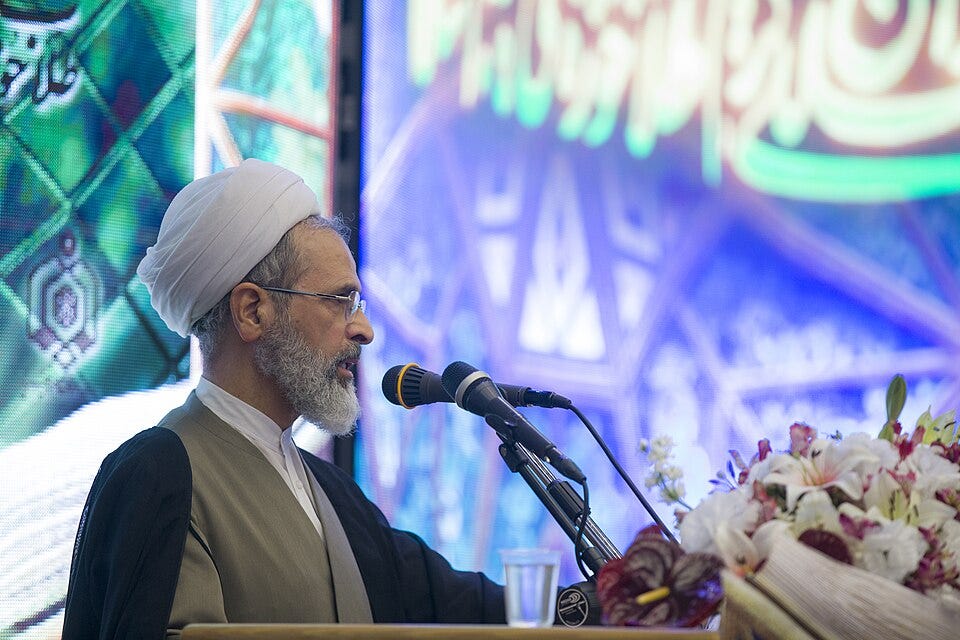
One of the strongest calls for ending diplomacy came from Alireza Arafi, Director of Iran’s Seminaries and a senior member of the country’s leadership structure. Arafi declared that the United States had violated every major provision of the memorandum and urged Iranian officials to regard it as finished. He called on President Masoud Pezeshkian, the Supreme National Security Council, military commanders and diplomats to abandon negotiations and instead pursue what he described as the path of “jihad and resistance.” He also rejected arguments that economic hardship or concern over the costs of the war should influence national strategy.
His position reflects a broader argument within hardline circles that the United States has already resumed the war and that continued negotiations would only delay an unavoidable military confrontation. This position has also gained significant support inside parliament. Approximately 180 members of the Majles signed a statement declaring that the memorandum had effectively ended, emphasizing retaliation against the United States and supporting measures to reinforce Iran’s control over the Strait of Hormuz. Their intervention demonstrates that pressure to terminate negotiations has become institutional rather than merely rhetorical.
Another influential intervention came from Seyyed Ali Khomeini, grandson of Ayatollah Ruhollah Khomeini, during a memorial ceremony held after Khamenei’s funeral. Khomeini argued that Iran’s conflict with the United States had entered a new stage following Khamenei’s death, describing the relationship as one of “blood vengeance.” He said any official who was not thinking about avenging the late leader should question his own conscience.
While acknowledging that negotiations may continue, he rejected the idea that they could ever lead to peace with Washington. Instead, he argued that “negotiation itself is another form of war” and declared that anyone seeking negotiations in order to achieve peace with the United States was a “traitor.” According to Khomeini, the Islamic Republic’s identity is defined by refusing compromise with America, and diplomacy must never become a vehicle for reconciliation or de-escalation.
Parliament Speaker Mohammad Bagher Ghalibaf has adopted a more nuanced position. He argues that Iran must remain fully prepared for war while simultaneously using diplomacy to secure national interests. According to Ghalibaf, war and negotiations are complementary instruments rather than competing alternatives. Negotiations should continue only when they preserve Iran’s battlefield achievements, protect its strategic gains, and produce concrete benefits. Otherwise, he argues, Iran has no reason to remain committed to the memorandum. Ghalibaf also emphasizes that Iran’s military must retain complete operational freedom and presents Iran’s position in the Strait of Hormuz as both a strategic military achievement and a source of diplomatic leverage. His approach attempts to preserve negotiations without allowing them to limit Iran’s military options.
The Iran Reform Front has taken another position, strongly defending both the government and the negotiating team. The coalition argues that preserving the memorandum is essential to preventing a full-scale war, reducing sanctions, stabilizing the economy, and protecting Iran’s national interests. It warns that weakening diplomacy through contradictory political messages could lead to renewed military confrontation, intensified sanctions, worsening economic conditions, capital flight and greater international isolation.
Former President Mohammad Khatami has emerged as one of the most prominent advocates of preserving negotiations. He argues that military defense, diplomacy, and domestic governance cannot be separated and describes the 14-point memorandum as an opportunity to move Iran beyond the current crisis. Khatami warns that allowing public anger after Khamenei’s funeral to dictate national policy could deepen Iran’s harm amid the war.
Khatami also challenges religious arguments being used against negotiations, pointing to Imam Hassan’s peace treaty and Iran’s acceptance of UN Security Council Resolution 598 after the Iran-Iraq War as historical examples showing that compromise can serve national survival. According to Khatami, undermining negotiations ultimately serves those seeking to drag Iran back into prolonged conflict.
The debate is not simply between reformists and conservatives. Some conservative establishment figures have also defended the continued use of diplomacy. Asadollah Badamchian, Secretary-General of the Islamic Coalition Party, argues that negotiation should not be confused with surrender and that Iran cannot demand concessions from Washington while refusing to negotiate. Judiciary Chief Gholam-Hossein Mohseni Ejei has similarly argued that negotiations do not necessarily constitute capitulation and warned that public attacks on diplomacy could create the impression that Iran’s leadership is divided.
Outside the formal political establishment, teachers’ rights activist Aziz Ghasemzadeh rejected both the Islamic Republic and foreign military intervention, arguing that Iranians should not be forced to choose between authoritarian rule and a destructive external war. He criticized attempts to portray attacks on bridges, energy facilities, schools, transportation networks, and other civilian infrastructure as attacks only against the government, arguing that such destruction primarily harms ordinary Iranians.
Taken together, the current debate has crystallized into three broad camps.
The war-and-retaliation camp - represented by Arafi, Seyyed Ali Khomeini, many lawmakers, parts of the clerical establishment, and hardline media - believes the memorandum has effectively collapsed and that Iran should prioritize retaliation and focus on winning the war.
The military-diplomatic camp - represented most clearly by Ghalibaf and parts of the security establishment - believe diplomacy should continue only when it strengthens Iran’s military position and complements deterrence.
The de-escalation camp - represented by the Pezeshkian government’s allies, the Reform Front, Mohammad Khatami, and parts of civil society - argues that preserving negotiations remains the best chance to reduce the harm to the nation by the war.
The principal disagreement inside Iran is therefore centered around whether the country should accept that another large-scale war with the United States has become inevitable or continue using diplomacy in an effort to prevent that outcome. For now, Iran appears to be pursuing a dual-track strategy, maintaining diplomatic engagement while preserving military readiness and emphasizing deterrence. Whether this balance can be sustained will depend on developments on the battlefield, the American posture toward the memorandum and the outcome of the increasingly public political struggle over Iran’s response to the renewed war with the United States.