

When Iran recently doubled its third-tier gasoline price from 5,000 to 10,000 tomans per liter, the government sought to reassure motorists that the two heavily subsidized gasoline allocations used by most drivers would remain unchanged. New comments from government spokesperson Fatemeh Mohajerani, however, provide a clearer picture of the policy behind that increase: the government had planned periodic adjustments to gasoline pricing before the war, and while it hopes to preserve the two cheaper quotas, it is not ruling out further changes to the subsidy system.
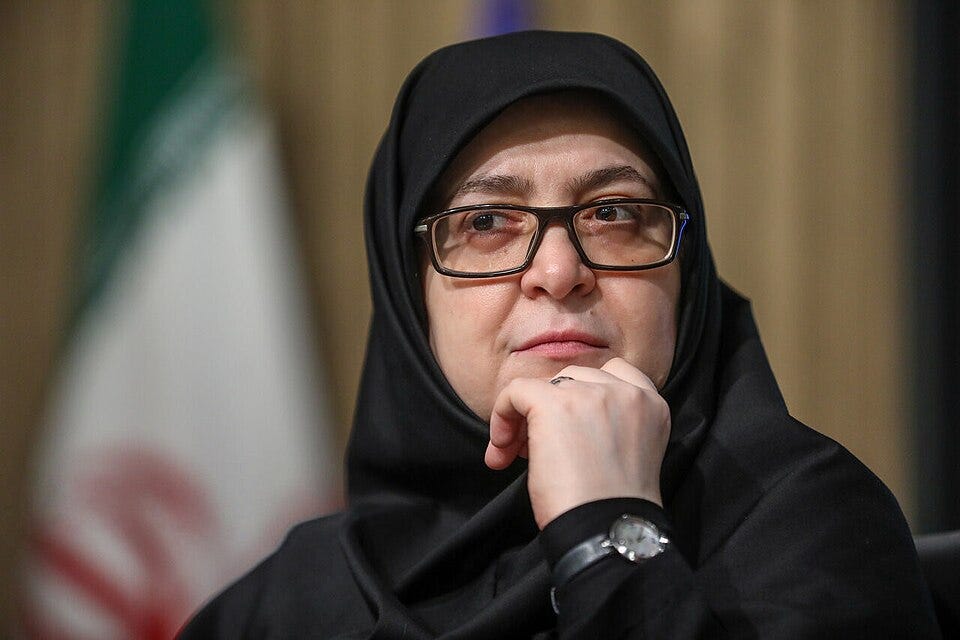

Speaking Tuesday, Mohajerani said the latest increase had actually been scheduled for last winter but was postponed because of the war. “According to the government resolution, this adjustment was supposed to take place quarterly,” she said. She also addressed the question most important to Iranian motorists. “We hope there will be no need for any reduction in the first and second gasoline quotas,” Mohajerani said.
For now, those allocations remain unchanged: private motorists receive 60 liters per month at 1,500 tomans per liter and another 50 liters at 3,000 tomans. Gasoline purchased beyond those allocations now costs 10,000 tomans. Mohajerani also said all additional revenue generated by the higher price would be spent on household livelihoods and promised that if the government decides to take further action, it will speak with the public beforehand.
Taken together, the comments suggest that the recent doubling of the third-tier price should be understood not as a one-time adjustment, but as the first visible stage of a broader effort to gradually restructure one of Iran’s largest and most politically-sensitive subsidies. The government created the framework before the current war. A resolution adopted in November 2025 and amended the following month preserved the two heavily subsidized allocations while establishing a mechanism for reviewing the higher price charged through emergency fuel cards at filling stations.
Under the amended resolution, that higher rate is subject to quarterly review by a government working group, with changes requiring presidential approval. There is an important limitation. The resolution does not mandate quarterly increases in the 1,500 or 3,000 toman gasoline price tiers. The quarterly mechanism specifically applies to the least-subsidized tier. Mohajerani likewise did not say Tuesday that the government has decided to increase either of the two cheaper rates.
But rather than guaranteeing that the existing quotas will remain unchanged, Mohajerani said the government “hopes” there will be no need to reduce them. Even 10,000-toman gasoline remains heavily subsidized compared with what the government says it costs to obtain additional supplies. First Vice President Mohammad Reza Aref has said imported gasoline costs the government more than 70,000 tomans per liter.
The government therefore appears to be keeping the politically sensitive core of the subsidy system intact while gradually increasing the price paid outside it. The difference is already substantial. A motorist using the first quota pays 1,500 tomans per liter; someone purchasing gasoline at the third-tier rate pays more than six times as much.
The problem facing the government is therefore straightforward but politically difficult: the gap between what consumers pay and what additional gasoline costs the state is enormous, but rapidly closing that gap would impose a major new burden on households already struggling with inflation and declining purchasing power.
Some newly registered vehicles valued above one billion tomans are being excluded from the standard cheap gasoline allocations and shifted toward the higher rate. The logic is that owners of more expensive vehicles should receive less government support for fuel. But inflation has complicated that distinction. A one-billion-toman vehicle in today’s Iran is not necessarily a luxury car. Years of inflation and currency depreciation have pushed some ordinary domestically-produced vehicles, including versions of the Peugeot 207, Tara and Dena Plus, toward or above that threshold.
Fuel-distribution officials have acknowledged that the threshold may need to be revised as vehicle prices rise. This points to the broader direction of the government’s strategy. Instead of eliminating cheap gasoline for everyone simultaneously, authorities can gradually determine who continues to receive it, how much they receive and what consumers pay after their allocation is exhausted.
There are strong economic pressures pushing the government in that direction. Iranian gasoline consumption has for years strained domestic production, leaving a country with some of the world’s largest hydrocarbon reserves dependent on gasoline imports. Extremely low prices encourage consumption, while inefficient vehicles and inadequate public transportation in many areas make reducing demand difficult.
War has made that imbalance more consequential. Damage and disruption affecting energy infrastructure, combined with greater difficulty obtaining imported fuel, have made the cost of maintaining extraordinarily=cheap gasoline harder for the government to absorb.
Gasoline prices carry a turbulent political history in Iran. In November 2019, authorities abruptly increased gasoline prices and introduced new rationing rules. Protests spread rapidly across the country and developed into a much broader confrontation with the political system. Security forces responded with lethal force, killing large numbers of protesters.
The government’s current strategy appears designed in part to avoid repeating that experience. Rather than imposing one dramatic nationwide increase, it is changing the system incrementally. Mohajerani’s promise that authorities will speak with the public before making further changes is notable in this context. She made a similar commitment when the current pricing framework was introduced last year.
The government’s effort to protect most motorists also explains why the first two quotas remain so important. Officials argue that the combined 110 liters available at 1,500 and 3,000 tomans are sufficient for most ordinary private motorists.
But the burden is not distributed evenly. Motorcycle couriers, delivery workers, taxi drivers and others who rely on vehicles for their livelihoods can exhaust subsidized allocations much more quickly. Representatives of Tehran’s light urban transport sector have said the monthly motorcycle allocation can last only a few days for full-time couriers. For these workers, the higher gasoline price comes alongside rising costs for tires, repairs and vehicle maintenance. Higher fuel consumption does not necessarily indicate greater wealth; in many cases it reflects the requirements of someone’s job.
That complicates the government’s attempt to distinguish between consumption that should remain heavily subsidized and consumption that should be priced closer to its actual cost. Aref has argued that people who frequently make discretionary long-distance journeys, including repeated trips to northern Iran, should pay more for the gasoline they consume. Critics inside Iran counter that consumer behavior is only one part of the country’s gasoline problem. Iran’s inefficient vehicle fleet, limited public transportation, urban development patterns and decades of government energy policy have also contributed to high consumption.
Mohajerani’s claim that all revenue generated by the latest gasoline increase will be spent on household livelihoods is another indication the government is seeking to manage public perceptions regarding gasoline pricing. The government is simultaneously discussing greater assistance through Iran’s kalabarg, or electronic coupon system, as rising food, medicine, housing and other costs put increasing pressure on household budgets. The implied strategy is redistribution rather than simply cutting subsidies: consumers using more gasoline and falling outside the categories receiving the cheapest fuel pay more, while some of the resulting resources are redirected toward household assistance.
Whether that works as promised will be crucial. Iranian households have repeatedly experienced price increases whose effects were immediate while compensation was delayed, inadequate or rapidly eroded by inflation.
Mohajerani’s comments now make the larger policy clearer. Iran is not preparing to eliminate gasoline subsidies overnight. It is building a system in which the government can periodically raise the least-subsidized price, narrow eligibility for cheap gasoline and potentially adjust quotas while attempting to shield most motorists from an immediate shock. The recent move from 5,000 to 10,000 tomans was therefore important not only because gasoline became more expensive. It demonstrated how the government intends to approach a problem Iranian governments have struggled with for decades.
The question is no longer simply whether gasoline prices will rise. It is how far Tehran can gradually move consumers away from extraordinarily cheap fuel - quarter by quarter and category by category - without turning an economic necessity into another major social and political crisis.