

Iran’s international air connections narrowed further on September 25 as Najaf, Erbil and Sulaimaniya joined Baghdad in suspending Iranian flights. Iranian aviation officials confirmed the loss of Najaf, a destination they had recently identified as an alternative to Baghdad. Senior officials in Tehran meanwhile threatened neighboring countries’ airports if they cooperated with Washington’s campaign to deny services to Iranian airlines.
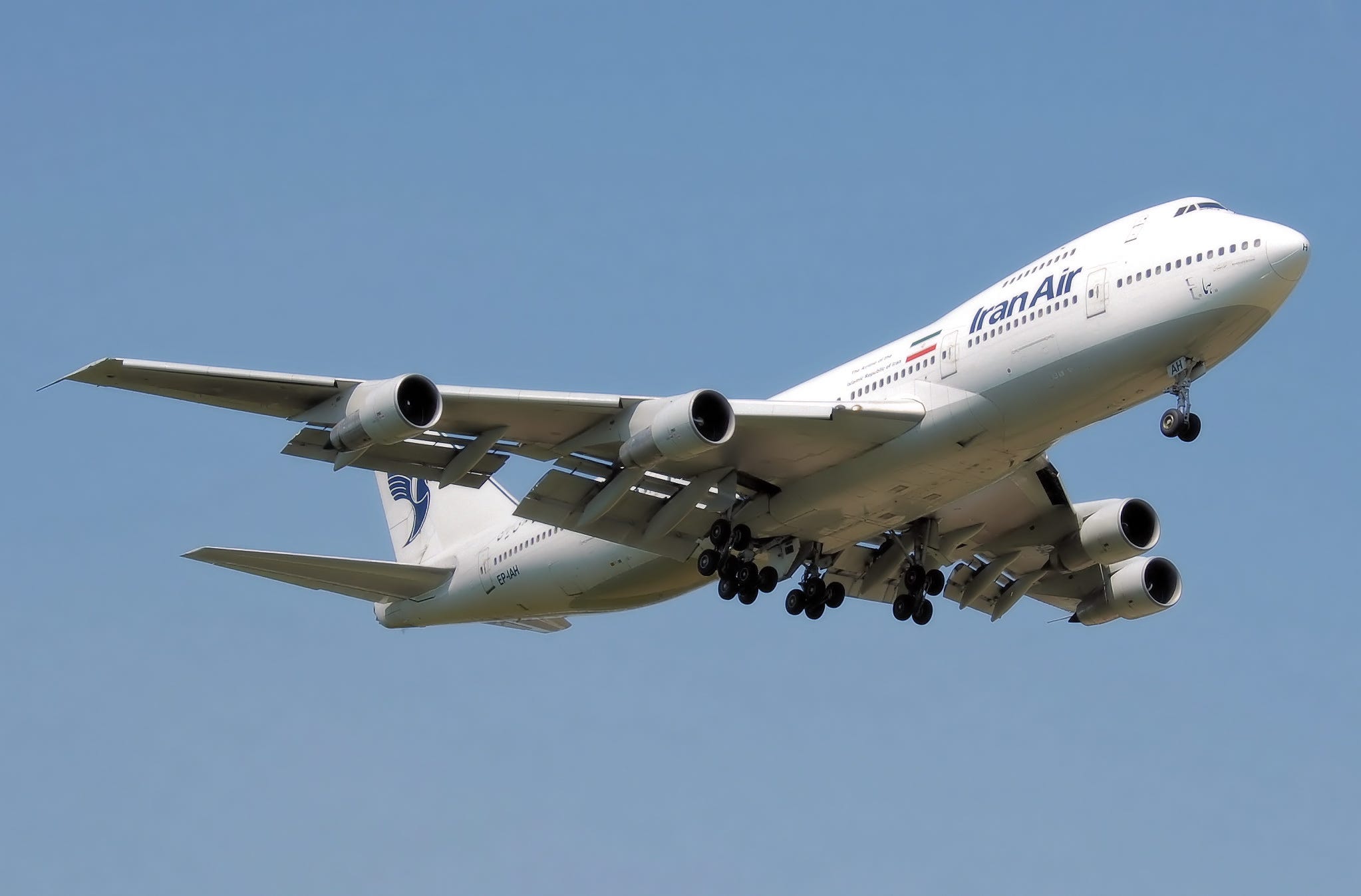

Ramin Kashef Azar, chief executive of Imam Khomeini Airport City, told Iranian media that Najaf airport had stopped accepting Iranian flights at 2 a.m. Friday and that no decision had been made to resume them. His remarks, reported by Saat24, confirmed that another major connection between Iran and Iraq - and a fallback that Iranian authorities had only recently proposed - had closed. Reuters subsequently reported, citing two sources, that Erbil and Sulaimaniya were also suspending Iranian flights from Friday.
Passengers were already encountering the consequences. According to BBC Persian, officials at Najaf prevented travelers from boarding a Meraj Airlines flight to Mashhad, leaving the aircraft to return without passengers. The incident illustrates how restrictions on airport services can prevent a journey even when an aircraft is available.
The cancellations extend restrictions that have already affected several nearby destinations. Iranian newspaper Rah-e Emrooz reported on September 24 that services to the United Arab Emirates, Georgia, Azerbaijan and Oman had been canceled. The disruption follows Washington’s expansion of sanctions against Iranian aviation. After designating 27 Iranian airlines earlier in September and canceling key authorizations allowing overflights and U.S.-origin aircraft to travel to Iran, the administration announced a September 23 deadline for its effort to deny them overseas support.
Treasury Secretary Scott Bessent threatened exclusion from the dollar system for companies providing Iranian carriers with fuel, airport services or ticket sales. The pressure extends beyond the airlines themselves to the foreign companies whose cooperation is necessary for international passenger flights.
Iranian officials have responded by threatening the operation of airports elsewhere in the region. On September 23, Mohsen Rezaei, secretary of Iran’s Supreme National Security Council, warned on Iranian state television that neighboring countries cooperating with U.S. aviation sanctions would find their own airports unable to operate.
Mohammad Mokhber, an adviser to Iran’s supreme leader, reinforced that warning on September 25. In a statement published by Iranian outlets including Khabar Online and Etemad Online, he said that if Iran lost access to flights and airport services, other countries in the region would lose that ability as well. Neither statement identified specific targets, a timetable or an operational order. They nevertheless raised the possibility of a confrontation affecting civilian aviation beyond Iran, as neighboring governments face both U.S. financial pressure and Iranian threats.
Despite the expanding restrictions, some international connections remain operational. The situation differs by country, airline and route. Turkey provides the clearest example. Mahan Air’s earlier suspension of Istanbul and Ankara services did not end every Iranian airline’s access to Turkey. BBC Persian reported that aircraft operated by Iran Air and Qeshm Air landed at Istanbul International Airport on September 25. Iranian domestic reporting also continued to list Turkey among available destinations.
China remained on the active-route list published by Rah-e Emrooz on September 24, alongside Russia, Armenia, Pakistan, Belarus and Afghanistan. These reports describe a continuing network, although they do not establish that every scheduled flight subsequently operated. Malaysia’s diplomatic mission in Tehran also publicly confirmed that direct connections remained available. Speaking at a tourism promotion event in Tehran on September 24, Malaysia’s chargé d’affaires and head of mission said flights between Iran and Malaysia, as well as connections with Southeast Asia, were continuing. Iranian transport outlet Tinn reported his remarks.
The diplomat expressed hope that the services would continue and that more Iranian tourists would visit Malaysia. His statement provides an official account of continuing connectivity, although it does not confirm the operation of each scheduled departure. Separate reporting based on flight tracking had also recorded Iranian services to Thailand after Washington’s announced deadline.
A flight to Tajikistan demonstrates another way airlines are attempting to preserve international access: changing the route when permission to cross a country’s airspace is denied. A Varesh Airlines service bound for Dushanbe returned to Tehran on September 24 after Turkmenistan refused permission to cross its airspace. According to airline sources cited by BBC Persian, the journey was subsequently completed through Azerbaijani, Kazakh and Uzbek airspace before reaching Tajikistan.
More than 90 passengers traveled on the rerouted outbound service. The return flight departed Dushanbe at approximately 1 a.m. Friday with another 90 passengers bound for Tehran. The episode highlights the distinction between permission to land and permission to cross another country’s airspace. A destination can remain accessible even when the usual route becomes unavailable. Conversely, a flight appearing on a departure board does not establish that all the necessary permissions and services are in place.
For passengers, the result is an extremely unpredictable system, leading to canceled flights, unexpected delays and deep frustration. The Najaf case involves travelers reportedly prevented from boarding; the Dushanbe case involves a return to the departure airport followed by an alternative flight path. Both provide concrete examples of disruption beyond announcements of future restrictions.
Fewer direct connections and longer routes can create additional expenses for replacement tickets, accommodation and onward travel. The available reporting does not yet provide a reliable measure of those costs. Their impact will depend on the route, the availability of alternatives and passengers’ ability to meet transit or entry requirements.
These restrictions affect journeys for family visits, education, medical care and religious travel. For Iranians living abroad, they can also make reaching relatives in Iran more difficult. The immediate burden falls on passengers whose travel depends on the airport services and financial arrangements being targeted.
The latest developments show shrinking air options rather than a complete halt to international travel. Iraqi alternatives have closed, while some connections through Turkey, China and other destinations continue. Airlines are trying to preserve access through remaining airports and different flight paths. Tehran’s threats now add the risk that restrictions already disrupting Iranian civilian travel could escalate into a broader confrontation over regional aviation.