

As Iran continues to grapple with the aftermath of both a devastating military conflict and months of political unrest, teachers’ organizations inside Iran and their international allies are increasingly warning that educators, students, and children have become some of the primary victims of the country’s overlapping crises. In recent days, two significant developments highlighted growing concern within the global labor and education movement. At the International Labour Organization (ILO) conference in Geneva, Shiva Ameli-Rad, the international representative of Iran’s Coordinating Council of Teachers’ Trade Associations (CCTTA), delivered a statement condemning both the U.S.-Israeli war against Iran and the repression faced by labor and civil society activists inside the country. Around the same time, the American Federation of Teachers (AFT), one of the largest education unions in the United States, adopted a resolution calling for an immediate end to the war and emphasizing that military action undermines rather than advances democracy, human rights, and peace.
Together, these statements reflect a perspective that has become increasingly common among independent labor and civil society groups: that ordinary people—particularly workers, teachers, students, and children—bear the greatest costs of both war and authoritarian repression. Speaking before delegates at the ILO, Ameli-Rad argued that many of the labor and union activists who should have been participating in international forums remain imprisoned, under prosecution, or subjected to various forms of state pressure because of their advocacy for workers’ rights. She urged delegates not to overlook the continued suppression of independent labor organizing and civil society activism in Iran.
Her remarks also drew attention to the human costs of the recent conflict. According to the Coordinating Council, children and students have paid an especially heavy price during both the war and the broader political crisis that preceded it. Ameli-Rad noted that the conflict exacerbated already severe economic hardships, contributing to job losses, increased poverty, and growing barriers to education.
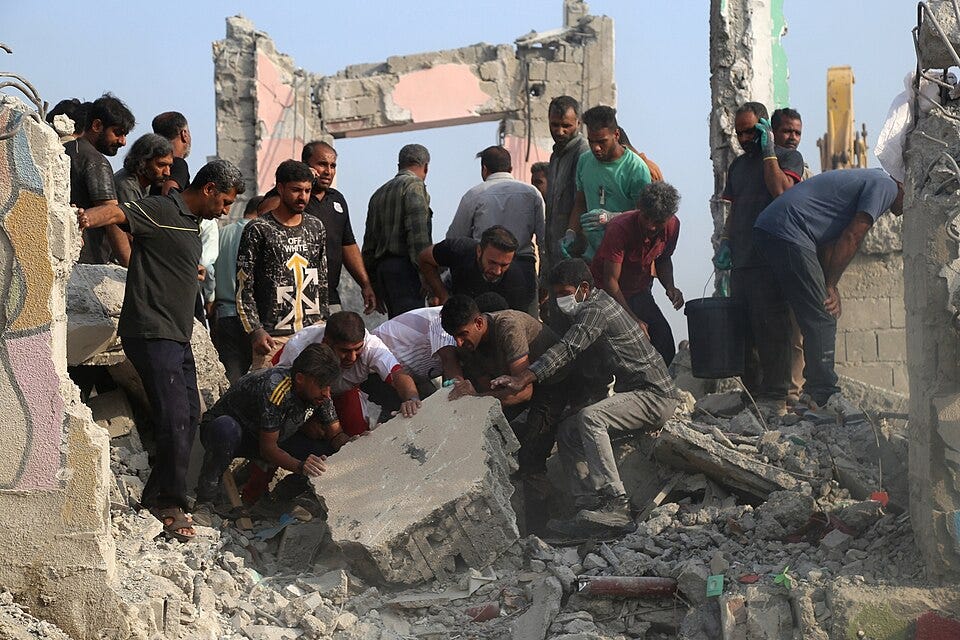
One of the most devastating incidents highlighted by teachers’ representatives was the bombing of an elementary school in Minab on the first day of the war. According to the Coordinating Council, the attack killed at least 120 children, making it one of the deadliest known attacks on a school during the conflict. Teachers’ organizations have pointed to the tragedy as a stark example of the disproportionate toll that warfare imposes on children and educational communities. Beyond the immediate loss of life, the attack left profound psychological trauma for survivors, families, teachers, and students across the country.
.jpg)
Educators warn that attacks on schools not only destroy lives but also undermine the fundamental right to education. The Minab school bombing disrupted entire communities, deepened fear among students and parents, and reinforced concerns that educational institutions are increasingly vulnerable during periods of conflict. Teachers’ advocates have also criticized the lack of accountability and independent investigation into the incident, arguing that attacks on schools and children must be subject to transparent scrutiny regardless of the actor responsible.
The statement further emphasized that the education sector has suffered through multiple layers of crisis. Teachers and students were affected not only by wartime disruptions but also by the consequences of domestic political repression. In the view of the Coordinating Council, the same communities that faced violence and insecurity during the conflict had already endured significant losses during the wave of protests earlier this year.
The organization highlighted that Iranian students have paid a devastating price in both crises. During the January protests and subsequent crackdown, approximately 250 children reportedly lost their lives. Months later, the war brought another wave of suffering to schools and educational communities, with the Minab tragedy becoming a powerful symbol of the dangers facing children during armed conflict.
For teachers’ organizations, this dual experience has strengthened their opposition to both militarization and repression. The Coordinating Council reiterated that it opposes war, military intervention, dictatorship, and political repression in all forms and regardless of the actor responsible. It argued that meaningful democratic change can only emerge through independent civic organizing and collective action from within society rather than through military force.
These concerns were echoed, from a different perspective, by the American Federation of Teachers. In its newly adopted resolution, the AFT characterized the 2026 war against Iran as unnecessary and harmful, arguing that military escalation has failed to advance democratic values or improve human rights conditions. The union asserted that diplomatic engagement remains a more effective path toward addressing concerns regarding Iran’s nuclear program and regional security.
Notably, the AFT resolution simultaneously criticized both the Iranian government’s domestic human rights record and the military campaign against Iran. The resolution described the Iranian government as authoritarian and acknowledged longstanding concerns regarding restrictions on labor rights, discrimination against women and minorities, and repression of independent civil society. However, it rejected the notion that war would improve these conditions, arguing instead that military conflict often strengthens insecurity while weakening prospects for democratic development.
The union also expressed solidarity with Iranian educators and independent teachers’ organizations, including members of the Coordinating Council who have faced pressure, detention, and restrictions because of their advocacy efforts. By connecting opposition to war with support for labor rights and democratic freedoms, the resolution sought to advance an alternative vision centered on diplomacy, accountability, and human rights.
The convergence of these positions is noteworthy. Although emerging from very different political and institutional contexts, both statements reject the idea that the rights of ordinary people can be protected through military escalation. At the same time, both emphasize that concerns regarding human rights violations inside Iran cannot be ignored.
For Iranian teachers, the stakes are particularly high. The education system has faced repeated disruptions due to economic instability, political tensions, and conflict. Teachers’ unions have long warned about declining educational opportunities, growing poverty among students, and increasing barriers to accessing quality education. The recent war has compounded many of these challenges by further straining household finances and public resources.
Children have emerged as the central victims in both the war and the domestic crackdown. Whether discussing casualties during the January protests, the bombing of the Minab elementary school, the impact of military operations, or the economic consequences of conflict, both the Coordinating Council and the AFT emphasized that young people have borne a disproportionate share of the suffering. The loss of educational opportunities, rising child labor, school dropouts, and psychological trauma are all likely to have long-term consequences extending far beyond the immediate crisis.
As debates continue regarding Iran’s future, the statements delivered in Geneva and adopted by educators in the United States underscore a message that has increasingly resonated across labor and human rights movements: protecting human dignity requires opposition both to external military violence and to internal repression. For teachers and students, whose lives are shaped by the decisions of governments and armed actors alike, peace and justice remain inseparable goals.
From the perspective of organizations advocating for diplomacy and human rights, the experiences of Iranian educators highlight the urgent need for policies that prioritize civilian protection, educational access, labor rights, and democratic freedoms. The voices emerging from teachers’ organizations inside Iran and from international labor unions suggest that sustainable peace will require not only an end to military confrontation but also meaningful respect for the rights of workers, educators, students, and civil society actors throughout the country.