

Iranian football is mourning the loss of two of its most respected figures, Hassan Habibi and Hamid Alidoosti, whose careers spanned different generations of the country’s sporting history. Both men played important roles in shaping Iranian football, leaving behind a legacy that extends beyond their achievements on the field to the generations of players they coached and inspired.
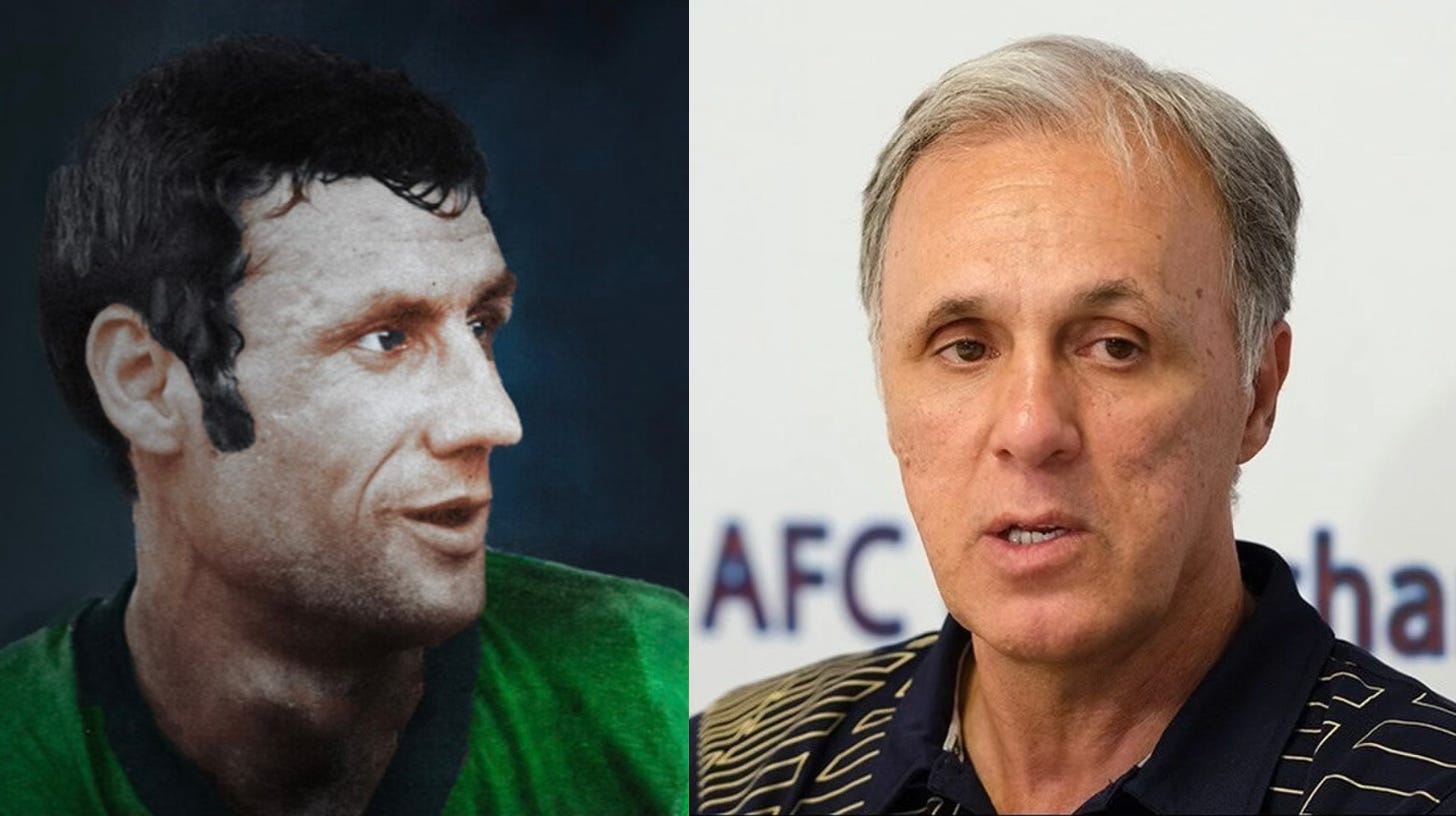
Hassan Habibi, a former national team captain and coach, died in Tehran on Monday, November 2, at the age of 86. One of the prominent figures of Iranian football before and after the 1979 revolution, Habibi played for some of the country’s most historic clubs, including Shahin, Taj, and Pas. His move from Shahin to Taj in the 1950s became one of the earliest controversial transfers in Iranian football, reflecting the intense rivalries that were already emerging between Tehran’s major clubs. He later helped establish Pas, which went on to become one of the country’s most successful football institutions.
Habibi captained Iran during its first Asian Cup triumph in 1968, a historic achievement that helped establish the national team as a leading force in Asian football. The victory marked the beginning of a period in which Iran would win three consecutive Asian championships. Following the 1979 revolution, Habibi became the first official head coach of Iran’s national football team. He guided Iran through qualification for the 1980 Moscow Olympics, but the team was ultimately unable to participate after Iran joined the boycott of the Games in response to the Soviet invasion of Afghanistan.
Habibi’s coaching career also reflected the diversity of Iranian football. He spent many years leading Ararat, a club closely associated with Iran’s Armenian community, which has made significant contributions to the country’s sporting and cultural life. His work with the club became an important part of his coaching legacy.
During the 1990s, Habibi also coached Iran’s Olympic and youth-level teams, working with players who would later become household names. Karim Bagheri, Mehdi Mahdavikia, Mehrdad Minavand, and Khodadad Azizi were among the footballers who played under his guidance and went on to represent Iran at the highest levels.
Hamid Alidoosti, the former Iranian national team forward, died on Sunday, November 1, in Tehran, following a prolonged illness. Iranian media reported that he had been receiving treatment for prostate and bone cancer and died following cardiac arrest at Erfan Niayesh Hospital. Alidoosti was widely admired for his technical ability, intelligent movement, and professionalism. He was particularly associated with Homa, one of Tehran’s prominent football clubs, and became a familiar name to Iranian supporters during the late 1970s and 1980s.
He scored 15 goals in 27 appearances for Iran’s national team, establishing himself as one of the country’s notable forwards of his generation. He also played professionally in Germany, joining the relatively small group of Iranian footballers who gained experience in European club football during that period. After retiring as a player, Alidoosti remained involved in football as a coach, sharing his experience with younger generations. His reputation was built not only on his goals and performances but also on his conduct, modesty, and dedication to the sport.
Alidoosti was also the father of Taraneh Alidoosti, one of Iran’s most prominent actresses, whose work in Iranian cinema has earned international recognition. His passing brought together figures from both the sporting and artistic communities. His farewell ceremony was attended by football personalities, artists, friends, and family members, reflecting the respect he had earned beyond the football field.
The deaths of Habibi and Alidoosti mark the passing of two important figures whose lives were closely connected to different chapters of Iran’s modern history. Habibi belonged to the generation that helped establish Iran’s dominance in Asian football during the 1960s and 1970s and continued to serve the sport after the revolution. Alidoosti represented a generation that sustained Iranian football through the difficult years of the 1980s, when war and political upheaval profoundly affected the country’s sporting institutions.
Both men also contributed to the development of younger players, helping preserve the continuity of Iranian football across generations. Their careers reflect the history of a sport that has remained one of the strongest sources of shared identity, pride, and collective memory among Iranians, both inside the country and throughout the diaspora.
The National Iranian American Council (NIAC) extends its heartfelt condolences to the families and loved ones of Hassan Habibi and Hamid Alidoosti, their former teammates, players, colleagues, and friends, and to the entire Iranian football community and Iranian fans around the world. Their achievements, dedication, and contributions to Iranian sports will remain part of the country’s football heritage. Their loss will be deeply felt, but their legacy will live on through the generations of Iranians who grew up watching, admiring, and learning from them.