

As diplomatic efforts to resolve the Iran-U.S. conflict face mounting uncertainty, a complex picture is emerging in which both sides are projecting strength while quietly probing for an exit from the impasse on their terms. This includes Iran proposing a structured three-phase negotiating formula, communicated to the American side through intermediaries.
In the first phase, Tehran demands a complete and permanent cessation of hostilities, with binding guarantees that war will not be resumed against Iran or Lebanon. Only if this condition is met would Iran enter a second phase, focused on the management and legal framework of the Strait of Hormuz, with Oman’s participation. The nuclear file is explicitly reserved for the third and final phase, and Tehran has made clear it will not engage on nuclear issues until full agreement is reached on the first two stages. This sequencing reflects Iran’s core strategic calculation: it refuses to surrender its nuclear cards at the outset of negotiations and intends to use it as the ultimate point of leverage.
This stands in direct tension with Washington’s stated position. President Trump has repeatedly identified Iran’s nuclear program as the primary objective of both negotiations and, if necessary, military action, signaling a preference for a maximalist deal that addresses the nuclear question upfront. Trump canceled his envoys’ travel to Islamabad for a rumored negotiation round over the weekend, posting on Truth Social that too much time was being wasted, that Iran’s leadership is in a state of internal confusion, and that “we have all the cards, they have none.”
Iran, however, is calculating that time may be working in its favor. Tehran reportedly believes Washington has limited appetite for launching a new round of war ahead of the U.S. midterm elections, and is calibrating its negotiating posture accordingly. Iran also appears to be actively working to internationalize the crisis and reduce its isolation.
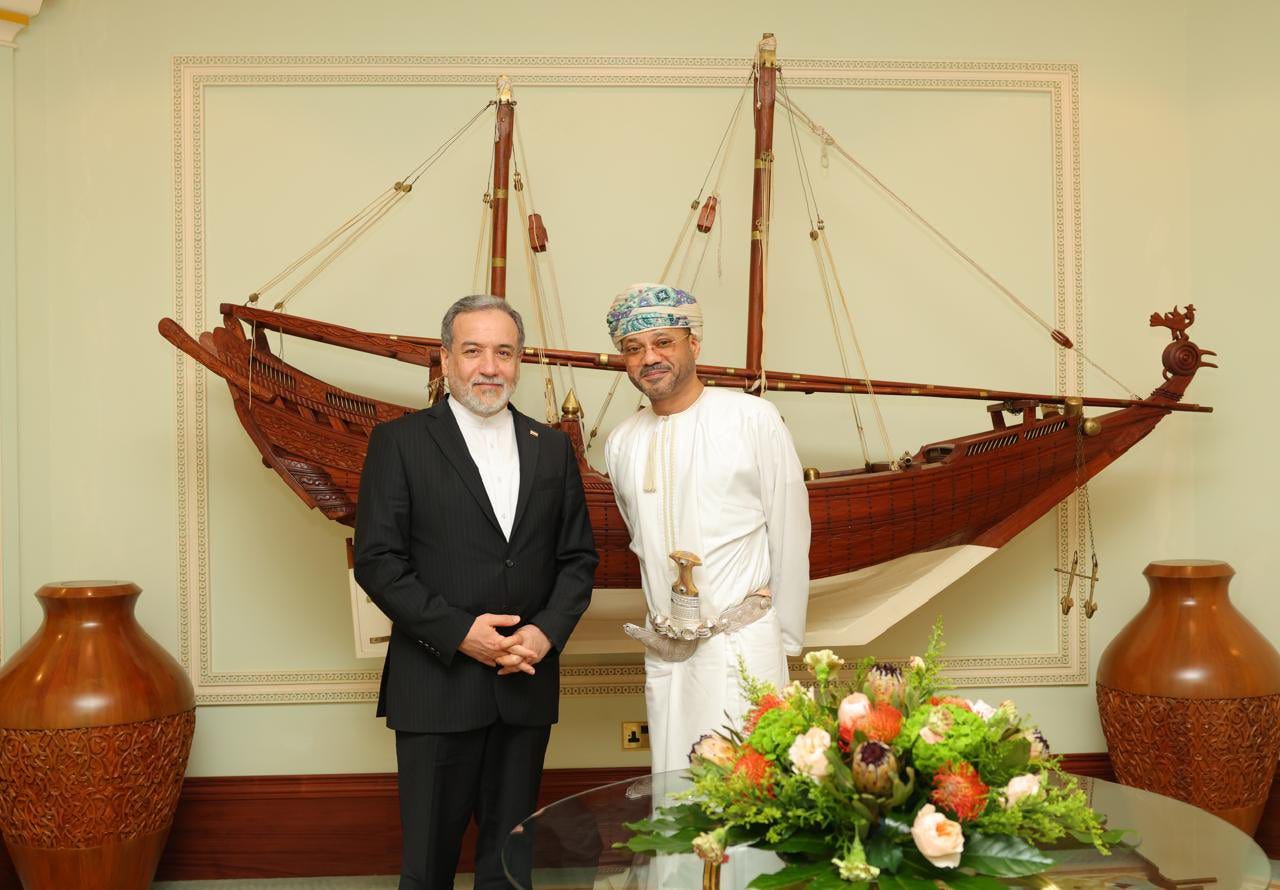
Amid these continued developments, Iranian Foreign Minister Abbas Araghchi’s diplomatic tour has taken center stage. He visited Muscat, Oman where discussions centered on the Strait of Hormuz and safe passage guarantees, meeting with Oman’s Sultan Haitham bin Tariq. Oman’s Foreign Minister Badr Albusaidi, a former mediator between Tehran and Washington, confirmed the talks and called for “more diplomacy” and practical solutions. According to Iranian state media, Araghchi then traveled to Islamabad twice within 48 hours with “Iran’s written messages to the United States regarding nuclear red lines and the Strait of Hormuz,” which was delivered to Pakistani officials, including Army Chief Field Marshal Asim Munir and Prime Minister Shehbaz Sharif. Pakistan reaffirmed its commitment to serving as a neutral facilitator. Araghchi also held phone calls with the foreign ministers of Qatar and Saudi Arabia, briefing them on Iran’s diplomatic initiatives. He has now traveled to Moscow.
The Russia dimension is significant. In St. Petersburg, President Vladimir Putin met with Araghchi and stated that Moscow would spare no effort to help guarantee peace in the Middle East. Araghchi described the Iran-Russia relationship as a “strategic partnership” that will only grow stronger. Putin expressed hope that under the “new leadership” - a reference to Mojtaba Khamenei, from whom he had received a letter in this trip - Iran would navigate this difficult period. Iran is clearly seeking to align closer with Russia and China amid the crisis as counterweights to American pressure.
On the economic front, U.S. Treasury Secretary Scott Bessent has overseen the continuation of financial pressure on Iran. This includes the sanctioning of Chinese petrochemical firm Hongli Refining for purchasing billions of dollars of Iranian oil, the targeting of approximately 40 vessels linked to Iran’s so-called “shadow fleet,” and the blocking of $344 million in digital assets tied to Iranian regime officials. Bessent has warned that any entity - individual or vessel - involved in covert Iranian oil trade will face U.S. sanctions, and stated that Iran’s attacks on Gulf neighbors may prove a “fatal mistake,” as those states are now far more willing to scrutinize and expose suspicious transactions in their banking systems.
Iran has responded with its own escalatory signals. A senior aide to President Pezeshkian warned that for every Iranian oil well damaged by a blockade, Iran would guarantee damage to four oil wells in countries supporting the aggressor. Iranian state television published a list of energy infrastructure it says would be targeted if war resumes, including Qatar’s North Field gas facilities, UAE offshore oil and gas hubs, Saudi Arabia’s Abqaiq, Safaniyah, and Khurais installations, and Kuwait’s Burgan oil field.
On the American military side, three U.S. carrier strike groups are currently deployed in the CENTCOM area of operations, and unconfirmed reports suggest the USS Dwight D. Eisenhower, recently out of maintenance, may be joining the region, which could bring the total to four. Trump has also publicly claimed that Iranian oil infrastructure faces a risk of internal mechanical explosion within approximately three days if the export pipeline blockage continues, a statement widely interpreted as both a warning and a psychological pressure tactic. Some experts dispute this assertion, given Iran’s experience in responding to various changes in oil markets and pressure over the years.
The overall picture is one of two sides preparing simultaneously for a negotiated resolution or war. Iran is buying time, sequencing concessions carefully, and internationalizing the crisis. The United States is sustaining its military presence, tightening the economic pressure, and demanding a comprehensive deal. Whether and how quickly the space between these two postures can be bridged will define whether the U.S. and Iran return to war or agree to take an offramp.