

Iran’s parliament has taken the first step toward restructuring the Ministry of Intelligence following successive wars that exposed serious vulnerabilities in the country’s security apparatus, including the assassination of Intelligence Minister Esmail Khatib. The proposed reforms could allow a non-cleric to lead the ministry for the first time while establishing two new organizations whose directors would be appointed directly by Supreme Leader Mojtaba Khamenei.
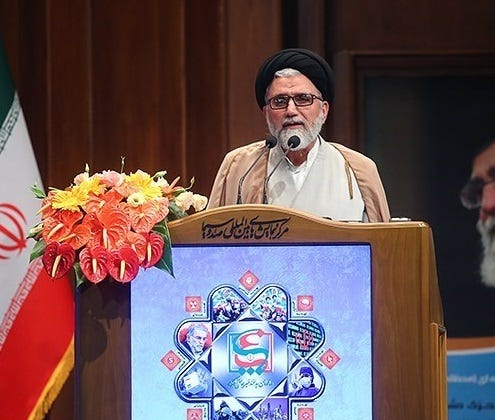
On November 15, parliament approved a single-urgency motion to consider amendments to the laws governing the ministry, with 192 lawmakers voting in favor, 49 against, and four abstaining. The vote did not approve the restructuring itself, which still requires legislative review and approval by the Guardian Council.
The initiative comes nearly eight months after Khatib was killed in an Israeli airstrike on March 18, 2026. His assassination followed the killing of numerous senior military commanders, nuclear scientists, and security officials during the June 2025 twelve-day war and the subsequent 2026 conflict. The fact that Iran’s own intelligence minister became a successful Israeli target was a particularly striking demonstration of the country’s security vulnerabilities.
These operations reinforced a perception among critics and political observers that Israeli intelligence had repeatedly outmaneuvered Iran’s security establishment. Israel’s seizure of Iran’s nuclear archive in 2018, the assassination of nuclear scientist Mohsen Fakhrizadeh in 2020, and additional sabotage and assassination operations had already raised serious concerns about counterintelligence capabilities. The twelve-day war brought those weaknesses into sharper focus when Israeli attacks eliminated several senior commanders and nuclear scientists in the opening stages of the war and hobbled Iran’s ability to retaliate.
Although the precise extent of Israeli penetration remains difficult to establish, the successful identification and targeting of senior officials raised fundamental questions about operational security, intelligence coordination, and the protection of sensitive information. Criticism of these failures has also come from within Iran’s political establishment. Following the twelve-day war, President Masoud Pezeshkian acknowledged that the conflict had exposed fundamental shortcomings in the country’s security arrangements.
Former Intelligence Minister Ali Younesi had issued an even more explicit warning years earlier. In a 2021 interview with the Iranian news website Jamaran, he said Mossad’s penetration had become so extensive that senior officials should fear for their lives. Younesi blamed the problem partly on competition among parallel intelligence organizations, arguing that they had become excessively focused on monitoring domestic critics rather than identifying foreign intelligence networks.
Former President Mahmoud Ahmadinejad also alleged in 2021 that an official responsible for countering Israeli intelligence had himself been recruited by Mossad, along with approximately 20 colleagues. These specific allegations have not been independently verified, but they illustrate how concerns about Israeli penetration had entered Iran’s political debate well before the recent wars.
The Intelligence Ministry has offered a different assessment of its performance. Following the June 2025 phase of the war, it claimed to have prevented the assassination of 35 senior officials and disrupted Israeli-linked networks. Khatib also defended the ministry’s operations and emphasized cooperation among security institutions. These claims have not been independently verified in full and coexist with the documented success of major Israeli operations.
The resulting debate is not simply whether Iran’s intelligence services experienced serious failures, but whether those failures resulted from inadequate professional expertise, institutional rivalry, compromised security procedures, or deeper structural problems. One central element of the proposed legislation concerns removing the longstanding requirement that the intelligence minister possess ijtihad, an advanced qualification in Islamic jurisprudence. The requirement has effectively reserved the position for clerics, limiting the pool of potential candidates to those with certain religious qualifications, but who may lack extensive knowledge of the intelligence field and how to run effective institutions.
Supporters argue that intelligence leadership should depend primarily on professional experience and operational expertise. Amir Hayat-Moghadam, deputy chairman of parliament’s National Security and Foreign Policy Committee, has supported expanding eligibility to experienced intelligence professionals without clerical backgrounds. However, lawmakers have offered conflicting explanations, with some defending the existing religious qualification.
The proposed institutional changes could prove more consequential. According to the Iranian news agency Tasnim, the legislation would establish two organizations within the ministry: an Intelligence Protection Organization responsible for internal security and counterintelligence, and an Ideological-Political Organization overseeing religious and ideological affairs.
The directors of both organizations would be appointed directly by the supreme leader, while the intelligence minister would continue to be nominated by the president and confirmed by parliament. The arrangement resembles existing structures within Iran’s armed forces, where similar organizations operate under leaders appointed by the supreme leader. If implemented, the changes would significantly alter the relationship between the Intelligence Ministry and the elected government. The precise distribution of operational authority, budgets, and oversight responsibilities remains unclear.
The proposal has generated criticism within parliament. Lawmaker Mojtaba Yousefi warned that creating two additional leadership structures could effectively leave the ministry with three centers of authority, potentially complicating management rather than improving coordination. This concern highlights a central contradiction: reforms intended to address intelligence failures could reproduce the institutional fragmentation that former officials have identified as one of their causes.
The debate also raises questions about the longstanding rivalry between the Intelligence Ministry and the Islamic Revolutionary Guard Corps’ Intelligence Organization. Both institutions have overlapping responsibilities in counterespionage, domestic surveillance, and national security investigations, but operate under different chains of command. The ministry formally belongs to the executive branch, while the IRGC Intelligence Organization operates within an institution directly accountable to the supreme leader.
Their competition has occasionally become visible in politically-sensitive investigations. One prominent example involved environmental activists detained on espionage allegations by the IRGC Intelligence Organization despite the Intelligence Ministry’s assessment that the accusations were unsupported.
Following the recent wars, the possibility of merging the two organizations has attracted renewed attention. In an article published in the reformist newspaper Etemad, journalist Mehdi Beik-Oghli examined whether consolidating Iran’s intelligence institutions could improve coordination and reduce bureaucratic rivalry. However, a merger remains a subject of debate rather than an announced government policy, and it is separate from the legislation currently under parliamentary consideration.
For critics of Iran’s security establishment, including opposition commentators, repeated Israeli operations have raised questions about whether excessive attention to domestic dissent has diverted resources from countering foreign intelligence threats. This argument echoes Younesi’s earlier criticism, although no unified opposition position on the specific restructuring proposal has emerged.
The implications extend beyond institutional efficiency. The Intelligence Ministry plays a significant role in investigations involving political activists, journalists, civil-society organizations and alleged national security offenses. Changes to its leadership and internal command structure could therefore affect both counterintelligence operations and citizens’ rights.
A more coordinated intelligence system could improve Iran’s ability to identify foreign operations, but concentrating authority without effective oversight could also increase the risks of politically-motivated surveillance and restrictions on civil liberties. Ultimately, the proposed restructuring reflects two potentially competing objectives: professionalizing intelligence leadership following devastating security failures and strengthening the supreme leader’s direct authority over important components of the ministry. Whether these reforms produce a more effective and accountable intelligence service, or merely redistribute power among competing security institutions, remains the central unresolved question.