

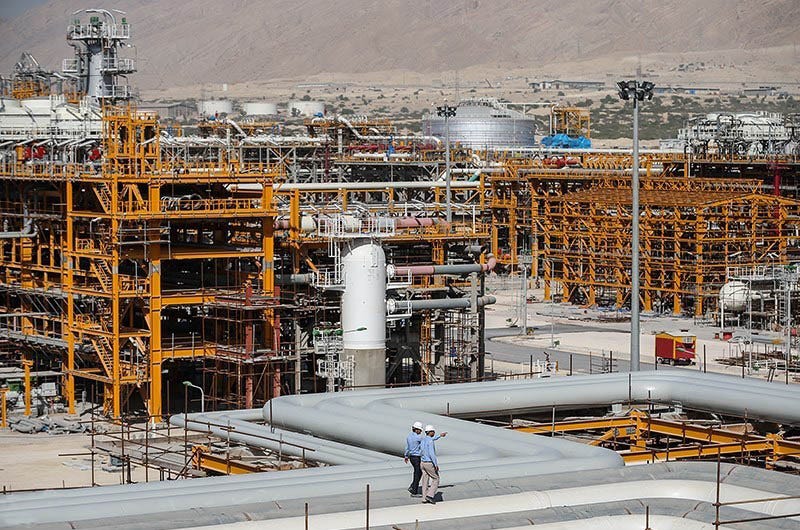
Iran is approaching winter with a potentially serious natural gas shortage following wartime damage to its energy infrastructure, even as the country reports a significant improvement in electricity supply during the summer. The government is working to repair damaged facilities, secure additional fuel, and explore gas imports from northern neighbors to prevent disruptions to household heating and industrial production.
.jpg)
President Masoud Pezeshkian acknowledged the challenge on October 15, saying that attacks had damaged gas facilities, power plants and factories. He pledged that the government would work to maintain gas and electricity supplies throughout the winter.
According to the National Iranian Gas Company, attacks on four gas-processing facilities eliminated approximately 230 million cubic meters of daily processing capacity. Repairs have restored roughly 100 million cubic meters, leaving an estimated 130 million cubic meters of prior capacity unavailable. These figures are based on official statements and have not been independently verified.
The losses have compounded a longstanding structural problem. Even before the war, Iran faced an estimated natural gas deficit of 200 million to 250 million cubic meters per day during periods of peak winter consumption. The additional damage has increased concerns about the country’s ability to meet demand as temperatures fall.
The situation contrasts with Iran’s experience during the summer. On September 21, Mohammad Allahdad, a senior official at the state electricity company Tavanir, reported that Iran’s peak electricity deficit had fallen from approximately 20,000 megawatts in summer 2025 to 10,000 megawatts in summer 2026, a reduction of 50 percent. Iranian officials also reported fewer electricity supply restrictions during the summer, suggesting that households and businesses experienced less disruption than in the previous year. However, comprehensive independent data on the frequency and duration of power outages are not available.
The reported improvement came despite wartime damage to electricity infrastructure. Officials attributed it to repairs, conservation measures, demand management, and the expansion of generating capacity, including renewable energy projects.
However, winter energy is a different story entirely. While summer electricity demand is driven largely by cooling, winter places much greater pressure on natural gas supplies as households increase heating consumption. The same gas network must also supply power plants, petrochemical facilities, and other industries.
One of Iran’s most important options is to resume or expand gas imports. Even relatively modest imports could help stabilize supplies in northern Iran by reducing the need to transport gas over long distances from southern production centers.
Turkmenistan represents a potential target for increased imports of natural gas, which already has pipeline connections to northeastern Iran. The possibility has received renewed attention following Pezeshkian’s recent visit to Ashgabat. Iranian media, including Mehr, have highlighted the potential for Turkmen gas to ease shortages in northern and northeastern provinces, which are particularly vulnerable because they are located far from Iran’s major gas fields in the south.
Turkmenistan previously supplied gas directly to Iran, while the two countries have also participated in gas-swap arrangements involving Azerbaijan. Such arrangements allowed Iran to receive gas in its northern provinces while delivering equivalent volumes elsewhere, reducing pressure on its domestic transmission network.
However, previous supply interruptions, commercial disputes, payment difficulties, and competition for Turkmen exports have complicated these arrangements. There is currently no confirmed evidence of a new agreement that would provide substantial additional Turkmen gas supplies during the coming winter.
Russia represents another potential supplier. In 2025, Iranian officials announced a preliminary understanding with Moscow concerning the import of up to 55 billion cubic meters of Russian gas annually, potentially through Azerbaijan. However, the announced figure represented a proposed long-term arrangement rather than gas already being delivered. Significant imports would require finalized commercial agreements, suitable pipeline infrastructure, and operational coordination among the countries involved. There is no confirmed evidence that deliveries on such a scale will begin before this winter.
Azerbaijan could also play a role through existing pipeline connections and swap arrangements, although the availability of additional gas would depend on commercial negotiations and regional supply commitments.
There is also disagreement among Iranian energy specialists over whether imports can provide meaningful relief in time. Energy expert Hashem Oraee has warned that northern provinces could face particularly severe shortages, questioning whether Iran can rely on Turkmenistan or Russia to provide sufficient additional gas given existing commercial, infrastructure, and geopolitical constraints.
However, imports alone are unlikely to eliminate the country’s national gas deficit in the immediate future. The government is also working to restore damaged gas-processing infrastructure, particularly facilities associated with South Pars, which supplies a large share of Iran’s natural gas. Officials have reported progress in restoring capacity, although substantial losses remain.
Another option is substituting liquid fuels for natural gas at power plants. Mohammad Sadegh Azimifar, head of the National Iranian Oil Refining and Distribution Company, reported that approximately 3.2 billion liters of liquid fuel had been stored for power plants ahead of winter, with reserves reportedly around 25 percent higher than a year earlier. These reserves could help maintain electricity generation when gas supplies are restricted. However, not all power plants can switch fuels, and greater reliance on diesel and heavy fuel oil could worsen air pollution in cities already affected by winter smog.
Authorities can also reduce gas consumption through efficiency measures, heating restrictions in public buildings, adjustments to industrial operating schedules, and campaigns encouraging households to conserve energy. Such measures can ease peak demand but cannot fully compensate for major production losses.
Longer-term options include reducing gas flaring, capturing associated gas from oil fields, expanding renewable electricity generation, improving building insulation, and increasing investment in gas production and transmission infrastructure. These measures could reduce pressure on the system over time, but most cannot deliver substantial additional gas before this winter.
Iran’s energy difficulties also reflect years of underinvestment, inefficient consumption, aging infrastructure, and restrictions on financing and technology under sanctions. The war has intensified these problems by damaging facilities that were already operating within a strained system.
The government’s central dilemma is how to protect household heating without imposing severe restrictions on industrial production. Iranian authorities have traditionally prioritized residential gas supplies during winter, often reducing deliveries to factories, petrochemical facilities, cement producers, and power plants when temperatures fall. That approach can protect households from immediate hardship, but it shifts much of the economic burden to businesses and workers. Reduced industrial gas supplies can interrupt production, increase costs, and contribute to inflation and employment losses.
In unusually cold conditions, even residential supplies can become vulnerable, particularly in northern and northeastern provinces where pipeline constraints limit the ability to compensate for local shortages. The economic stakes are especially high this year. Wartime damage, sanctions, and disruptions to trade have already placed considerable pressure on Iranian businesses and household finances. Prolonged energy restrictions could deepen those difficulties.
Iran’s improved summer electricity performance suggests that repairs and demand management can produce meaningful results, even under wartime conditions. But the approaching winter presents a different and potentially more difficult challenge. The outcome will depend on how quickly damaged facilities can return to operation, whether imports from northern neighbors materialize, how effectively alternative fuels are distributed, and the severity of winter temperatures. Another major escalation in the war could also significantly worsen these expected challenges.
For millions of Iranians, the consequences will extend beyond whether their homes remain heated. The winter gas shortage could also determine whether factories can continue operating, workers retain their incomes, and the economy avoids another round of energy-related disruption.