

Senior Iranian officials have accused American media outlets of helping prepare public opinion for renewed military attacks on Iran, following two reports published within days of each other. Yesterday, a CNN report quoted U.S. intelligence officials who had indicated that Tehran may be planning a radioactive “dirty bomb” attack in Washington, DC. Separately, a New York Times report examined whether Iranian dams and water infrastructure have been powering Iran’s underground missile facilities. Both reports have been heavily criticized by numerous observers in the United States for relying on suspect evidence and building pressure toward further military escalation.
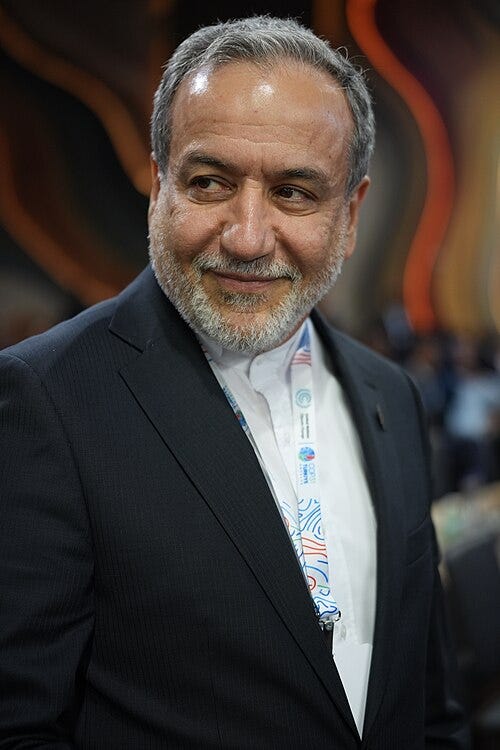
Abbas Araghchi, Iran’s Foreign Minister, called the reports “RUBBISH.” He stated, “In the past 72 hours, pro-Israel media have “reported” that Iran is supposedly plotting to use chemical weapons in DC while building missile bases under dams. RUBBISH. Spare us the Iraq War-style propaganda, especially with Israeli fingerprints all over it. Nobody is buying it.”

Parliament Speaker Mohammad Bagher Ghalibaf wrote on X regarding the CNN report, “Same false flags, same war mongering, new logos. The right’s credibility deficit is maxed out, so the messaging operation pivoted to NYT and CNN. Approved by Larry Ellison, biggest private donor to Israel’s IOF and CNN’s new owner. Media capture in full swing.” Notably, Ellison - the new owner of CNN via his conglomerate Skydance - does have a history of financial support for Israel and its military, though no reporting exists suggesting he has been involved in the editorial and publication process for the report. Regarding the report on dams, Ghalibaf said that it was part of an effort to build consent for attacks on civilian infrastructure, and warned “New rule: Any dam, port, or power plant near a US or Israeli base is dual-use. We’ll apply your logic consistently and even-handedly.”
Foreign Ministry spokesperson Esmail Baghaei echoed the charges from other figures that the New York Times report was part of a campaign to manufacture security justifications for further attacks on civilian infrastructure that are essential to millions of Iranians.
Their accusations come amid questions about Israeli intelligence warnings, a recent visit by the Mossad director to Washington, and disagreements among American officials over the credibility of alleged Iranian threats. The CNN report cited seven American officials familiar with intelligence assessments who indicated that intelligence suggested Iran was developing possible plans to target Washington, DC, and potentially senior Trump administration officials with a “dirty bomb” that disperses radiological material, or a chemical weapon in Washington, DC. The report described intelligence suggesting that Iranian planners had discussed specific targets and locations. One source also claimed that intercepted communications indicated materials potentially suitable for such an attack might already have been concealed inside the United States.
However, CNN acknowledged that American officials disagreed about the credibility of the intelligence and Iran’s ability to execute such an operation. The reported planning was characterized as an effort to develop possible options, rather than evidence of an imminent attack. No publicly disclosed evidence established that Iran had assembled a device, positioned an operational team, or authorized an attack.
Such a move would be a major escalation by Iran, which has responded aggressively within the Middle East but also carefully considered how the war is playing out in the American public. Iran’s soft power influence operations have sought to suggest that Iran is fighting a war of self-defense, highlighted the economic costs of the war to ordinary Americans and suggested that Iran has no quarrel with the American people. Threatening the United States with WMD would run directly counter to such efforts seemingly aimed at undermining American domestic support for the war.
The report also comes after American media figure Tucker Carlson, who has extensive ties to figures in President Trump’s orbit, suggested that the United States could launch nuclear weapons at Iran. While the President has previously dismissed such ideas, the prevalence of discussion of using nuclear weapons against Iran in American media could have triggered efforts in Tehran to countersignal and seek to establish deterrence.
The White House stated that it was monitoring potential threats but had identified no credible threat to the American homeland at that time. President Trump subsequently said the allegations were being investigated and warned Iran of severe consequences if an attack occurred.
The New York Times investigation examined whether some of Iran’s extensive dam-building and water-transfer projects might have helped provide water, electricity, or other support to underground military facilities. It drew on geographical analysis and interviews with military and water specialists, while acknowledging uncertainty about the alleged connections.
Baghaei cited water reservoirs in Khomein, Haftkel, and Bamani in Sirik, alongside desalination facilities on Qeshm Island and in Nikshahr, Tis, and Banji near Jask, as examples of infrastructure that Iranian authorities say had already been attacked during the war. According to Tehran, the resulting damage disrupted water supplies to civilian communities. The circumstances and extent of damage to each facility have not all been independently verified.
Baghaei also invoked international humanitarian law, particularly protections for dams and installations containing dangerous forces. Although the laws of war do not categorically prohibit attacks on every facility with civilian and military uses, they impose strict requirements concerning military objectives, proportionality, precautions, and civilian protection.
Iran’s mission to the United Nations also rejected the chemical-weapons allegations, emphasizing that Tehran considers the use of such weapons illegitimate under any circumstances. Iran’s experience as a victim of Iraqi chemical attacks during the 1980–1988 war remains an important part of its official position on chemical warfare.
Criticism of the New York Times report has not been limited to government officials. Kaveh Madani, director of the United Nations University Institute for Water, Environment and Health and a former Iranian environmental official, challenged the investigation’s underlying reasoning. In a post on X, Madani emphasized that speculation is not evidence and geographical proximity does not establish a causal relationship. He argued that the presence of military installations near dams does not demonstrate that the dams were built to serve those installations. Madani also criticized what he regarded as sensational reporting that could have dangerous consequences for civilian water infrastructure.
Esfandyar Batmanghelidj of Bourse & Bazaar noted he was “perplexed” by the report, stating that less than 10% of Iran’s 500+ dams have turbines installed to generate electricity. He suggested that the reason that Iran has engaged in so much dam building is because “there are vested interests, including IRGC construction companies, that use infrastructure budgets to generate rents.”
Notably, separate reporting has signaled division within Washington over information relayed to the United States by Israeli intelligence agencies. On November 3, The New York Times reported that Israeli intelligence officials had warned their American counterparts that Iran was developing the capability to deliver chemical weapons through missiles or covertly introduce them into hostile countries. Israeli officials reportedly portrayed the chemical-weapons threat as more urgent than Iran’s nuclear program.
These warnings generated deep skepticism among some American officials, who viewed them as part of a pressure campaign by Prime Minister Benjamin Netanyahu’s government to persuade the Trump administration to resume major combat operations against Iran. The newspaper also reported that officials in several Persian Gulf countries questioned the Israeli assessments, with one regional official describing briefings that presented conclusions without supporting evidence.
The New York Times further reported that, for some American officials, the Israeli warnings recalled the flawed U.S. intelligence assessments about Iraqi weapons of mass destruction in 2002, which helped justify the 2003 invasion of Iraq. Other U.S. officials, however, considered the Israeli warnings serious in light of intelligence indicating possible Iranian attacks against American interests. The disagreement is significant because it demonstrates that concerns about the reliability of Israeli intelligence were already being raised within American security circles, nearly two weeks before CNN published its dirty-bomb allegations.
Another development has attracted attention: the visit of Mossad director Roman Gofman to Washington on November 13. According to Axios, Gofman, a close confidant of Israeli Prime Minister Benjamin Netanyahu, met CIA Director John Ratcliffe and was expected to hold further discussions with U.S. envoy Steve Witkoff in Miami. The visit occurred as Netanyahu was pressing Trump to resume military operations against Iran, with the American president reportedly favoring maintaining economic pressure and maritime restrictions rather than initiating another major bombing campaign.
The visit also coincided with heightened security precautions involving senior Trump administration officials. CNN reported that Treasury Secretary Scott Bessent had been moved into military housing during the preceding week following threats attributed to Iran. Israeli media described similar protective arrangements involving other senior officials.
Nevertheless, CNN’s dirty-bomb report appeared just three days after the Mossad director’s reported Washington meetings. The proximity of these developments has added to questions about the timing and origins of the intelligence disclosures, although there is no public evidence establishing that Mossad supplied the specific information cited by CNN.
Some security analysts have also questioned the feasibility of such an attack. Talha Abdulrazaq, a researcher at the University of Exeter, told Al Jazeera that Iran lacks the long-range strike capabilities needed to reach Washington directly and considered the alleged dirty-bomb scenario highly unlikely.
The broader political context is also significant. Trump has resisted Netanyahu’s calls for renewed large-scale military action, while Israeli opposition figures have expressed concern that an escalation involving Iran could interfere with efforts to form a new government following Israel’s October election. Axios reported that some Israeli opposition figures feared Netanyahu might launch an attack or provoke an Iranian response during the political transition.
Iranian officials have emphasized what it deems a cumulative pattern: allegations of hidden military purposes behind dams, warnings about chemical weapons, claims of a possible dirty-bomb attack in Washington, and renewed Israeli pressure for military escalation. Tehran argues that these developments could create a public climate in which further attacks on Iran are presented as defensive or preventive measures.
The suspect reports raise serious questions about how intelligence assessments are verified, how uncertainty is communicated to the public, and how reports involving unconventional weapons may influence decisions about war. For U.S. policymakers, credible threats require serious investigation and appropriate security measures. But the potential consequences of acting on incomplete or disputed intelligence are equally significant, particularly when renewed military operations could expose Iranian civilians to further attacks on essential infrastructure or put American soldiers at increased risk. That the politicization of dubious WMD-related intelligence paved the way for the invasion and occupation of Iraq underscores the risks at stake, and raises the question of whether history is once again repeating itself on Iran.