

The appointment of Mohammad Bagher Zolghadr as Secretary of Iran’s Supreme National Security Council (SNSC), issued by President Masoud Pezeshkian and approved by the Supreme Leader, marks a significant development in Iran’s security structure amid ongoing war and internal uncertainty. Zolghadr replaces Ali Larijani, who was killed in an Israeli strike on March 16 (26 Esfand) alongside members of his family, aides, and security team. The killing of Larijani has intensified the urgency of leadership consolidation within Iran’s top security institutions.
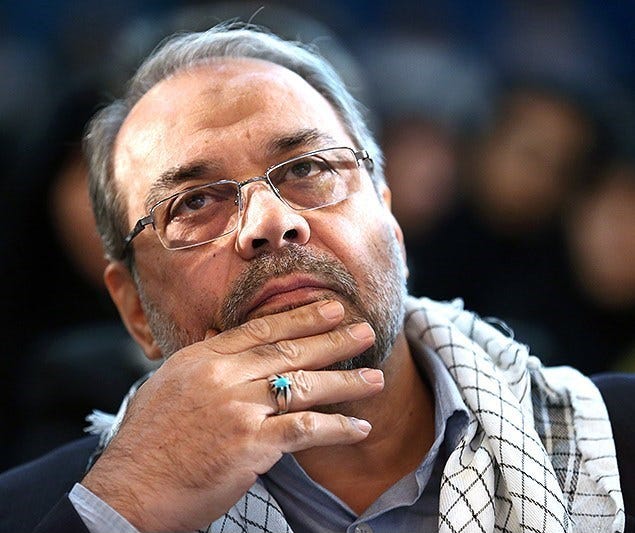

Zolghadr is a senior IRGC commander and long-standing figure within Iran’s security and political system, with a career spanning pre-revolutionary militancy, post-revolutionary institutional building, and high-level governance. Before this appointment, he served as Secretary of the Expediency Discernment Council (since 2021) and was appointed as a permanent member of the council in 2022 by the Supreme Leader. His elevation to the SNSC comes at a moment when Iran’s leadership appears to prioritize security continuity, ideological alignment, and crisis management capacity.
The position of SNSC secretary is formally appointed by the president; however, the role carries deeper significance. While the secretary does not have an independent vote, the individual is often simultaneously appointed as the Supreme Leader’s representative in the council, which confers voting power and decisive influence. As of now, Zolghadr has not yet been officially named as the Leader’s representative, a role currently held by Saeed Jalili, leaving open questions about the full scope of his authority within the council.
Zolghadr’s background reflects deep integration with the Islamic Revolutionary Guard Corps (IRGC) and the evolution of Iran’s extraterritorial military strategy. He was among the founders of the IRGC’s Ramadan Headquarters, a precursor to what later became the Quds Force, responsible for Iran’s regional operations. His early involvement in armed opposition before the 1979 revolution—as a member of the Mansouroun group—and later participation in the formation of the Mojahedin of the Islamic Revolution Organization (right-wing faction) demonstrate his longstanding alignment with revolutionary and hardline currents. Following the revolution, Zolghadr held key roles including:
Head of IRGC training
Commander of irregular warfare headquarters
Chief of the IRGC Joint Staff
Deputy Commander-in-Chief of the IRGC for eight years under Yahya Rahim Safavi
His transition into governmental roles included serving as Deputy Interior Minister for Security Affairs (2005–2007), although he was later removed amid reported disagreements over how to respond to potential internal unrest under external pressure. Some accounts attribute his departure to policy differences with President Mahmoud Ahmadinejad, while others point to strategic disagreements over domestic security responses.
Zolghadr has also been directly associated with internal security operations, including participation in the suppression of the 1999 student protests, and later served in the judiciary as Deputy for Social Protection and Crime Prevention (appointed in 2010). Politically, he has been linked to hardline networks, including membership in the central council of JAMNA (Popular Front of Islamic Revolutionary Forces).
His appointment signals several broader trends. First, it reflects a continued consolidation of security power within figures rooted in the IRGC and revolutionary institutions, especially in a wartime environment. Second, it suggests a preference for experienced security operators capable of managing both internal dissent and external confrontation. Third, it reinforces the security-first doctrine that increasingly defines Iran’s strategic posture.
The historical trajectory of the SNSC leadership - from Hassan Rouhani to Ali Larijani, Saeed Jalili, Ali Shamkhani, Ali Akbar Ahmadian, and again Larijani, and now Zolghadr - illustrates a gradual shift from diplomatic-security hybrids toward more deeply militarized and ideologically aligned figures. Zolghadr’s appointment appears to accelerate this trajectory. In sum, the elevation of Mohammad Bagher Zolghadr to the head of Iran’s top security body underscores a critical reality: at a time of war, leadership loss, and regional escalation, Iran is doubling down on centralized, hardline, and security-driven governance, with decision-making increasingly concentrated in the hands of veteran IRGC figures.
Is the IRGC’s declared decentralized command structure changing?