

The war between the United States, Israel, and Iran is in the midst of a dangerous phase, where civilian infrastructure, nuclear-adjacent sites, and global energy flows are central to the conflict itself. Recent developments, including President Donald Trump’s threat to strike Iran’s electrical grid, Iranian missile attacks near Dimona following U.S.-Israeli strikes on Natanz and Washington’s temporary easing of sanctions on Iranian oil highlight a war that is expanding beyond traditional military boundaries into a broad and destabilizing confrontation.
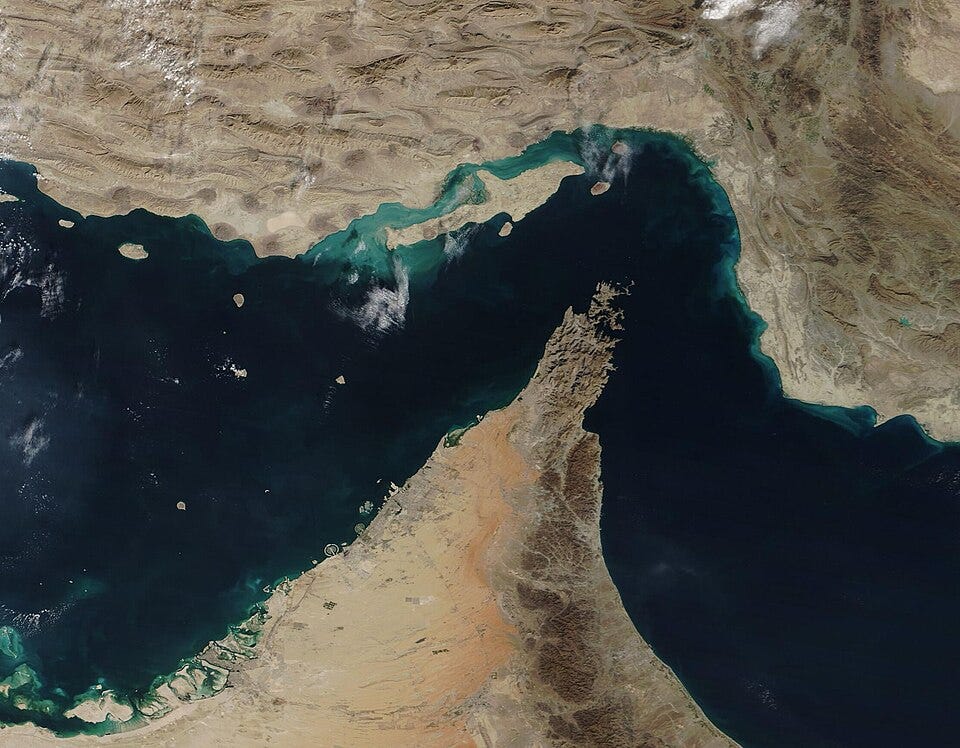
At the center of this escalation is President Trump’s 48-hour ultimatum warning that if Iran does not reopen the Strait of Hormuz, the United States will begin targeting Iranian power plants, starting with the largest ones. Issued on Saturday night, Trump’s latest ultimatum marks a clear threat against civilian infrastructure, a move with potentially severe humanitarian consequences.
.jpg)
Iranian officials responded with explicit retaliatory threats, stating that any such attack would lead to the complete closure of the Strait of Hormuz and trigger widespread strikes on energy, electricity, water, and technological infrastructure across the region, including in countries hosting U.S. forces. Since the first days of the war, Iran has demonstrated a consistent pattern of following through on its stated red lines, which has significantly increased the credibility of its threats. Notably, after the strikes on Asalouyeh, Iran carried out retaliatory attacks on regional energy infrastructure, reinforcing the perception that its warnings are not merely rhetorical but operational. As a result, international actors are increasingly taking Iran’s declarations seriously, recognizing that its escalation framework is both deliberate and actionable. This growing credibility has heightened concerns across global energy markets and among regional stakeholders about the risks of further escalation.
If Trump acts on his threat it is likely the U.S., Israel and Iran enter a full-scale infrastructure warfare, where electricity systems - essential for hospitals, water supply, communications, and daily life - are treated as targets. The consequences of such a shift would likely extend far beyond Iran, risking regional blackouts, economic disruption, and large-scale civilian harm for tens of millions of people.
At the same time, the conflict has moved dangerously close to nuclear-sensitive areas. U.S. and Israeli forces targeted Iran’s Natanz nuclear facility, which had been bombed extensively in the June war. In the same sequence of events, a strike also reached the vicinity of Iran’s Bushehr nuclear site, where at least one bomb landed nearby but did not cause damage.
In response, Iran launched missiles toward southern Israel, including Dimona - located near Israel’s nuclear facilities - injuring large numbers of Israelis. The powerful missile impact, captured on numerous cameras, landed in a populated area and not on the nuclear facility itself. At least one other missile impacted in the city of Arad, not far from Dimona. These strikes on the two cities led to nearly 200 injuries, 11 of them serious, and included at least two children.
Notably, the Dimona strike came after the attack on Natanz, indicating a reciprocal cycle involving nuclear-adjacent targets. Even without direct hits, military activity near nuclear facilities significantly increases the risk of miscalculation, accidental escalation, or catastrophic consequences that would spread radiation to neighboring civilians..
The geographic scope of the war also continues to evolve. In a highly significant development, the United States indicated that Iran launched two ballistic missiles toward the U.S.-UK military base at Diego Garcia, approximately 4,000 kilometers from Iran. One did not reach the base, while the other was reportedly intercepted by a warship.
Notably, Iran denied that it had launched the missile at Diego Garcia. Iran had previously voluntarily imposed a range limit on its missiles of 2,000 kilometers, though in practice many of its current models could be modified to try to hit targets further away. If it was Iran that engaged in the launch, it would appear that Iran has halted adherence to its voluntary range limit amid war. That could put additional nations and bases in its range, though with the war ongoing, Iran does not lack for nearby potential targets amid its current retaliatory doctrine.
Amid this military escalation, the Trump administration has taken a seemingly contradictory step by issuing a temporary waiver allowing the sale of approximately 140 million barrels of Iranian oil already at sea. The stated objective is to stabilize global energy markets, which have been severely disrupted by the conflict and tensions in the Strait of Hormuz.
However, this move exposes a fundamental contradiction: while escalating militarily and threatening critical infrastructure, Washington is simultaneously easing economic pressure to try to mitigate a global energy crisis. This dual-track approach reflects the growing difficulty of sustaining both maximum pressure and market stability at the same time.
More broadly, the war is increasingly defined by strategic ambiguity and internal contradictions. U.S. leadership has suggested that the war is nearing its end, yet military deployments continue, threats intensify, and new fronts are emerging. Iran is described as weakened or defenseless, yet it continues to launch coordinated missile and drone attacks across multiple countries and extend its reach to distant targets while finding ways to hit critical American military systems, sometimes causing significant casualties.
The move toward targeting additional, vital civilian infrastructure is deeply concerning. This transformation dramatically raises the stakes, not only for the region but for the global economy and civilian populations. Targeting power plants risks severe humanitarian consequences and invites reciprocal attacks across the region. Strikes near nuclear facilities increase the danger of catastrophic escalation, even if unintended. And the need to release Iranian oil to stabilize markets underscores the economic unsustainability of continued escalation. Absent a shift toward de-escalation, the current trajectory suggests the conflict is moving toward a broader regional, and potentially global, crisis, where military actions, energy markets, and civilian vulnerabilities are tightly interconnected.