

The International Atomic Energy Agency’s Board of Governors voted on September 9 to report Iran to the United Nations Security Council, escalating a dispute over nuclear inspections while Tehran seeks international action against attacks on its nuclear facilities. The resolution, introduced by the United States, Britain, France and Germany, received 23 votes in favor, with Russia, China and Niger opposed.
.jpg)
The decision does not automatically impose new sanctions or authorize military action. It provides a fresh basis for UN Security Council consideration of unresolved safeguards issues, alongside a separate dispute over the restoration of earlier sanctions. For Iran, the immediate consequences are increased diplomatic pressure and the possibility of a deeper breakdown with the international nuclear monitoring agency.
Tehran’s response centers on how inspections should operate after safeguarded nuclear facilities have been attacked. In comments published September 9, Iran’s representative in Vienna, Reza Najafi, said continuing wartime conditions prevented Iran from properly preparing and providing information about affected facilities for safety and security reasons. He also rejected the legal basis for restoring earlier Security Council resolutions nearly one year ago. Iran has separately requested that the IAEA’s September 14–18 General Conference consider prohibiting attacks and threats against peaceful nuclear facilities under safeguards. Its submission argues that such attacks undermine nuclear safety, confidence in inspections and the agency’s responsibility to support peaceful nuclear activities. The request has entered the conference’s supplementary agenda process; the proposal itself has not been adopted.
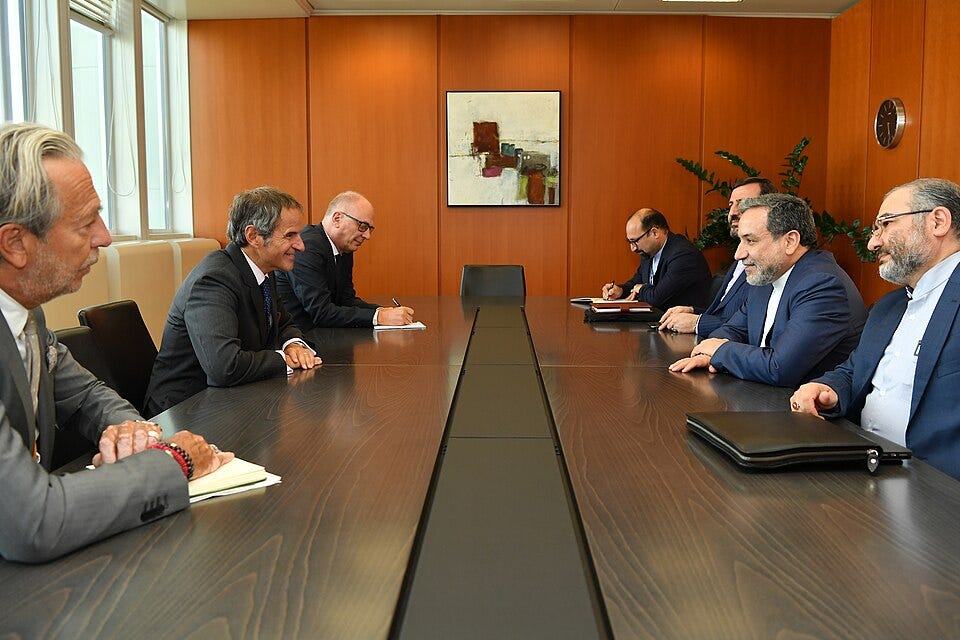
The IAEA says it lacks the information and access necessary to verify the status of Iran’s declared nuclear facilities and material. Director General Rafael Grossi told the board that, during the latest reporting period, inspectors had neither received the required information nor obtained access for on-site verification. He also warned that attacks on nuclear facilities anywhere create unacceptable risks for people and the environment.
This verification gap represents a serious proliferation concern. While the agency had serious questions over past nuclear activities before the June 2025 war, the agency has now been barred from inspections for 15 months. The immediate questions concern the location, condition and accounting of nuclear material, alongside unresolved investigations into past undeclared activities. Damage to facilities and subsequent restrictions on inspections have added another layer of uncertainty.
Iran’s first UN Security Council referral followed a similar sequence of an IAEA noncompliance finding and a separate decision to report the matter. In September 2005, the board determined that Iran’s failures to declare nuclear material and activities constituted noncompliance with its safeguards agreement. In February 2006, it requested that the director general report the issue and relevant agency documents to the UN Security Council.
Council action developed over several years. Resolution 1696, adopted in July 2006, demanded that Iran suspend enrichment-related and reprocessing activities. Resolution 1737 imposed sanctions that December, including restrictions on sensitive nuclear transfers and asset freezes. Further resolutions in 2007, 2008 and 2010 expanded restrictions involving designated entities, weapons transfers and proliferation-related financial activities.
The economic isolation that followed was broader than the UN sanctions themselves. Washington adopted additional restrictions under its own authorities, enforcing tough extraterritorial sanctions that severed Iran’s trade relationships with many countries around the world. Together, these overlapping measures restricted Iran’s trade, access to foreign exchange and connections to international banking, triggering a significant economic downturn.
The 2015 nuclear agreement demonstrated that the dispute could be managed through negotiated limits, extensive verification and reciprocal sanctions relief. Security Council Resolution 2231 endorsed the Joint Comprehensive Plan of Action and waived prior Security Council resolutions. The IAEA subsequently verified Iran’s implementation of its nuclear commitments throughout the implementation of the accord, providing a framework for addressing proliferation concerns through diplomacy.
However, the United States withdrew from the agreement in May 2018 while the IAEA was continuing to verify Iran’s implementation, ending that bargain. Washington restored sanctions despite the agreement’s nuclear restrictions remaining in place. Iran began progressively exceeding those limits a year later and subsequently curtailed monitoring, including implementation of the Additional Protocol in February 2021. Iran’s decisions weakened verification and did not remove its underlying safeguards obligations. But the sequence matters: the agreement’s unraveling followed Washington’s abandonment of a functioning diplomatic framework.
The withdrawal also created a lasting credibility problem for negotiations. From Tehran’s perspective, accepting restrictions and inspections had not secured durable economic relief. A subsequent agreement would therefore have to address whether reciprocal commitments could survive changes in American policy, as well as the scope of Iran’s nuclear activities.
The diminished inspections and advancing nuclear program led directly to U.S. and Israeli attacks on Iranian nuclear facilities in June 2025. After the war was launched immediately following the passage of a separate IAEA resolution declaring Iran in breach of its safeguard obligations, Iranian cooperation with the agency has deteriorated considerably. Since that time, inspectors have been barred from accessing the damaged sites and negotiations on the nuclear program have not yet borne fruit. Damage to infrastructure complicated verification, while the targeting of safeguarded sites deepened Tehran’s doubts about the security benefits of nuclear cooperation. The attacks did not resolve outstanding questions about nuclear material: determining its location and condition still requires information, access and cooperation.
Iran now invokes wartime safety and security concerns to explain restrictions on access to affected facilities. Those concerns require practical arrangements for inspections rather than indefinite suspension of verification. Equally, demands for renewed access must account for conditions at damaged sites and the possibility of further attacks. Restoring cooperation requires addressing both the agency’s information needs and the security environment in which inspections would occur.
Iran continues to dispute the sanctions “snapback” pursued in September 2025. Following that process, UN resolutions that had been waived under the 2015 nuclear deal came back into force. The EU separately reinstated nuclear-related economic restrictions. Iran, Russia and China reject the legal validity of that restoration. This distinction has generated competing interpretations inside Iran. Foreign Ministry spokesperson Esmaeil Baghaei questioned why Western governments needed another referral if they considered earlier resolutions restored. He portrayed the initiative as an effort to increase political pressure and warned of an Iranian response.
Russia and China’s opposition constrains what happens next, but does not shield Iran from all additional pressure. New substantive Security Council measures generally require at least nine affirmative votes and no veto from a permanent member. Their positions make agreement on further punitive measures more difficult. Neither country, however, can prevent Washington or European governments from imposing restrictions independently.
For ordinary Iranians, the economic effects will depend largely on subsequent decisions. Additional restrictions or heightened uncertainty could discourage transactions, increase costs and complicate investment and reconstruction. These are plausible risks, rather than demonstrated effects of the September 9 vote.
The historical record illustrates the stakes. The World Bank found that Iran’s non-oil growth was close to zero on average during 2012–15, before recovering following sanctions relief. Sanctions were not the only source of economic weakness, but prolonged restrictions on trade and finance narrowed opportunities for businesses and households.
Humanitarian exemptions have also proved insufficient when payment channels fail. Human Rights Watch documented how financial restrictions and companies’ fear of sanctions obstructed medicine imports following the restoration of U.S. sanctions, despite exemptions for humanitarian goods. Further banking restrictions or avoidance of otherwise lawful trade could reproduce those problems. Any resulting harm should be traced to the specific measures and commercial decisions involved, rather than automatically attributed to the IAEA vote.
The referral provides no authorization for military action. Nevertheless, unresolved nuclear questions in a wartime setting can intensify threat perceptions and narrow diplomatic options. The challenge now extends beyond securing another Iranian commitment on inspections: it also involves rebuilding confidence that negotiated commitments will be reciprocated and that safeguarded facilities will not remain exposed to attack.
A durable settlement would need to restore credible verification while addressing the reliability of sanctions relief and the security of nuclear facilities. Additional resolutions can increase pressure, but they cannot by themselves repair the obstacles created by the U.S. withdrawal from the earlier agreement, subsequent Iranian nuclear escalation and military attacks. The practical measure of success will be renewed access, reliable material accounting and an agreement that gives all parties a reason to sustain cooperation.