

The war between Iran and the United States did not produce the internal political collapse that many opposition voices predicted. Instead of turning the conflict into an opportunity for a nationwide uprising, the war revealed deep asymmetries across Iran’s internal landscape, and allowed the state to reassert control through a combination of coercion, narrative management, and wartime mobilization.
This outcome reflects a major miscalculation by many observers after protesters took to the streets during the January uprising before a brutal crackdown. Many external observers - including the former Crown Prince of Iran Reza Pahlavi - predicted that war conditions would weaken the government, reignite large-scale anti-government demonstrations and ultimately bring about the collapse of the Islamic Republic. However, neither collapse nor widespread protests materialized, while significant pro-government and anti-war demonstrations were observed across the country.
There is a risk in over-interpreting mid-war dynamics. The relative absence of protest should not necessarily be interpreted as political apathy or acceptance. Anger and dissatisfaction with the Iranian government are still, undoubtedly, widespread in Iranian society. Moreover, the Iranian government deployed a combination of intensified repression, widespread fear, and structural constraints to stifle the potential for unrest. The expansion of security checkpoints, the presence of armed forces in urban areas, the criminalization of information-sharing, and the near-total disruption of internet access created an environment in which organizing or participating in protests became extremely costly.
At the same time, another critical factor shaped public behavior: a significant portion of Iranian society - even among those critical of the government - was unwilling to align with or appear to support a foreign military assault on the country. The war introduced a powerful nationalist dimension that altered the internal political calculus. For many, opposition to the government did not translate into support for external attacks, particularly when those attacks targeted civilian infrastructure.
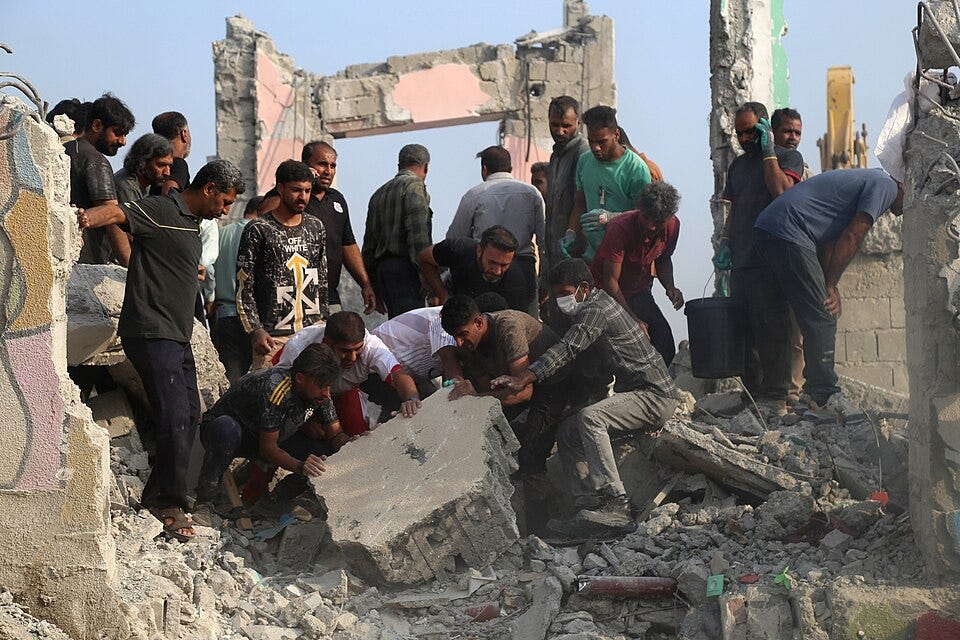
This dynamic became especially visible following incidents such as the strike on the girls’ school in Minab and the broader targeting of civilian infrastructure, which generated anger and concern beyond traditional pro-government circles. These events helped shift segments of the so-called “gray population” - citizens who are neither firmly pro-government nor actively oppositional - toward a more defensive, nationalist posture. In this context, the government was able not only to mobilize its core supporters but also to draw in parts of this broader population into public displays of solidarity, particularly through organized street presence and nightly gatherings.
.jpg)
As a result, the visible street dynamic during the war was dominated not by anti-government protesters, but by regime supporters and state-aligned mobilization. Authorities actively encouraged public demonstrations of support, and these gatherings were amplified through state media to project stability and control. Meanwhile, opponents were explicitly warned against taking to the streets and faced severe consequences for doing so. This dual strategy - mobilizing supporters while suppressing dissent - played a key role in reshaping the public image of the war.
The cumulative effect of these dynamics was a fundamental shift in the narrative. The war did not weaken the state in the way many had anticipated. Instead, it allowed the government to reassert its authority, tighten its control over public space, and redefine the political atmosphere inside the country. The opposition’s expectation that external pressure would trigger internal collapse proved misplaced.
Another important dynamic impacting the stability of the state during the war is the containment of areas of the country more prone to unrest: Kurdish opposition groups became some of the most exposed and targeted actors, while Baluchestan remained within its familiar pattern of localized insecurity rather than evolving into a center of mass in anti-government protests.
Before the war, many analysts believed that Baluchestan could emerge as a major hub of unrest if Iran entered a prolonged military confrontation. However, developments during the war did not support this scenario. Instead of large-scale mobilization, the region continued to experience armed incidents and sporadic attacks against security forces, reflecting an ongoing but contained pattern of instability rather than a transformative political uprising. Fatal attacks on police patrols in Saravan over the last week, which resulted in the killing of officers, fits within this longer trajectory of localized violence rather than a broader wartime rebellion.
In contrast, Kurdish opposition groups moved much closer to the center of the conflict and paid a significantly higher price. Tehran treated these groups as a direct security threat, particularly due to concerns about their potential coordination with external actors. Cross-border strikes, drone attacks, and missile operations against Kurdish positions - especially in the Kurdistan Region of Iraq - continued even after the announcement of a ceasefire, underscoring their vulnerability. At the same time, some Kurdish groups signaled readiness to become more actively involved in the conflict, but inconsistent and often contradictory messaging from Washington ultimately left them exposed without meaningful strategic backing. As a result, they became one of the primary non-state victims of the war - visible enough to be targeted, but not supported enough to alter the battlefield dynamics.
In this new reality, Baluchestan did not transform into a center of mass protest, Kurdish groups became the most directly targeted and vulnerable opposition actors, and the protest movement that had emerged earlier in the year was effectively contained rather than reactivated. At the same time, the state succeeded in projecting an image of cohesion through visible street mobilization and security dominance.
The broader lesson is clear: war did not dissolve the Islamic Republic’s internal control - it reorganized and, in some respects, reinforced it.