

Iran’s economy remains under extraordinary pressure from the U.S. maritime blockade, but the government has so far maintained essential economic activity through currency intervention, household assistance, alternative trade arrangements, and support from powerful economic foundations. These measures have helped prevent a sudden breakdown, even as inflation and the loss of oil revenue impose growing costs on ordinary Iranians.

Yet, a major question is how long this economic response can be sustained. Washington’s blockade has dramatically reduced Iran’s ability to export oil, historically its most important source of foreign currency. Tanker-tracking estimates cited by Reuters indicated that exports fell from approximately two million barrels exported by Iran per day in March to between 220,000 and 255,000 barrels per day in August.
The pressure has intensified further. On October 13, Reuters reported that energy intelligence firm Vortexa estimated Iranian crude exports had fallen to zero in October. The estimate concerns observed crude shipments and does not necessarily mean Iran has stopped receiving payments for oil delivered earlier or has lost every alternative source of foreign currency.
In late September, Treasury Secretary Scott Bessent suggested Iran would soon exhaust the oil available for sale outside the blockade. Although the precise timing of the resulting financial pressure remains uncertain, the latest shipping estimates indicate that Washington has made substantial progress in restricting new oil exports.
Yet a sharp reduction in oil shipments does not automatically produce an immediate collapse of government finances or domestic economic activity. Iran can draw on existing resources, receive delayed payments, restrict imports, and redirect spending. These mechanisms can buy time, but they cannot fully replace sustained export earnings.
For Iranian households, the economic damage is already substantial. According to the Statistical Center of Iran, annual inflation reached 73.6 percent in September, while prices were 89.8 percent higher than a year earlier. Consumer prices increased another 4.2 percent during the month alone. These figures help explain why maintaining employment and access to basic goods has become as important as preventing a financial crisis. Even families receiving regular wages face a steep decline in purchasing power.
President Masoud Pezeshkian’s administration has responded by prioritizing essential supplies, expanding household assistance, and attempting to stabilize the currency. One major initiative is increasing electronic food-purchasing credits, known as kalabarg, for lower-income households. In September, the government approved the general framework for expanding this support and examined possible funding sources, including reducing subsidies for higher-income groups and cutting less essential expenditures.
Pezeshkian has also emphasized assistance for vulnerable families, including female-headed households. The Planning and Budget Organization has outlined a broader economic-management framework intended to coordinate emergency measures and maintain supplies of essential goods.
However, the announcement of additional assistance should be distinguished from its delivery. Publicly available information does not yet establish the full value, coverage, or long-term financing of all the proposed increases.
The government is also drawing on institutions that operate outside the ordinary structure of its ministries. Two particularly important examples are the Barakat and Alavi foundations, which finance employment programs, provide assistance, and support businesses damaged by the war.
Barakat is affiliated with the Execution of Imam Khomeini’s Order, a major economic institution with extensive commercial holdings. In August, the foundation reported providing financing assistance to approximately 3,600 businesses affected by the war. It also reported distributing food packages and preparing meals during emergency relief operations.
The Alavi Foundation, affiliated with the Foundation of the Oppressed, has reported postponing loan repayments for 29,525 small-business projects for three months. According to its officials, 328 war-damaged businesses had resumed operations with assistance from its recovery programs. These are meaningful interventions for the businesses involved, although their scale remains limited compared with the nationwide economic disruption.
Unlike conventional government welfare programs, the foundations can mobilize resources from commercial holdings, their parent institutions, and banking partnerships. Barakat’s management reported that the Execution of Imam Khomeini’s Order supplied 47 percent of the financing resources for its employment programs in 2025. That year, the foundation reported allocating approximately 125.6 trillion rials in interest-free loans to more than 85,000 small and medium-sized business projects. Alavi uses a comparable financing model. In one agreement with Sina Bank, the foundation committed five trillion tomans toward a joint financing initiative, with the bank expected to contribute another 11.8 trillion tomans.
These arrangements illustrate a distinctive feature of Iran’s economy: large institutions outside the conventional government budget can help finance economic activity during a crisis. But their resources are not necessarily independent of public policy or state-supported lending mechanisms. Many reported expenditures are repayable loans rather than grants, and comprehensive, independently audited information about the foundations’ available resources is limited. Their reported achievements also come largely from their own officials, making it difficult to assess how much assistance has actually reached recipients or how many businesses have recovered sustainably.
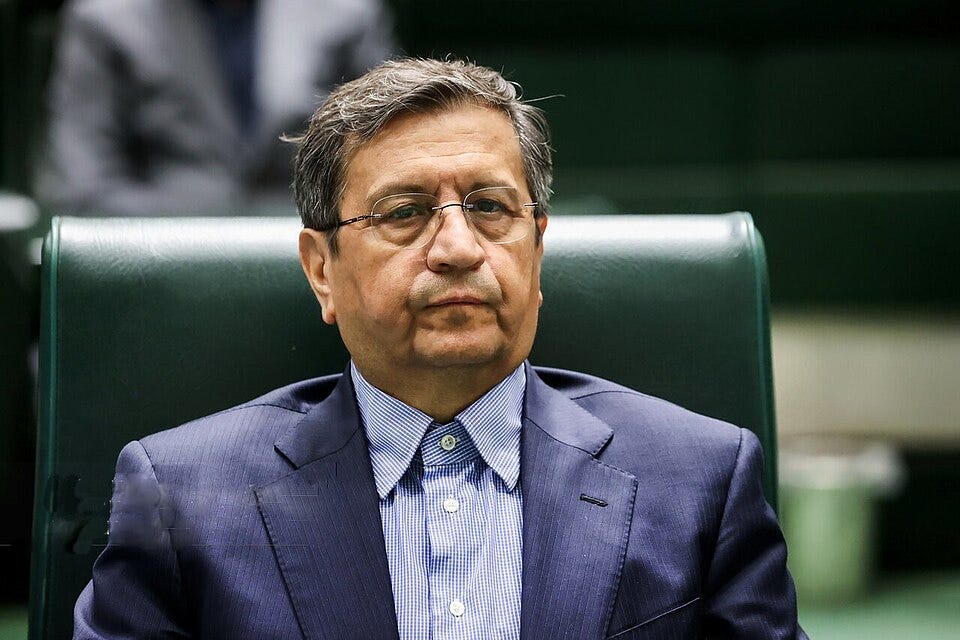
Another important component of the government’s response has been intervention in the foreign-exchange market. The dollar rose above 270,000 tomans in early October, briefly reaching approximately 272,000, before falling back toward 260,000 tomans by October 13. The decline followed announcements by Central Bank Governor Abdolnaser Hemmati that authorities intended to supply up to $2 billion to the market.
The central bank also introduced a more unusual measure: beginning October 3, adults could purchase up to $10,000 each through five designated banks, at rates linked to the market. The initial announced selling price was approximately 259,000 tomans per dollar. Hemmati subsequently said the average purchase was about $5,000 per applicant, suggesting that the program had moved beyond an announcement into actual transactions.
The policy appears designed to channel demand through regulated institutions while signaling that the central bank retains access to foreign currency. That signal may have contributed to the recent easing of pressure on the rial, although exchange-rate movements also reflect political expectations and other market conditions.
The rial’s recovery from its recent peak is significant, but it does not establish lasting currency stability. Sustained intervention depends on accessible foreign-currency reserves and continued earnings from exports and other transactions.
Iran has also preserved some international transportation connections despite U.S. restrictions on Iranian airlines. In late September, Iranian aviation officials reported continuing flights to Pakistan, Afghanistan, China, Turkey, Malaysia, and Vietnam, while routes to Iraq, the United Arab Emirates, and several other destinations faced restrictions.
These flights are evidence that Iran has not been completely disconnected from regional and international transportation networks, despite far-reaching sanctions. They can support travel and business contacts, but they should not be taken as proof that normal trade or banking operations continue.
Iranian manufacturers still face expensive imported materials, logistical difficulties, restricted financing, and uncertainty about future demand. The combination of war-related damage, high inflation, and lost export revenue also threatens investment and employment. Iran’s experience with sanctions has given businesses and institutions ways to adapt, but adaptation comes at a cost. Alternative supply routes may be more expensive, financing more complicated, and economic activity less productive.
The government’s immediate objective appears to be preventing those pressures from becoming a broader breakdown in essential services, employment, and household consumption. So far, Iran has maintained important economic functions while absorbing a severe external shock. The foundations, emergency assistance programs, and central bank interventions help explain how that has been possible.
But economic survival and economic stability are not the same. The government can keep institutions operating while families become poorer and businesses postpone investment. The durability of Iran’s response will depend on whether it can preserve access to foreign currency, finance meaningful household assistance, and prevent temporary economic disruption from becoming another prolonged decline in productive capacity and living standards.