

The NIAC Capitol Insider is a digest tracking the latest from Congress on Iran-related policy developments, legislation, votes and more. This resource is designed to give our community a clearer, more comprehensive understanding of how Congress is approaching Iran policy by breaking down votes, providing policy analysis, and updating on key congressional actions.
House Shelves Hegseth Impeachment After 11 Democrats Miss Key Vote
Can Congress Cut Off Iran War Funding Before January?
Democrats Won Congress. Now Comes the Fight Over How to Lead It.
Senators Push to Strip U.S.–Israel Military Provisions From the NDAA
One week after the midterms, voters’ mandate to end the Iran war is already shaking up Congress, especially among Democrats as they prepare to take control of both chambers. From the fight over war funding and the push to impeach Defense Secretary Pete Hegseth to the debate over who should lead the new majority, Democrats are facing pressure to show how they’ll act on that mandate.
House Shelves Hegseth Impeachment After 11 Democrats Miss Key Vote

Photo Credit: Tom Williams/CQ Roll Call
The House voted 211–204 on Tuesday to block consideration of eight articles of impeachment against Defense Secretary Pete Hegseth. The vote sends the impeachment resolution to the Republican-led House Judiciary Committee, where it can sit until it expires at the end of this year. The vote was split on partisan lines, with Rep. Thomas Massie (R-KY), who introduced the measure, being the only Republican to vote against tabling the effort.
Massie first brought the articles to the House floor on September 15, accusing Hegseth of violating Congress’s war powers by carrying out the unauthorized war on Iran. Similar to previous efforts to block a Massie-led effort to force the Epstein files release,Speaker Mike Johnson adjourned the House to avoid holding a vote before the midterms.
When lawmakers returned on November 9, Massie gave formal notice that he would bring the articles back under House Rule IX. Because the resolution directly called for Hegseth’s impeachment, a power the Constitution gives exclusively to the House, it qualified as privileged. That gave it priority on the floor and required the Speaker to bring it up within two legislative days of Massie’s notice. When the House took it up on Tuesday, Republicans intervened to force a vote to send the articles to committee.
With seven Republicans absent, Democrats had an opening. The 11 Democrats who missed the vote were Reps. Julia Brownley (D-CA), Lou Correa (D-CA), Laura Gillen (D-NY), Steven Horsford (D-NV), Jonathan Jackson (D-IL), Nancy Pelosi (D-CA), Brittany Pettersen (D-CO), Melanie Stansbury (D-NM), Haley Stevens (D-MI), Marilyn Strickland (D-WA), and Frederica Wilson (D-FL).
If all 11 absent Democrats had voted with the rest of their caucus, they would have marshalled 215 votes to prevent the impeachment measure from being tabled versus the 211 Republican votes. That would have cleared the way for an expected vote on impeachment itself on Wednesday, November 11.
The missed votes have already caused friction within the Democratic caucus. Rep. Pat Ryan (D-NY) said he left the hospital early while recovering from back surgery specifically so he could cast his vote. Rep. Sydney Kamlager-Dove (D-CA) took aim at absent colleagues, saying members knew the vote was coming and there was “no reason why we should have lost this vote because of attendance issues.” Several of the Democrats who missed the vote cited traffic near the Capitol, including Rep. Melanie Stansbury (D-NM), who said a traffic incident and police escort blocked her from getting in. Rep. Julia Brownley (D-CA) said Speaker Johnson closed the vote while she and others were still rushing to the floor.
The outcome also put Democratic leadership’s handling of the vote under scrutiny. Minority Leader Hakeem Jeffries sets the caucus’s floor strategy and publicly backed impeachment, while Minority Whip Katherine Clark counts votes and mobilizes members for key floor votes. Every Democrat who voted wanted to keep the articles on the floor, but leadership fell short of getting enough members there to do it.
What happens next?
Another House member could reintroduce the articles in January, when Massie’s term ends and Democrats take control of both chambers. Asked whether Democrats would pursue impeachment in the new Congress, Jeffries said, “We’ll have that conversation at the appropriate time.” If House Democrats are united, they’ll have the votes to impeach Hegseth. However, removing him from office would still require a two-thirds vote in the Senate.
Democrats have repeatedly called the war on Iran illegal and demanded an end to it. Just a week after sweeping midterm wins that many believe gave them a clear mandate to end the war, Democrats had a chance to impeach the official overseeing the Pentagon’s conduct of that war. Enough Democrats missed the vote to let Republicans send the articles to committee, and the House lost that opportunity.
Can Congress Cut Off Iran War Funding Before January?
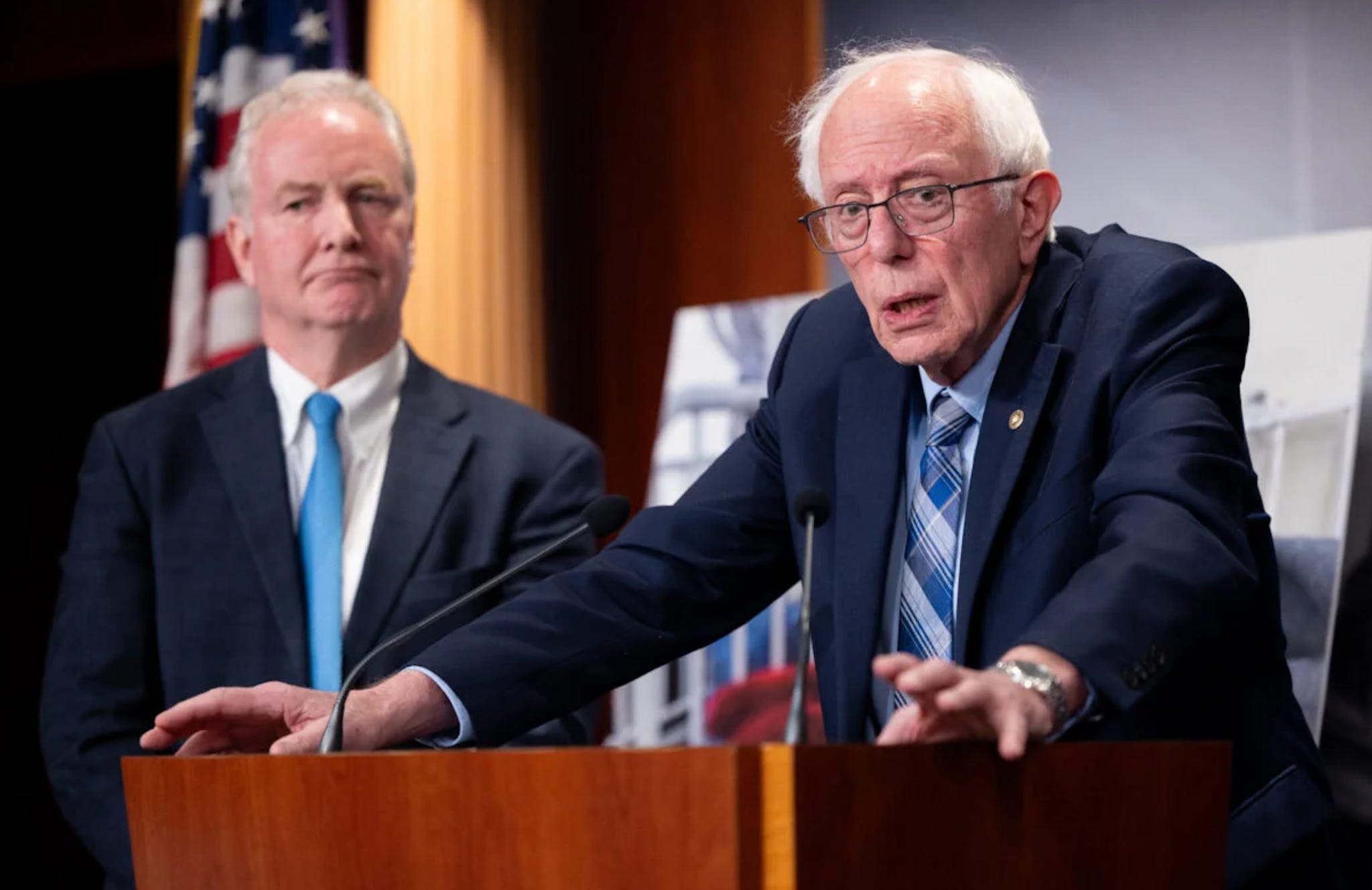
With the House shelving the Hegseth impeachment articles, the December 11 government funding deadline gives Congress another chance to act on the war. A growing number of lawmakers want a funding cutoff during the lame duck, the period between Election Day and the start of the new Congress. Republicans still control both chambers but will need the support of at least 7 Democrats in the Senate to clear the 60-vote threshold to advance a spending bill.
Sen. Michael Bennet (D-CO) drew a clear line in a letter to Senate colleagues released Monday. He said he would vote against any temporary spending bill that funds the war and urged senators to block any package that “includes another cent for his war.” Bennet, a moderate Democrat, is asking colleagues to use their votes to hold up a government funding bill over the war, a sign that support for that approach is reaching beyond the party’s progressive wing.
Sens. Tammy Duckworth (D-IL) and Bernie Sanders (I-VT), and Rep. Mark Pocan (D-WI) have also backed cutting off war funding, joining Sens. Chris Van Hollen (D-MD) and Tim Kaine (D-VA), Reps. Rosa DeLauro (D-CT), Adam Smith (D-WA), and Ro Khanna (D-CA), and Michigan Senator-elect Abdul El-Sayed. Senators Bennet, Sanders, Van Hollen, and Duckworth put their opposition on the record together, issuing a joint statement opposing any spending package that funds Trump’s war on Iran. Potential 2028 Presidential hopefuls Pennsylvania Gov. Josh Shapiro and Illinois Gov. JB Pritzker have also voiced support for Democrats to vote down any spending bill that continues to fund the war. Senate Democratic Leader Chuck Schumer, who hopes to become the Senate Majority Leader in January, has also pointed to Congress’s power of the purse, its authority over how federal money is spent, as a way to end the war, but has been noncommittal regarding doing so in the lame duck spending fight.
Bloomberg Government reported Tuesday that Sen. Patty Murray (D-WA), the top Democrat on the Senate Appropriations Committee, told fellow negotiators she favors passing a short-term spending bill to keep the government funded beyond the December 11 deadline and into the new Congress. She dismissed pursuing any long-term spending bill in the current Republican-controlled Congress unless Republicans agree to put “parameters and guardrails” on the war. A short extension would keep the government open into January, when Democrats take control of both chambers and can shape the full-year spending bills. But unless the stopgap explicitly bars the use of federal funds for the war, Congress would effectively be voting to allow the administration to keep drawing on available Pentagon funds to continue military operations against Iran.
Asked Monday whether Democrats should risk a shutdown to force an end to the war, House Democratic Leader Hakeem Jeffries demurred, saying, “We’re going to end the war in Iran one way or the other,” then said the spending talks were “in the hands of” DeLauro and Murray, the top Democrats on the House and Senate spending committees. His noncommittal answer leaves open the possibility that Democrats will accept a temporary funding bill that allows funding for the war through the end of the year, pushing the fight to end the war into January. That would be a tough sell given that Jeffries and Schumer themselves said after the midterms that Democrats had a “clear mandate” to “stop the reckless war of choice in Iran.”
The annual defense policy bill is another legislative item to watch in the lame duck. The House passed its version of the 2027 National Defense Authorization Act, or NDAA, in July, but Democrats in the Senate voted their version down, in part to protest the war on Iran. House and Senate Armed Services leaders are working toward a compromise that both chambers could vote on before year’s end.
The NDAA sets Pentagon policy and authorizes spending levels, while appropriations bills provide the money. The defense policy bill can still place restrictions on what the Pentagon can do and how its funds are used. Senator Tammy Duckworth has already proposed language be included to halt additional funding for offensive operations against Iran without congressional authorization. That language was not allowed to be considered when the bill was voted down previously in the Senate and whether it makes it into a final compromise bill remains to be seen.
Democrats Won Congress. Now Comes the Fight Over How to Lead It.
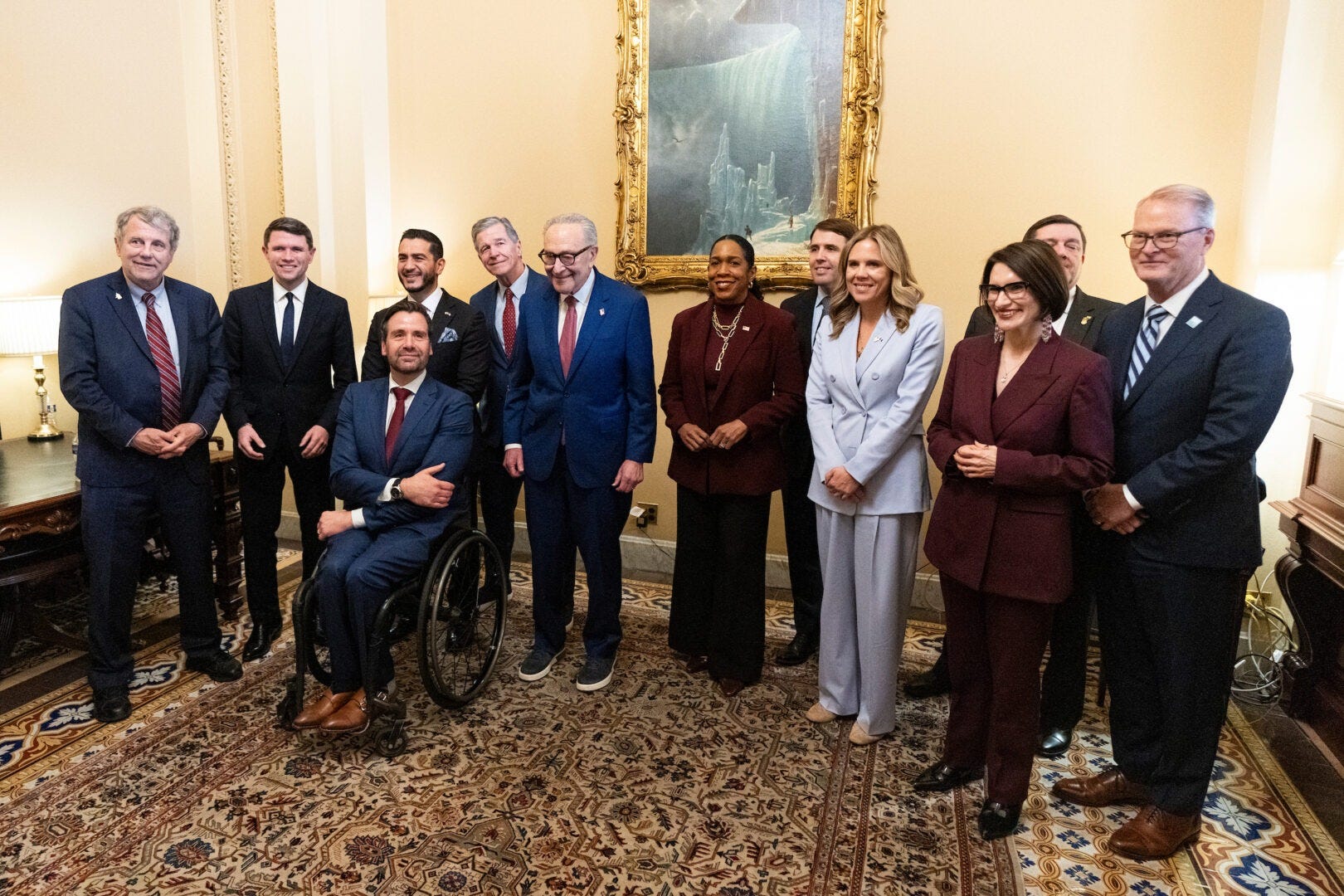
Democrats’ midterm sweep gave them control of both chambers when the 120th Congress convenes on January 3, but it also opened a debate over who should lead the new majority. In the House, constituents have reportedly called and emailed Democratic offices urging members to oppose Hakeem Jeffries for Speaker of the House. Jeffries has downplayed the volume of calls and remains the favorite, with no declared challenger ahead of the caucus vote. House Democrats will choose their nominee before the full House elects a speaker in January, while Senate Democrats will select their leader by secret ballot within the caucus.
In the Senate, Senator-elect Abdul El-Sayed and progressive activists are urging Maryland Sen. Chris Van Hollen to challenge Chuck Schumer. Van Hollen has called on Congress to block any spending bill that keeps funding the Iran war and is leading an effort to remove provisions from the annual defense bill that would establish an unprecedented level of Israeli integration into U.S.military and intelligence operations (more on this in the section below). That record helps explain why people looking for a more forceful response to the war are turning to him. He is reportedly talking with colleagues about a possible bid and calling for a caucus debate over how to use the new majority, though he has yet to enter the race.
On Tuesday, Sen. Bernie Sanders said he would oppose Schumer’s reelection, arguing that voters had called for a bolder direction for the party. Moderate Sen. Elissa Slotkin joined him in pressing for a concrete plan for change. Sen. Richard Blumenthal had called for “new energy and ideas” a day earlier, but reaffirmed his support for Schumer when asked that evening about a possible challenge. Schumer says he’s confident he has the votes.
For activists pressing for new leadership, both Jeffries’s and Schumer’s substantial campaign backing from the American Israel Public Affairs Committee (AIPAC) and allied groups is part of a broader concern about how the party would approach the Iran war and U.S. military support for Israel under their stewardship. That pressure is coming from inside the incoming caucus, too. Ohio Rep.-elect Don Leonard, who flipped a district Trump carried by 10 points, says his support for Jeffries depends on commitments to end the Iran war, end U.S. support for Israel, and curb big money in politics. As Drop Site News reported, Leonard said allies of Jeffries threatened to make his life “a living hell” and undermine his reelection prospects if he kept those conditions in place.
As of November 12, Democrats have flipped forty-four Republican seats in the House and eight in the Senate, with several races still uncalled. When the party takes control in January, Democratic leaders will set the floor schedule, and Democrats will chair committees and hold more seats on them. Each party recommends its members for committee seats, and the full chamber formally approves the assignments. For incoming lawmakers, those seats will shape which bills they help write, which administration officials they can question, and which investigations they can pursue. Sen. Patty Murray, for example, is expected to chair Senate Appropriations, giving her a leading role in writing the spending bills at the center of the war funding fight.
With Trump still in the White House, one of the biggest changes will be who gets to ask the questions. Democratic committee chairs can set hearing agendas and pursue investigations, while Senate Democrats can decide whether to advance Trump’s nominees. On Iran, that means Democrats can call Pentagon officials to testify publicly about how the administration has conducted the war and what it has cost. Those hearings can put answers on the public record even when Trump and Congress are at odds over legislation.
Senators Push to Strip U.S.–Israel Military Provisions From the NDAA
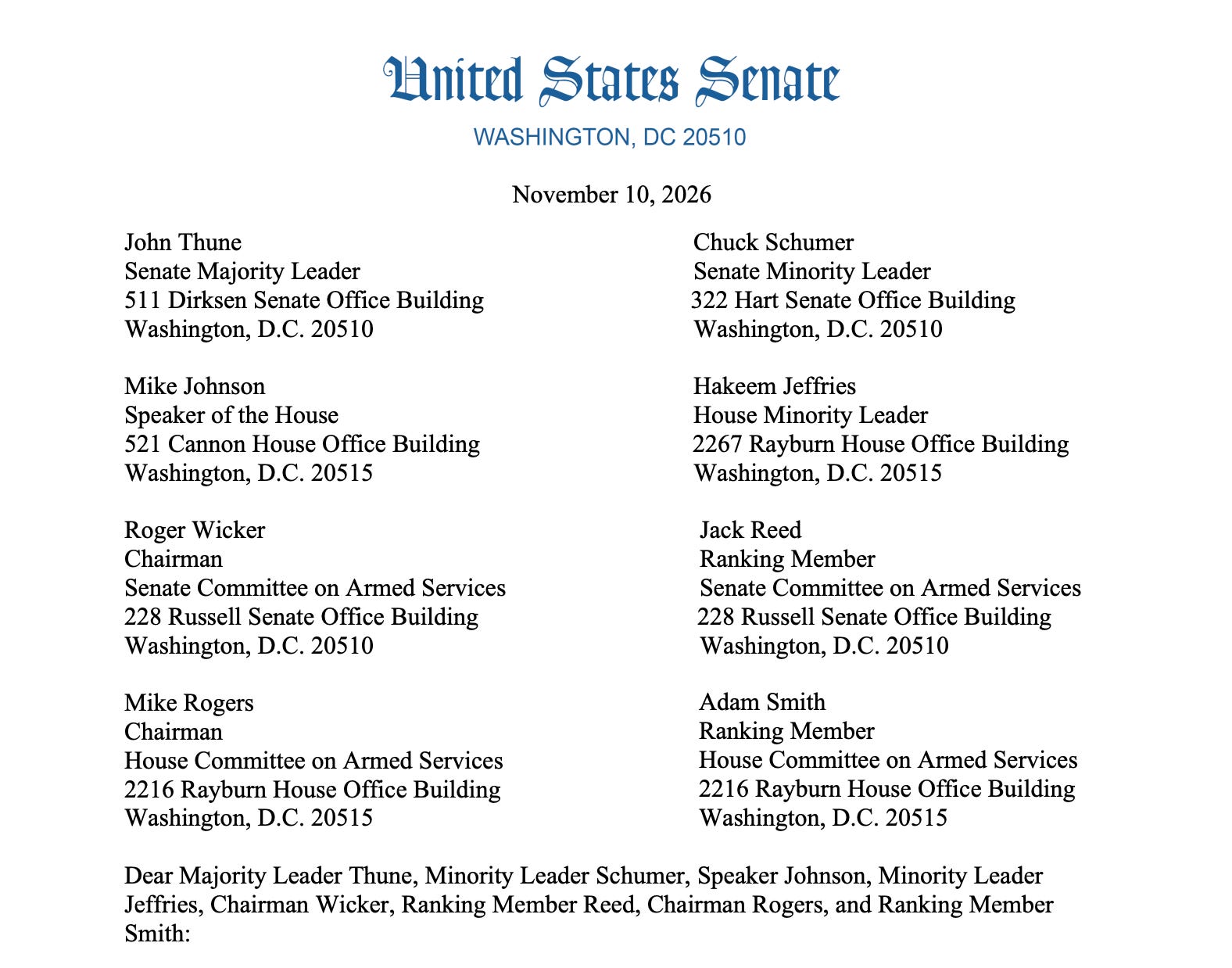
As House and Senate negotiators work toward a final version of the fiscal year 2027 National Defense Authorization Act (NDAA), the annual bill that sets U.S. defense policy, Sen. Chris Van Hollen (D-MD) and several colleagues are pushing to remove three provisions that would expand military and intelligence cooperation with Israel. In a November 10 letter to congressional leaders and the top Republicans and Democrats on both Armed Services Committees, the senators argued that the provisions would lock the United States into commitments that could be difficult to unwind.
The House-passed NDAA and the Senate Armed Services Committee’s version each include language requiring the United States and Israel to share military technology, conduct joint research, and produce weapons systems together. The third provision comes from the Senate intelligence authorization bill, which is typically folded into the final NDAA. It would require the administration to expand intelligence sharing with Israel and bar it from suspending, reducing, or materially limiting that sharing.
Van Hollen and his colleagues drew a direct connection to the Iran war in the letter. They pointed to Netanyahu’s remarks about having sought a war with Iran for decades and called the war “a strategic disaster for the United States.” Their concern is that deeper ties would give the Israeli government more leverage over U.S. weapons and technology while making it harder for Washington to change course when the two governments’ interests diverge. The immediate question is whether negotiators will drop all three provisions before the final NDAA goes to the House and Senate for a vote.