

The most significant development emerging from the latest round of Iran-U.S. negotiations may not be the creation of technical working groups or the reported 60-day roadmap toward a final agreement. Instead, it may be the emergence of a new economic logic that is beginning to shape diplomacy on both sides.
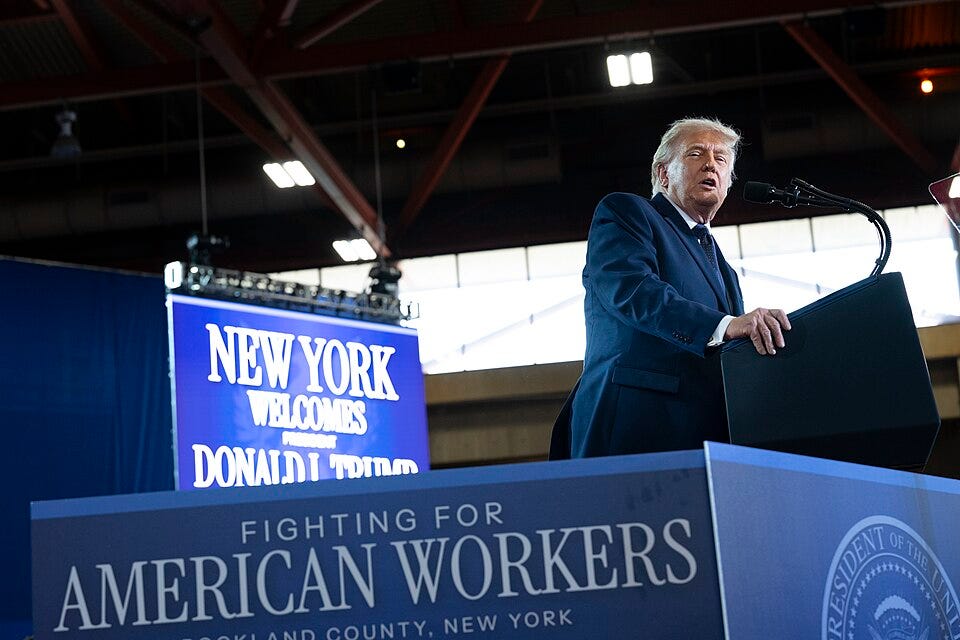

For years, debates over Iran policy in Washington centered on sanctions, nuclear restrictions, military deterrence, and regional conflicts. Today, however, President Donald Trump is increasingly presenting diplomacy with Iran through a different lens: as an economic opportunity for the United States.
The clearest indication came with the publication of OFAC General License X, which authorizes, through August 21, 2026, the production, transportation, delivery, and sale of Iranian crude oil, petroleum products, and petrochemicals. The authorization also covers related services including banking, insurance, shipping, and logistics. Most notably, the license permits the importation of Iranian-origin oil and petrochemical products into the United States and allows associated dollar-denominated transactions. While temporary and tied to ongoing negotiations, the measure represents the most meaningful opening for Iran’s energy sector since the current conflict began, and the broadest opening of primary sanctions on Iran - which prohibit most direct U.S.-Iran trade - in decades.
For Iran, the waiver offers access to badly needed export revenues and creates an opportunity to reconnect with global energy markets. For Washington, it helps reduce pressure on oil prices while creating leverage to encourage continued compliance with the diplomatic process. The temporary nature of the authorization ensures that both sides retain incentives to keep negotiations moving forward.
The economic dimension of the talks became even more apparent in Trump’s public comments about how Iranian assets set to be released under the memorandum of understanding could be used. Rather than focusing solely on nuclear issues or regional security, Trump repeatedly highlighted potential Iranian purchases of American agricultural products, particularly corn, soybeans and wheat, emphasizing the benefits for American farmers.
What makes this noteworthy is that Iran’s response has not been outright rejection. Central Bank Governor Abdolnasser Hemmati stated that if American products are competitively priced and offer suitable quality, “there is no obstacle” to purchasing them. At the same time, he rejected suggestions that Washington would dictate how Iranian assets are spent. Iran’s position appears to be straightforward: Tehran may purchase American goods, but based on its own economic needs rather than political conditions imposed by the United States.
In practice, the disagreement may be smaller than public rhetoric suggests. Iran already imports substantial quantities of agricultural commodities, animal feed, and other basic goods, and has a history of importing many goods from the United States that are not blocked by U.S. sanctions. Redirecting part of its purchases toward American suppliers would not necessarily require a major shift from Tehran. The first $6 billion tranche of released assets is already governed by the framework negotiated during the Biden administration in 2023, which limited expenditures primarily to humanitarian goods such as food and medicine.
More importantly, Iranian officials have indicated that future released assets would not be restricted solely to basic goods. According to Hemmati, additional funds could be used for a broader range of non-sanctioned purchases. This potentially creates a much larger commercial space than the initial humanitarian framework.
The reported $300 billion reconstruction and economic development initiative could further expand that opportunity. Although details remain limited, reconstruction projects, infrastructure investments, technology transfers, and industrial development could eventually create opportunities for international companies, including American firms if political conditions permit.
Some Iranian policymakers have long argued that tying American economic interests to a diplomatic agreement can strengthen its durability. The logic is simple: if influential economic actors inside the United States benefit from engagement with Iran, they become stakeholders in preserving diplomatic progress. Trump’s emphasis on exports, agriculture, and commercial opportunities suggests that a similar calculation may now be emerging in Washington. Some of Trump’s early, major criticisms of the 2015 deal negotiated under President Obama stem from his belief that other countries benefited far more from the sanctions lifting than the United States.
Yet this remains politically sensitive inside Iran. For many opponents of the agreement, particularly hardline factions, expanding economic ties with the United States remains deeply controversial. Those sensitivities have only intensified following the recent war and the deaths of senior Iranian military commanders, government officials, soldiers, and civilians. Even among supporters of diplomacy, normalization with the United States remains a difficult and emotionally charged subject.
At the same time, the biggest threat to the emerging economic opening may sensitivities or the nuclear file, but Lebanon. The memorandum reportedly requires an end to military operations on all fronts, including Lebanon. Yet Israeli officials continue to insist that Israeli forces will remain in parts of southern Lebanon and retain freedom of military action. Reports of deadly incidents following the ceasefire underscore how fragile the situation remains.
The issue appears to be receiving direct attention from the White House. When asked about Prime Minister Benjamin Netanyahu’s insistence that Israeli forces would not leave southern Lebanon, Trump declined to discuss specifics but signaled confidence that the matter would be resolved, stating: “This problem will be solved. I’m a problem solver.” Although Trump provided no details, the comment suggests that the administration recognizes continued tensions in Lebanon as a potential threat to the broader diplomatic process. This may help explain why negotiators reportedly created a dedicated conflict-control mechanism involving Qatar and Pakistan to monitor compliance and reduce the risk of renewed escalation.
Important questions also remain regarding nuclear inspections. U.S. officials have suggested that Iran agreed to allow the return of IAEA inspectors, while Iranian officials insist that no new nuclear commitments have been accepted beyond existing safeguards obligations. This discrepancy will likely be addressed by the technical working groups established during the negotiations and remains one of the most important unresolved issues.
Nevertheless, the negotiations have already produced something that previous rounds of diplomacy largely lacked: a significant economic incentive structure for both sides. Iran seeks access to energy markets, frozen assets, and reconstruction funding. The United States sees potential benefits in lower energy prices, expanded exports, and greater regional stability. Gulf states seek secure shipping lanes and reduced tensions.
These incentives do not eliminate the substantial political and security disputes that remain. But they do provide both sides with reasons to continue talking rather than returning immediately to confrontation. The ultimate significance of the Switzerland talks may therefore lie not only in what they achieved diplomatically, but in the possibility that economic interests are beginning to reinforce diplomacy itself. After years in which “maximum pressure” defined the relationship, the most durable foundation for a future agreement may ultimately be the prospect of mutual economic benefit.