


Iran’s protest movement entered its tenth consecutive day on Tuesday amid expanding street demonstrations, renewed unrest in Tehran’s bazaars, deepening economic anxiety, and increasingly hardened security signaling from the state. What began as an economically driven protest wave rooted in currency collapse, inflation, and fear of major economic restructuring has now evolved into a multifaceted national crisis, combining livelihood grievances, political dissent, labor unrest, and social exhaustion.
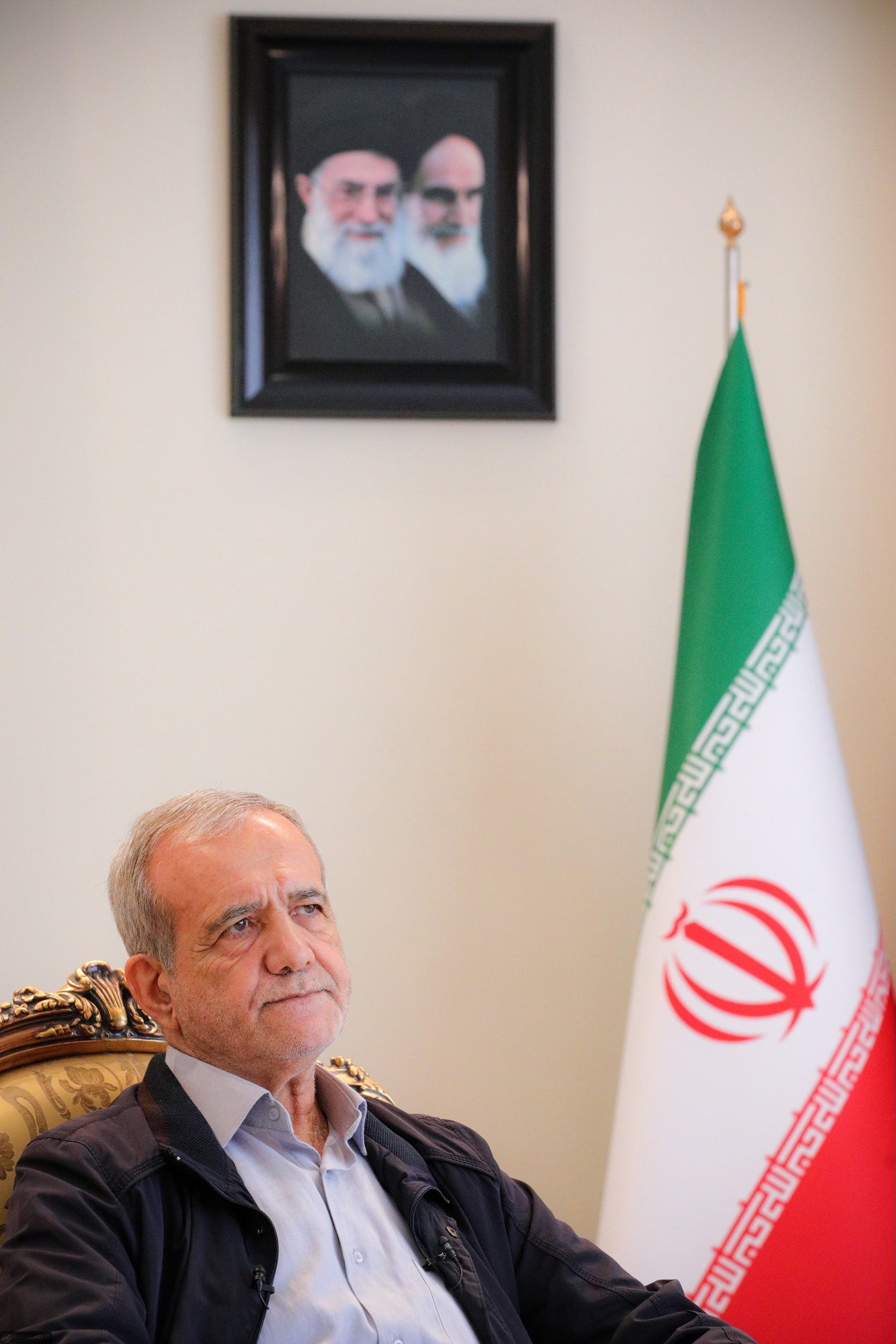
President Masoud Pezeshkian offered one of his most explicit acknowledgments of systemic responsibility since the unrest began, stating publicly that “the parliament and the government together have brought the country to this point.” He pointed to structural failures in banking, inflation management and governance, stressing that blame cannot be placed on a single individual or institution. While the remarks marked a rare moment of candor from the executive, they did not include concrete mechanisms for easing public pressure, reinforcing skepticism among many Iranians who see acknowledgment without relief as insufficient.
.jpg)
On the ground, protests continued across multiple provinces, with Ilam Province remaining a central flashpoint. In Abdanan, demonstrators again gathered in large numbers, pouring into the streets, marking several consecutive days of mobilization. Videos from the city show a few protesters vandalizing a branch of the Kourosh retail chain and bringing bags of rice from the store into the street, where they were scattered as a symbolic act of protest against rising prices, food insecurity, and the collapse of purchasing power. Other footage from Abdanan captured an unusual moment in which some police officers waved at protesters from atop a local police station, while demonstrators called on them to support the protest, chanting “Law enforcement, support, support.” The video highlights the uneven and sometimes contradictory behavior of security forces, particularly at the local level.
Tehran witnessed a significant escalation centered on the bazaar and surrounding commercial districts, pushing the crisis into a new phase. Shops were closed across large sections of the Grand Bazaar, as well as areas near Molavi, Hafez Street, Jomhouri, and Yaftabad. Protesters chanted openly political slogans, including “Death to the dictator” and “Death to Khamenei,” while security forces deployed tear gas to disperse crowds. Tear gas was also reported near Sina Hospital, causing distress among patients and staff and intensifying public sensitivity following the earlier incident at Imam Khomeini Hospital in Ilam, where security forces allegedly attempted to detain wounded protesters – an incident apparently under investigation from the President’s office.
Protests and confrontations were also reported in Mashhad, Borujerd, Shahrekord, Kermanshah, and parts of western Tehran, including Tehransar, where videos showed detainees being beaten and taken away by security forces. In Mashhad, demonstrators chanted “Neither Gaza nor Lebanon, my life for Iran,” reflecting the continued blending of economic hardship, nationalist messaging, and direct political opposition.
Funerals and mourning ceremonies have increasingly become focal points of protest and collective anger. In Kermanshah, burial and mourning ceremonies were held for two brothers, Rasoul and Reza Kadivarian (aged 17 and 20), who were reportedly shot during protests. Such ceremonies have repeatedly functioned as spaces for solidarity and mobilization, particularly in areas where direct street protest carries heightened risk.
According to HRANA, at least 35 people have been killed since the protests began ten days ago, including four children and two members of the security forces, while more than 1,200 people have been arrested nationwide. These figures underscore the mounting human cost of the unrest, even as verification remains difficult due to internet disruptions, restricted access, and competing official narratives. At the same time, state-affiliated media reported the death of a police officer in Malekshahi, Ilam Province, a development likely to be used to reinforce official claims that elements of the protest wave are violent and to justify harsher security responses.
Violence has both been deployed by security forces and been evident in the actions of individuals in the demonstrations. While security forces have deployed tear gas, batons, and in some cases live ammunition, multiple videos circulating online appear to show individuals amid the demonstration that are armed, including with firearms. In certain localized confrontations, individuals have used violence against the police. This has contributed to a more volatile and uneven protest environment, increasing the risk of deadly escalation without addressing the underlying, largely non-violent economic and political grievances driving the vast majority of participation in the protests.
The economic dimension of the crisis worsened sharply on Tuesday. The U.S. dollar rose above 147,000 tomans on the open market, setting a new historical record, while gold prices surged in parallel. These developments came despite repeated government assurances that economic reforms and currency restructuring would stabilize prices and reduce corruption. Instead, the pace and volatility of the rial’s collapse have amplified public fear that essential goods will become increasingly unaffordable, particularly for households already operating at the margins.
At the heart of the unrest lies a large, unavoidable, and deeply painful economic reform process, centered on efforts to eliminate multiple exchange rates and restructure subsidy mechanisms. While many economists and policymakers acknowledge that currency unification is structurally necessary to curb corruption, rent-seeking, and systemic inefficiencies, its short-term social impact has been severe and remains highly uncertain. Millions of people—particularly small business owners, shopkeepers, and informal workers—are absorbing the shock without adequate buffers or targeted protection. The reforms amount to a major economic surgery conducted under conditions of extreme social vulnerability, declining real incomes, and eroded trust, making even policies that may be technically sound politically explosive.
The renewed mobilization of Tehran’s bazaar is especially significant in this context. Iran has approximately three million small business units, which, when accounting for family members, encompass at least ten million people—a massive social layer rather than a narrow economic interest group. Contrary to long-standing assumptions that the “bazaar” is uniformly affluent and resilient, the vast majority of these businesses are now struggling to meet basic expenses, with revenues barely covering rent and wages. Years of market saturation, intense competition, the expansion of chain stores and malls, and the rise of online commerce have hollowed out profit margins, transforming many shops from sources of stability into sites of debt, waiting, and psychological exhaustion. It is therefore not coincidental that on 16 Dey, nearly every area of Tehran identified as a “market” became a site of protest or strike.
This erosion has also transformed the identity of this social group. Today’s market actors are less defined by ideological loyalty or historical memory and more by acute livelihood anxiety. As income and expenses drift further apart, symbolic affiliations give way to immediate survival demands—a shift that has been largely absent from policy design and political decision-making. This layer of society has been effectively invisible in major reform plans, tax restructuring, and transition strategies—an omission that now carries direct consequences for social stability.
The external environment has further intensified uncertainty. Escalating rhetoric from U.S. political figures and continued tension with Israel have deepened the psychological shadow of war, feeding panic in currency markets and reinforcing a sense of national vulnerability. Even absent direct military action, such signaling contributes to volatility that quickly translates into higher prices and renewed public anger.
Against this backdrop, the state’s security posture has visibly hardened. A statement from Iran’s Defense Council, affiliated with the Supreme National Security Council - in a message ostensibly aimed at potential threats from Israel and the U.S. - declared that the Islamic Republic “does not limit itself to responding after an action” and considers “objective signs of threat” as part of its security equation. This language signals a shift toward preemptive security logic, raising concerns that protest activity, foreign rhetoric, and economic instability are increasingly being folded into a single threat framework.
At the same time, dissent within religious and cultural spheres has become more pronounced. Molavi Abdolhamid warned that lethal violence against protesters constitutes both an international crime and a religiously forbidden act, while prominent cultural figures postponed or canceled performances in solidarity with the public, reinforcing the sense that normal public life cannot continue amid killings, injuries, and mass arrests.
Ten days into the unrest, Iran faces a compound crisis: nationwide protests; bazaar strikes disrupting key economic arteries; funerals functioning as mobilizing events; a rapidly deteriorating currency environment; and a political system oscillating between acknowledgment of failure, coercion, and securitized threat framing. While economic reform may be structurally necessary, its unmanaged human cost is now colliding with a severely eroded social safety net, placing extraordinary pressure on millions of households. Whether this protest wave stabilizes, fragments, or escalates into a broader national rupture appears to depend not only on security responses, but on whether the state can reduce immediate economic pressure and restore a minimum level of social trust before cumulative strain overwhelms what remains of Iran’s social capital.