

The fragile ceasefire between Iran and the United States may be facing its most serious test yet, as new military clashes in the Persian Gulf, reprisals on Gulf Arab states and escalating Israeli operations in Lebanon threaten to pull the region back into a broader war. The latest round began after U.S. forces intensified enforcement of a maritime blockade on vessels entering or leaving Iranian ports. According to U.S. Central Command, American forces disabled an empty tanker heading toward Iran after it allegedly ignored repeated warnings. Washington says the blockade is intended to restrict maritime commerce with Iran while maintaining freedom of navigation through the Strait of Hormuz.
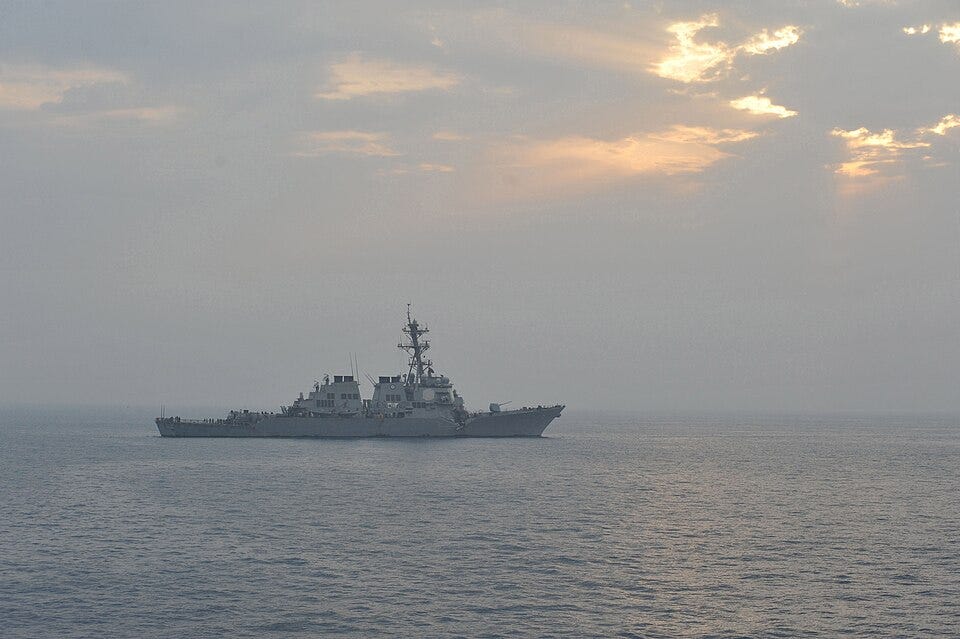

Iran responded by accusing the United States of attacking an Iran-linked tanker near the Strait of Hormuz and striking a communications tower on Qeshm Island. Tehran said the attacks originated from regional territory and accused neighboring countries of allowing their land, sea, airspace, or bases to be used against Iran, warning that any such country would be treated as a party to aggression.
The confrontation quickly expanded. Iran launched missiles and drones toward targets in Kuwait and Bahrain, while U.S. and regional air defenses intercepted several projectiles. Kuwait reported that Kuwait International Airport was hit, leaving one person dead and dozens wounded, with footage after the attack showing significant damage to the airport. Kuwait strongly denied allowing its territory or airspace to be used for attacks on Iran and expelled two Iranian diplomatic staff members in retaliation.
These events suggest that the Persian Gulf has entered a dangerous new phase where restraint is running out. The United States is attempting to maintain military and economic pressure on Iran through maritime interdictions and enforcement actions, while Iran is signaling that any attack on its territory, vessels, or infrastructure may trigger harsher retaliation against American military assets and logistical networks throughout the Gulf. Every new incident at sea now carries the risk of broader regional escalation.
At the center of the dispute is the future of the ceasefire itself. Iran increasingly appears to be arguing that the ceasefire must apply across all fronts, especially Lebanon. Tehran’s position suggests that continued Israeli military operations in Lebanon cannot be separated from the broader regional de-escalation process and are violations of the spirit and terms of the ceasefire.
This position was tested after Israel threatened attacks on Dahiyeh, Hezbollah’s stronghold in southern Beirut. Iranian and Hezbollah-linked media warned that an attack on Dahiyeh would cross a red line. For now, those warnings appear to have had some effect. President Donald Trump publicly brokered a halt to the threatened strike, announcing on June 1 that Israel and Hezbollah had agreed to halt major hostilities, with Israel refraining from striking Dahiyeh in exchange for Hezbollah ceasing attacks on Israel. Israeli attacks on Beirut’s southern suburbs have been delayed or limited as a result.
However, Israeli forces have maintained airstrikes and ground operations in southern Lebanon while issuing evacuation orders around Nabatieh. The city holds significant strategic and symbolic importance for Hezbollah and is often viewed as one of the movement’s principal centers in southern Lebanon. Continued Israeli operations there risk creating new friction between Washington’s diplomatic efforts and Israel’s military objectives.
The rhetorical divergence between Washington and Jerusalem has become increasingly visible, though it remains unclear how much this impacts policy on the ground. Trump has publicly emphasized the importance of preventing a wider regional war and preserving negotiations with Iran. Netanyahu, meanwhile, has continued to insist that military pressure on Iran and Hezbollah remains necessary. Although both leaders continue to stress their strategic alignment, recent public comments suggest growing tactical disagreements regarding Lebanon and the pace of regional escalation.
The situation is further complicated by increasing discussion of maritime chokepoints beyond the Persian Gulf. Iranian-linked media outlets and commentators have warned that if Israeli operations continue to expand in southern Lebanon, pressure could extend beyond the Strait of Hormuz. Some have suggested that the Bab el-Mandeb Strait and Red Sea shipping routes could become additional arenas of confrontation. While such threats have not been officially adopted as Iranian policy, they underscore the growing concern that the conflict could spread into multiple maritime theaters simultaneously.
Another factor shaping the calculations of all parties is the approaching summer energy season. June, July, and August are traditionally peak demand months for electricity generation, air conditioning, transportation, and industrial consumption. The continuing disruption of maritime traffic in the Persian Gulf, uncertainty surrounding the Strait of Hormuz, and attacks on shipping and energy infrastructure are occurring at a particularly sensitive moment for global energy markets.
Recent industry assessments have highlighted the vulnerability of energy supply chains after years of underinvestment in refining capacity. Market analysts warn that prolonged disruptions in Gulf energy exports could place additional upward pressure on prices during the summer months, particularly if tensions continue to affect maritime traffic through the region. At the same time, the U.S.-led blockade and restrictions on maritime commerce are placing growing pressure on Iran’s economy by limiting trade flows and increasing the costs of commercial activity.
As a result, both sides face mounting incentives to seek some form of diplomatic off-ramp. For Washington, a prolonged confrontation risks further disruptions to global energy markets, higher prices, and increasing pressure from regional partners concerned about instability. For Tehran, the continuation of maritime restrictions and economic pressure threatens to deepen domestic economic challenges and complicate long-term recovery efforts.
The emerging pattern is clear: the conflict is no longer limited to a single front. The Persian Gulf, the Strait of Hormuz, Kuwait, Bahrain, southern Lebanon, Dahiyeh, Nabatieh, and potentially the Red Sea are becoming interconnected theaters within a broader regional confrontation. Actions in one arena increasingly generate consequences in another.
For Iran, the message appears to be that there can be no selective ceasefire—calm in the Gulf requires calm in Lebanon. For the United States, the challenge is maintaining pressure on Iran while avoiding a wider regional war. For Israel, the central question is whether continued military operations in Lebanon are worth the risk of undermining broader diplomatic efforts.
The coming weeks may therefore prove decisive. Diplomacy could still provide a framework for managing the crisis, reducing tensions, or at least postponing a return to full-scale conflict. Yet if maritime confrontations continue in the Gulf while military operations expand in Lebanon, the fragile ceasefire may gradually give way to a broader regional war. Whether negotiations can contain these pressures - or merely delay a renewed confrontation - remains one of the most important unanswered questions facing the Middle East today.