

The war between Iran, the United States, and Israel continues to expand across the Middle East, with new developments highlighting intensifying regional military activity, mounting civilian damage inside Iran, growing threats to international shipping in the Persian Gulf, and emerging political tensions surrounding Iran’s leadership following the death of Supreme Leader Ali Khamenei.
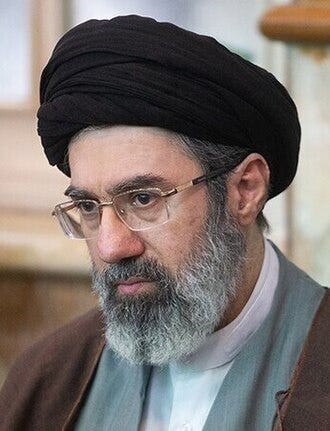
Growing concerns have emerged regarding both the health condition and the legitimacy of Mojtaba Khamenei’s selection as Iran’s new Supreme Leader. According to Alireza Salarian, Iran’s ambassador to Cyprus, Mojtaba Khamenei sustained injuries during the same attack that killed his father and several members of the family. In an interview with The Guardian conducted at the Iranian embassy in Nicosia, Salarian stated that he had heard “his legs and arms were injured” and that Mojtaba Khamenei was likely currently hospitalized.
Iranian state television previously acknowledged that Mojtaba Khamenei had been wounded during the attack but did not provide further details. Since the announcement of his appointment, no public message, speech, or appearance has been released, fueling speculation about his condition and ability to govern. These concerns were further amplified when Mojtaba Khamenei did not appear at the public funeral ceremony for senior Iranian military commanders killed during the first days of the war. The absence of the newly appointed leader from such a symbolic event has raised additional questions among observers and political figures inside and outside Iran.
.jpg)
The manner of Mojtaba Khamenei’s appointment has also generated debate within Iran’s political sphere. Many Iranian political figures publicly congratulated him after the announcement of his leadership, framing the transition as necessary for stability during wartime. However, former Iranian president Mohammad Khatami notably refrained from congratulating Mojtaba Khamenei directly. In his public statement, Khatami acknowledged the selection of the “third leader of the Islamic Republic” and wished success to the new leadership but avoided any explicit congratulatory message addressed personally to Mojtaba Khamenei, a silence that many observers interpret as a subtle political signal.
More explicit criticism came from Abolfazl Ghadiani, a prominent dissident political activist currently imprisoned in Evin Prison, who strongly condemned the process. Ghadiani described the appointment as “a disgraceful puppet show designed to turn the Islamic Republic into a hereditary monarchy.” He argued that transferring leadership from father to son represents an attempt to institutionalize dynastic rule within the Islamic Republic and reflects a deeper political illegitimacy within the governing system.
Meanwhile, reports from southern Iran indicate that a major hospital in Bushehr has been severely damaged following nearby explosions linked to ongoing military strikes. Local officials reported that the Persian Gulf Martyrs Hospital, a facility with approximately 280 beds, sustained extensive structural and equipment damage and has been temporarily removed from service. Iranian officials state that at least nine hospitals across the country have been damaged since the start of the conflict, raising growing humanitarian concerns regarding access to medical care during the war. Additional reports from Tehran indicate that a branch of Bank Sepah was struck during an overnight air attack, killing several bank employees who were reportedly working late to prepare end-of-month salary payments. Iranian authorities described the strike as an attack on civilian economic infrastructure.
Military tensions have also escalated around the Strait of Hormuz, one of the world’s most strategically important maritime chokepoints. Iran’s central military command headquarters, Khatam al-Anbia, declared that Iran will not allow “even one liter of oil benefiting the United States and its allies” to pass through the Strait of Hormuz.
Western intelligence sources believe Iran may be preparing to deploy naval mines in the area using small vessels capable of carrying multiple sea mines. The United States has warned Iran against such actions and reports that American forces have already targeted and destroyed 16 Iranian minelaying boats near the strait. At the same time, Iran has denied that it intends to mine the Strait of Hormuz, arguing that such a step is unnecessary because it already possesses effective operational control over the waterway. Iranian officials say their geographic position and naval presence allow them to influence maritime traffic without physically blocking the strait.
According to statements attributed to Iranian authorities, Tehran has indicated that commercial vessels from certain countries may be allowed to pass through the strait if their governments take political steps such as closing U.S. or Israeli embassies or reducing cooperation with them. Some reports also suggest that Chinese vessels have continued to transit the Strait of Hormuz with Iran’s approval, indicating that Tehran may be attempting to regulate shipping selectively rather than impose a full blockade. Analysts note that deploying naval mines could undermine this selective control mechanism, since mining the strait could disrupt traffic for all vessels, including those from countries Iran may wish to allow through.
Despite these statements, the situation in the waters around the Strait of Hormuz has become increasingly dangerous. Several commercial vessels have recently come under attack. The United Kingdom’s maritime monitoring agency reported multiple incidents involving projectiles striking commercial vessels near the Strait of Hormuz, including container ships and cargo vessels. In one incident, a cargo ship caught fire after being hit and had to be evacuated. A Thai-flagged cargo vessel was also attacked while passing through the strait. According to Thai naval authorities, 23 Thai crew members were onboard, with 20 rescued by the Omani navy while rescue operations continued for three others.
The conflict is increasingly spilling beyond Iran’s borders. Iranian forces and allied militias have reportedly launched missile and drone attacks against U.S. military facilities in Bahrain and Kuwait, as well as other targets across the Gulf region. Iran’s Islamic Revolutionary Guard Corps announced the start of the 38th wave of its ongoing military campaign, stating that operations would continue until what it described as the “complete surrender of the enemy.”
Gulf states have reported intercepting several projectiles. Saudi Arabia announced it had intercepted six ballistic missiles aimed at Prince Sultan Air Base, while also downing multiple drones targeting oil facilities. In Iraq, a drone struck a major U.S. diplomatic support facility near Baghdad International Airport, causing structural damage but no reported casualties. U.S. officials believe the attack was likely carried out by Iranian-aligned militias operating under the umbrella of the “Islamic Resistance in Iraq.” In the United Arab Emirates, authorities in Dubai reported that two drones crashed near Dubai International Airport, injuring three people, although air traffic later returned to normal.
The intensifying conflict has also triggered growing concern among global energy markets and major industrial economies. Energy ministers from the Group of Seven (G7) announced that they are prepared to coordinate with the International Energy Agency to take “all necessary measures” to address rising oil prices, including the possible use of strategic reserves. Reports indicate that the 32 members states of the International Energy Agency are considering one of the largest coordinated releases of emergency oil reserves in history if disruptions in the Strait of Hormuz worsen.
At the diplomatic level, the United Nations Security Council voted on the first resolution addressing the war, adopting a resolution condemning Iranian attacks on Gulf Cooperation Council countries and threats to international shipping. Russia and China abstained. Russia has proposed a separate resolution calling for a ceasefire and condemning attacks on civilians without directly assigning blame to Iran, Israel, or the United States.
At the same time, the war is exposing growing uncertainty about its strategic direction. German Chancellor Friedrich Merz has warned that the United States and Israel appear to have “no joint plan for a quick and convincing end” to the conflict. Despite earlier rhetoric supporting the war and the goal of toppling the Islamic Republic, Merz emphasized that Europe has no interest in an endless war and warned against outcomes resembling Libya or Iraq, stressing that the world still needs a stable Iran capable of remaining part of a regional peace and security framework.
Taken together, the combination of leadership uncertainty in Tehran, criticism of Mojtaba Khamenei’s succession, expanding regional attacks, threats to global energy routes, and mounting civilian infrastructure damage suggests that the conflict is entering a more dangerous and unpredictable phase. With no clear diplomatic pathway emerging and military operations continuing across multiple fronts, the war increasingly appears to be evolving from a direct confrontation into a broader regional crisis with profound humanitarian, political, and economic consequences.
Thank you for this update! I've shared on Bluesky. In Peace, Scott