

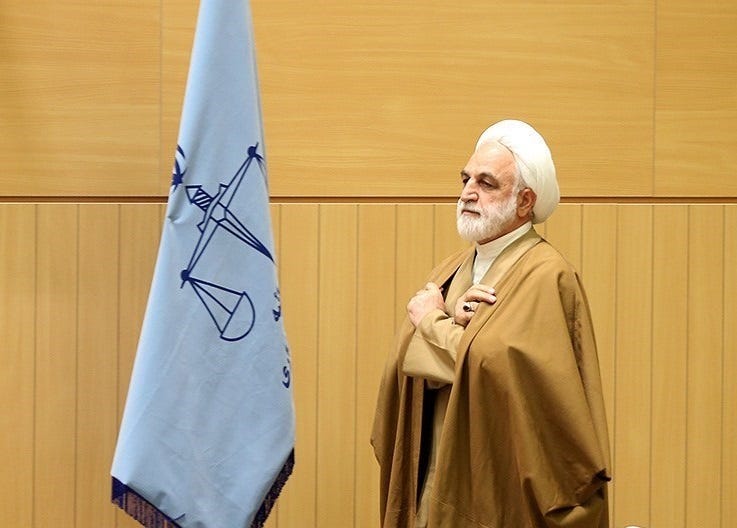
Recent developments in Iran point to a significant escalation in domestic repression, marked by the expansion of asset confiscations, arbitrary arrests, and intensified pressure on dissidents and public figures amid ongoing wartime conditions. Iranian judicial authorities have increasingly issued orders to confiscate the assets of individuals accused of ties to foreign actors or opposition groups, often without transparent legal proceedings. In recent days, reports confirmed that, following the seizure of assets belonging to an individual identified as “B.A.,” similar rulings were issued in Yazd against two additional individuals, accused of “anti-Iranian activities” abroad and alleged cooperation with hostile entities.
While official rulings refer to individuals only by initials, state-affiliated media have openly revealed identities and, in some cases, publicly celebrated these confiscations, raising serious concerns about due process, presumption of innocence, and the politicization of the judiciary. Authorities have explicitly warned that any cooperation with foreign media or entities deemed hostile may result in the confiscation of all personal property and additional penalties, effectively broadening the definition of national security offenses to include information sharing and documentation.

These measures take place in a broader environment where freedom of expression and access to information remain severely restricted, with Iran consistently ranked among the most repressive countries for journalists, civil society actors, and political dissenters. At the same time, reports of coercion, torture, and forced confessions continue to emerge, particularly involving members of marginalized communities like Payvand Naeimi, a Baha’i prisoner held in Kerman. According to statements by the Baha’i International Community, he has endured two staged executions, prolonged interrogation, and psychological pressure, and now faces serious risk to his life. Authorities are reportedly attempting to force confessions to crimes he denies committing, echoing a longstanding pattern of televised confessions under duress.
Additional concerns have been raised regarding the detention of Hamed Mehrabkhani, a 30-year-old Baha’i citizen who was shot in the leg prior to arrest and subsequently detained without access to adequate medical care, with his current whereabouts unknown. Such cases underscore systemic denial of due process and medical rights for detainees, particularly among religious minorities.
Parallel to these developments, Iranian authorities have expanded mass arrests tied to wartime information control. State media report the detention of at least 67 individuals accused of monarchist affiliations and one alleged member of the MEK, claiming they were filming missile strike locations and sharing the footage with foreign media. Officials also reported the seizure of electronic equipment, cold weapons, and other materials, though independent verification remains unavailable. Since the start of the war, an unspecified number of individuals have been detained under accusations of espionage or collaboration with “enemy” networks, often under vague or broadly defined charges.
Beyond judicial actions, pressure has also extended to prominent public figures and critics. Reports indicate increased scrutiny and pressure on former football star Ali Daei, who has previously expressed positions seen as sympathetic to protest movements. Similarly, the case of Sharifi Zarchi, whose assets have reportedly come under threat or seizure, reflects a widening pattern in which academics, professionals, and diaspora-linked individuals are targeted financially as well as politically.
Taken together, these developments suggest a coordinated strategy by Iranian authorities to consolidate internal control during a period of external conflict, using legal, security, and media mechanisms to deter dissent. The expansion of asset seizures, normalization of forced confessions, and criminalization of information-sharing indicate a shift toward more aggressive and systemic repression, with significant implications for human rights, rule of law, and the safety of civilians both inside Iran and abroad.