

The recent releases and temporary medical furloughs of several of Iran’s most prominent civil society figures - human rights lawyer Nasrin Sotoudeh, Nobel Peace Prize laureate Narges Mohammadi, and sociologist Saeed Madani - are positive human rights developments. Yet they are unfolding amid one of the most intense execution campaigns in recent years, underscoring the continued, systemic human rights challenges beyond relief on individual cases.
On May 13, Nasrin Sotoudeh was released from Tehran Greater Prison on bail after being transferred there from Ward 209 of Evin Prison during the recent military escalation in Iran. Sotoudeh, one of Iran’s most internationally recognized human rights lawyers, has spent years defending women’s rights activists, children facing the death penalty, political prisoners, and victims of state repression. Her repeated imprisonments over more than a decade has made her a symbol of peaceful civil resistance in Iran. Despite years of imprisonment, financial pressure, and severe sentences, Sotoudeh has consistently remained an independent voice advocating for justice and democratic freedoms.
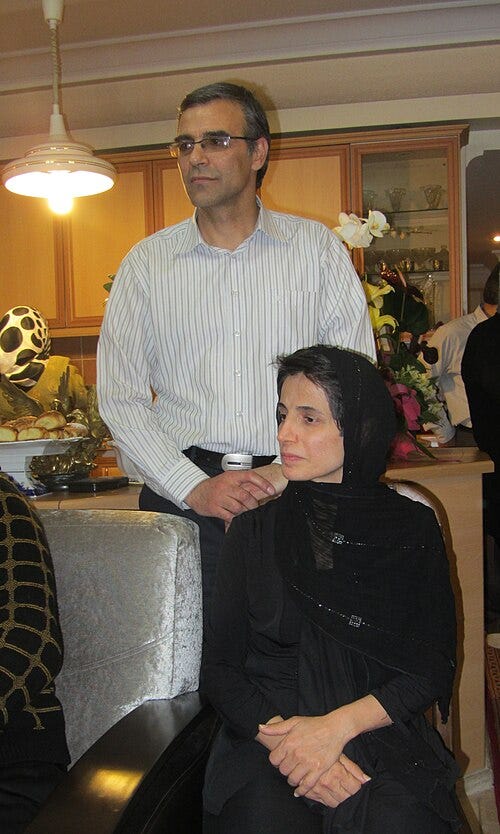

At nearly the same time, Narges Mohammadi, the 2023 Nobel Peace Prize laureate, was transferred from a hospital in Zanjan to Pars Hospital in Tehran after authorities temporarily suspended the implementation of her prison sentence to allow urgent medical treatment. According to her lawyer, the decision followed forensic medical evaluations emphasizing the necessity of specialized treatment outside prison due to multiple serious health conditions. Mohammadi had reportedly suffered severe blood pressure fluctuations, loss of consciousness, and deteriorating physical health while in detention.
However, Mohammadi’s family and supporters stressed that a temporary suspension of her sentence is not sufficient. In a statement, the Narges Mohammadi Foundation warned that she requires long-term specialized medical care and insisted that she should never be returned to prison to continue serving what they described as unjust sentences. Mohammadi had been sentenced by Branch One of the Mashhad Revolutionary Court to seven and a half years in prison, two years of internal exile, and a two-year travel ban following her arrest in December 2025. Human rights groups have also raised concerns over her prison conditions, including reports that she was held alongside violent offenders without proper separation of prisoners and had repeatedly been denied adequate medical care despite her worsening condition.
The easing of pressure on Sotoudeh and Mohammadi follows the release of Saeed Madani last month after four years in prison. Madani, one of Iran’s most respected sociologists and researchers of social movements, poverty, addiction, and civil society, was released from Damavand Prison on April 20 after authorities reduced his original sentence following an appeal.
Madani’s imprisonment became emblematic of the pressure placed on independent intellectuals in Iran. Even while incarcerated, he continued writing extensively on democratic transition, nonviolence, and the future of Iranian civil society. In a series of public exchanges conducted from prison, he argued that sustainable political change in Iran could only emerge through democratic transition, coalition-building, and the rejection of violence and authoritarianism. Madani’s release was welcomed by many reform-minded activists and scholars as a reminder that Iran’s civil society remains intellectually alive despite years of repression.
Taken together, the developments surrounding Sotoudeh, Mohammadi, and Madani offer a rare moment of relief for key members of Iran’s battered civil society. They also demonstrate the enduring resilience of individuals who, despite years of imprisonment and pressure, continue to advocate for human rights, democratic reform, and nonviolent change.
At the same time, these releases are occurring under the shadow of an accelerating execution campaign. Iranian authorities have continued to carry out executions at an alarming pace, including political prisoners and individuals accused of security-related offenses. Human rights organizations warn that the scale and speed of executions in recent months reflect a broader strategy of intimidation aimed at suppressing dissent during a period of heightened domestic and regional instability.
This contrast - the temporary release of globally recognized dissidents alongside an expanding machinery of executions - reflects the dual reality of Iran today: a society in which demands for dignity, justice, and democratic freedoms continue to persist, even as state repression deepens.