

A series of diplomatic signals emerging from Washington, Tehran, and Beijing over the past 48 hours suggests progress toward a possible preliminary agreement between the United States and Iran. The signals should be noted, but so too should the pattern that runs through the entire history of Iran–U.S. diplomacy: the moments that most resembled a breakthrough have often been the moments that preceded a collapse. Time and again, both sides have arrived at the edge of a deal - with negotiators signaling progress, intermediaries expressing optimism, and markets beginning to price in resolution - only for the process to unravel, sometimes suddenly, sometimes violently. The line between a situation that looks ready for a deal and one that tips into open conflict has, in this relationship, always been narrower than it appeared.
Both Reuters and Axios are reporting that Washington and Tehran are close to agreeing on a preliminary one-page memorandum of understanding that could serve as the foundation for broader nuclear negotiations. A Pakistani source cited by Reuters, directly involved in peace efforts, stated the two parties are “getting very close” and expect to finalize the document soon.
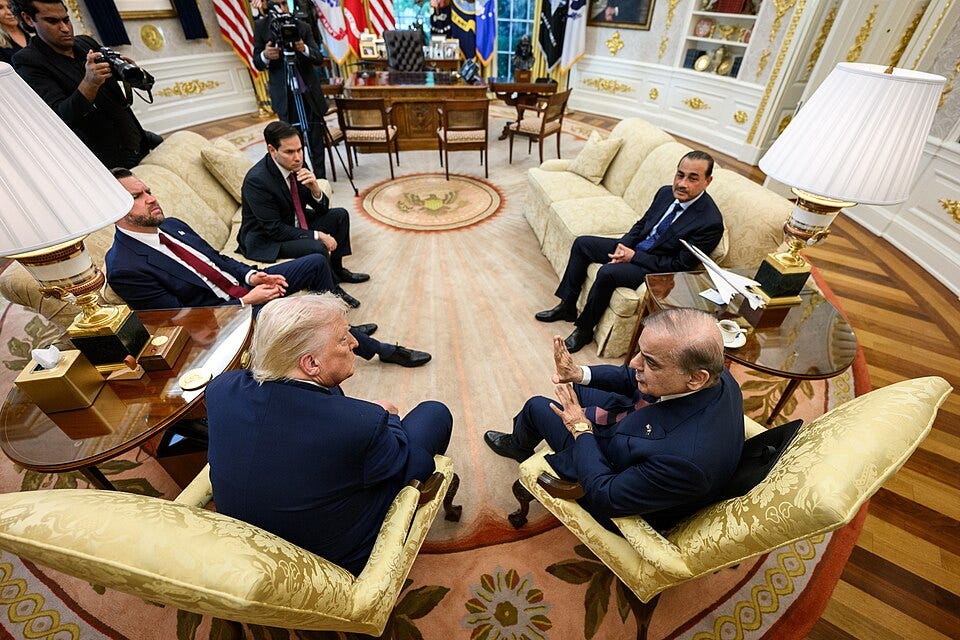

According to Axios, which cited two U.S. officials and two additional unnamed sources, the proposed document includes provisions for the suspension of Iran’s nuclear enrichment, the lifting of U.S. sanctions, and the restoration of free navigation through the Strait of Hormuz - the latter two having been among the most contentious sticking points throughout negotiations. Many provisions, however, remain contingent on reaching a final comprehensive agreement. Washington reportedly expects an Iranian response within 48 hours, though no deal has been signed as of publication.
One of the clearest diplomatic signals came when Iranian Foreign Minister Abbas Araghchi traveled to Beijing for meetings with his Chinese counterpart, Wang Yi. The timing of the visit is highly significant: it was conducted several days before U.S. President Donald Trump’s planned trip to China, where he is expected to meet President Xi Jinping - a visit that had previously been delayed because of the Iran conflict. During his time in Beijing, Araghchi also held a phone call with Saudi Foreign Minister Faisal bin Farhan, with both sides emphasizing “the continuation of the diplomatic path and regional cooperation to prevent escalation.” China, which brokered the restoration of Iran–Saudi relations after a seven-year severance, is increasingly positioned as a key facilitator in the broader diplomatic architecture surrounding the crisis.
Perhaps the most striking development was President Trump’s announcement that the “Operation Freedom” - the U.S. military operation launched to escort commercial vessels through the Strait of Hormuz - had been suspended only one day after it began. In a formal statement, Trump cited “the request of Pakistan and some other countries,” claimed “tremendous military success” in the campaign against Iran, and said that “significant progress” had been made toward a final agreement. He added that the naval blockade would remain fully in place during the pause. Trump’s statement read, “We have mutually agreed that while the blockade will remain fully in place, the Freedom Project will be paused for a short period to determine whether the final agreement can be completed and signed.”
Separately, Secretary of State Marco Rubio confirmed that “Operation Epic Fury” - the original joint U.S.–Israeli military campaign against Iran - has formally concluded. “We achieved the goals of this operation,” Rubio stated, declaring the offensive phase of the war “over.” He added that Trump prefers to reach a deal with Iran, including a memorandum of understanding on the full reopening of the Strait of Hormuz, though he noted that “Iran has not yet chosen this path.”
Financial markets have already begun pricing in the possibility of a deal. Brent crude fell 1.7% to $108 per barrel in Asian trading on Wednesday, following the suspension of Operation Freedom and growing diplomatic momentum. Prices had surged more than 6% earlier in the week as regional attacks intensified. Roughly one-fifth of the world’s oil and gas transits through the Strait of Hormuz, making any shift in its status a significant market event.
Despite the diplomatic signals, the situation on the water remains volatile. French shipping group CMA CGM confirmed that its vessel, the San Antonio, was struck while transiting the Strait of Hormuz on Tuesday, wounding several crew members. The British Maritime Trade Operations center reported three additional maritime incidents in the region this week alone.
Iran’s Foreign Ministry denied involvement in attacks on Monday attributed to it by the UAE, which reported that its air defense systems intercepted Iranian missiles and drones, and that an oil facility in Fujairah was struck in a drone attack. Iran’s IRGC headquarters stated that “Iran carried out no missile or drone operations against the UAE” in recent days, while warning of a “crushing response” should the UAE be used as a staging ground for attacks on Iranian territory. The U.S. is simultaneously pushing a UN Security Council resolution - co-sponsored with Bahrain, the UAE, Qatar, and Saudi Arabia - demanding that Iran halt toll collection and mine-laying in the strait.
The convergence of these signals - a preliminary diplomatic text in circulation, Araghchi’s high-profile Beijing engagement ahead of Trump’s own visit, the rapid suspension of Operation Freedom, and Rubio’s declaration that the offensive phase of the war is over — collectively suggest that the groundwork for a limited, preliminary deal is quietly being laid. If finalized, it would likely not resolve the deeper disputes over Iran’s nuclear program or its regional posture, but could serve as a critical first step: a temporary framework that freezes the most acute flashpoints and allows more detailed negotiations to begin.
Just two days ago, the trajectory of this conflict pointed toward further war, either a naval confrontation or an infrastructure campaign that could spiral beyond anyone’s control. Today’s signals point in the opposite direction, and the diplomatic channel that appeared all but closed is showing signs of life. Yet caution is warranted: both of the wars that preceded this moment began precisely at the point when many analysts and officials believed negotiations would break through.