

The announcement that the United States and Iran have reached a memorandum of understanding to end the war marks a historic and hopeful turning point after months of violence, uncertainty, and profound human suffering. For more than one hundred days, the Middle East lived under the shadow of a conflict that was engulfing the entire region. Thousands of civilians were killed or injured, critical infrastructure was damaged, international shipping routes were disrupted, energy markets were shaken, and millions of people across the region woke up each day wondering whether a wider war was imminent.

Today, for the first time in months, there is reason for cautious optimism. According to statements from Iranian officials, Pakistani mediators, and President Trump, the parties have reached a framework that would permanently halt military operations across all fronts, including Lebanon, end the U.S. naval blockade of Iran, reopen the Strait of Hormuz, and launch a new round of negotiations aimed at reaching a comprehensive nuclear and sanctions focused agreement.
According to details reported by Iranian media, the memorandum includes an immediate and permanent end to military operations, the lifting of the naval blockade imposed during the war, the reopening of maritime traffic through the Strait of Hormuz, partial sanctions relief, the release of frozen Iranian funds, and a 60-day process to negotiate a final agreement. Iranian officials have stated that future negotiations would focus primarily on nuclear issues, sanctions relief, and economic reconstruction. Reports on the precise terms remain incomplete and some provisions have yet to be independently confirmed. Even Iranian officials urged caution regarding speculation over the agreement’s details in the days leading up to its announcement.
If implemented, however, the framework could provide the basis for a broader agreement that reduces tensions, restores economic activity, and prevents a return to war. The significance of the agreement extends beyond its specific terms. After months of military confrontation, both sides have effectively acknowledged a reality that history has repeatedly demonstrated: military force can inflict enormous damage, but it rarely resolves the underlying political disputes that drive conflict. Ultimately, the parties returned to the negotiating table because diplomacy remained the only viable path to a sustainable outcome.
Perhaps the most sobering lesson of this conflict is how close the parties may already have been to a diplomatic breakthrough before the war began. In the weeks leading up to the conflict, Oman was actively mediating between Washington and Tehran. Oman’s Foreign Minister, Badr Albusaidi, traveled to Washington and met with Vice President JD Vance as part of a diplomatic effort to bridge remaining differences between the two sides. In public interviews, Albusaidi expressed optimism that an agreement was within reach and emphasized that there was no alternative to diplomacy. Omani officials argued that meaningful progress had already been achieved and that communication channels between Washington and Tehran remained open.
At the time, discussions focused primarily on guaranteeing that Iran would never acquire a nuclear weapon while providing a framework for sanctions relief and broader de-escalation. Reports suggested that Iran had signaled willingness to accept significant constraints and monitoring measures regarding its nuclear program. Diplomatic channels remained active, mediators were engaged, and a negotiated outcome appeared possible.
Yet despite this progress, the United States chose a military path. President Trump initially framed the war as a war to topple the Iranian government and prevent Iran from obtaining a nuclear weapon. The opening phase of the war targeted senior figures within Iran’s military and political establishment, beginning with Supreme Leader Ali Khamenei. Over the course of the conflict, a number of additional high-ranking Iranian military commanders and government officials were killed. Yet, the Iranian government proved durable and unleashed volleys of missiles and drones at surrounding countries, including many that were cooperating with the U.S.-Israeli war with Iran, and blocked the Strait of Hormuz. The equation suddenly changed from a quick and speedy operation to topple an injured adversary to finding a way out of a costly war that could not be won on the cheap. While goals started lofty, the bar for an end to the war was quickly lowered in Washington.
At various moments during the war, President Trump suggested that Iran’s political future could look very different after the conflict and has argued at various points that a regime change has occurred, even though this argument was strained by the fact that Ali Khamenei was quickly replaced by his son, Mojtaba. Reports also emerged that Kurdish groups were being viewed by some policymakers as potential partners in attacking inside of Iran, and Trump later indicated that the United States had provided arms to Kurdish actors who had not held up their end of the apparent bargain.
The result was one of the most dangerous and costly confrontations in recent Middle Eastern history. And yet, after more than one hundred days of fighting, enormous destruction across Iran, substantial costs to the United States and its partners, disruptions to global trade and energy markets, and repeated fears of regional escalation, the diplomatic destination looks remarkably familiar. The emerging agreement appears centered on the same core nuclear issue that was already under discussion before the war.
Meanwhile, Iran continues to reject negotiations over its missile program and its regional alliances, including Hezbollah and other non-state actors. According to reports regarding the emerging framework, these issues have been explicitly excluded from the current negotiations. Instead, future talks are expected to focus on nuclear arrangements, sanctions relief, implementation mechanisms, and economic recovery.
In a striking irony, some of the most important issues now being addressed, including the reopening of the Strait of Hormuz and the restoration of maritime commerce, were not the central disputes before the war. They became major international concerns only because the conflict itself created them.
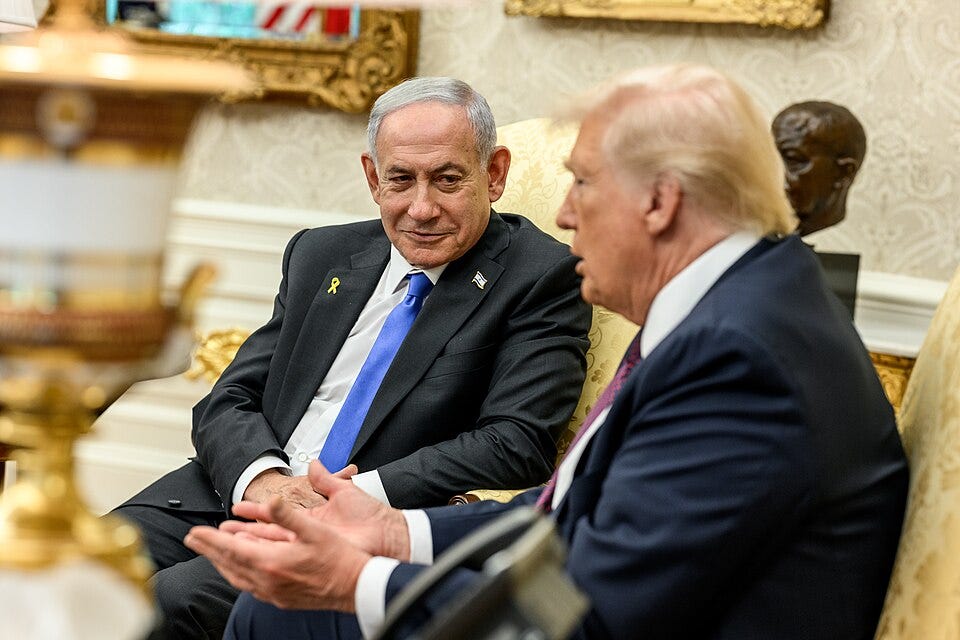
The path to this agreement was far from smooth, and perhaps no actor worked harder to prevent it from materializing than Israeli Prime Minister Benjamin Netanyahu. Throughout the negotiations, Netanyahu repeatedly argued against diplomatic engagement with Iran and favored a strategy of continued military pressure. In the final hours before the agreement was reached, Israel’s strike on Beirut’s southern suburbs threatened to derail the negotiations entirely. Coming at a moment when diplomats were reportedly closing the remaining gaps between Washington and Tehran, the attack was widely viewed by Iranian officials - and even President Trump, himself - as a deliberate provocation designed to jeopardize the diplomatic process and force a return to escalation.
It did not work—this time. The agreement was finalized despite these efforts, but the political incentives that drove them have not disappeared. Netanyahu and much of the Israeli political establishment continues to view a U.S.-Iran diplomatic opening as contrary to their nation’s strategic vision for the region. Netanyahu has repeatedly demonstrated a willingness to challenge American diplomatic initiatives toward Iran, including under the Obama administration and now under President Trump. His motivation to keep pressure on Iran and prevent a broader U.S.-Iran rapprochement is unlikely to disappear simply because an agreement has been signed.
President Trump recognized the danger in real time. His unusually sharp public criticism of Israel’s Beirut strike reflected an understanding that a single act of escalation could destroy months of diplomatic work. By publicly stating that the attack “should not have happened” and urging all sides to step back from confrontation, Trump helped prevent the collapse of negotiations at a critical moment. That diplomacy survived this episode may ultimately be one of the most important developments of the entire process. But it also serves as a reminder that reaching an agreement and sustaining it are two different tasks. The forces that opposed this agreement before it was signed are unlikely to disappear after it takes effect.
Indeed, even before the agreement is formally signed, its first major challenge has already emerged. While the reported framework calls for an immediate and permanent end to military operations across all fronts, including Lebanon, Israeli officials have signaled that they do not view themselves as bound by that provision. According to reports in the Israeli press, Prime Minister Netanyahu informed President Trump that Israel does not consider itself committed to the Lebanon-related provisions of the U.S.-Iran understanding. Israeli officials reportedly indicated that Israeli forces would remain in their current positions, continue operations against Hezbollah, and retain freedom of action to strike what they consider threats to Israeli security.
Inside Israel, opposition leaders such as Yair Lapid and Avigdor Lieberman have described the emerging understanding as a major strategic setback for Netanyahu’s government. Their criticism reflects concern that military pressure failed to secure broader concessions from Iran on missiles, regional alliances, or other long-standing Israeli priorities. That Netanyahu got his Iran war after decades of campaigning but did not improve Israel’s regional position is a major setback to his government and a boon for his political opponents, almost all of whom are equally if not more hawkish toward Iran but do not have anywhere near as much of a track record as Netanyahu in leading the nation or handling relations with the United States.
If military operations in Lebanon continue despite the agreement, Tehran may conclude that Washington is either unwilling or unable to deliver on commitments that were central to the negotiations. If the U.S. does not restrain Israel from violating the apparent terms of the agreement, the negotiating process could break down, paving the way for at least a resumption of the Israeli-Iranian portion of the war.
The agreement has also faced opposition from other quarters. Inside Iran, hardline critics have also voiced strong opposition. Conservative newspapers, political activists, and demonstrators associated with more hardline factions have questioned the wisdom of the agreement and accused negotiators of making unnecessary concessions. In Washington, some influential critics have decried the terms, highlighted Vice President JD Vance’s role in brokering the agreement and hinted at a Congressional debate on the deal.
The agreement announced this week is not a final peace treaty. Many difficult issues remain unresolved. The implementation of sanctions relief, the future of Iran’s nuclear program, mechanisms for verification, maritime security arrangements, reconstruction efforts, and broader regional tensions will all require difficult negotiations in the weeks and months ahead.
Success is not guaranteed. But after months of suffering, the region has been given an opportunity that seemed impossible only a short time ago.
The significance of this moment extends beyond governments and political leaders. For families in Iran, it means the possibility that air raid sirens may finally fall silent. For communities in Lebanon, it means the ongoing war that has devastated the south of the country and extended to Beirut may end. For Americans, it means avoiding deeper military entanglement in another costly Middle Eastern conflict. For the global economy, it means the reopening of one of the world’s most important commercial waterways and the prospect of greater stability in energy markets.
Additionally, it means that diplomacy has once again proven its value. The central lesson of the past one hundred days is not that war succeeded where diplomacy failed. It is precisely the opposite. After months of destruction, enormous economic costs, and tragic loss of life, all sides have returned to a negotiating process that was already available before the conflict began.
The agreement’s success will ultimately be measured not by the ceremonies surrounding its signing, but by whether it can withstand the pressures that have undermined so many previous diplomatic openings. The question of Lebanon is likely to be the first test. If the parties can prevent renewed escalation there, the agreement may begin to build the confidence necessary for more difficult negotiations ahead. If they cannot, the forces that repeatedly pushed the region toward war may once again gain the upper hand.
For now, however, the people of the region - and those who worked tirelessly to keep the possibility of diplomacy alive - have earned a moment of relief and hope. After so much suffering, diplomacy has been given another chance. The responsibility now falls on all sides to ensure that it is not squandered.